
Box-Truck Fleet Branding Standards for Sides, Cabs and Rear Doors
Keep a recognizable commercial identity across different box bodies without pretending every truck has the same panels. Define the shared hierarchy, body-specific layouts, rear arrangements and unit records needed for a repeatable fleet program.
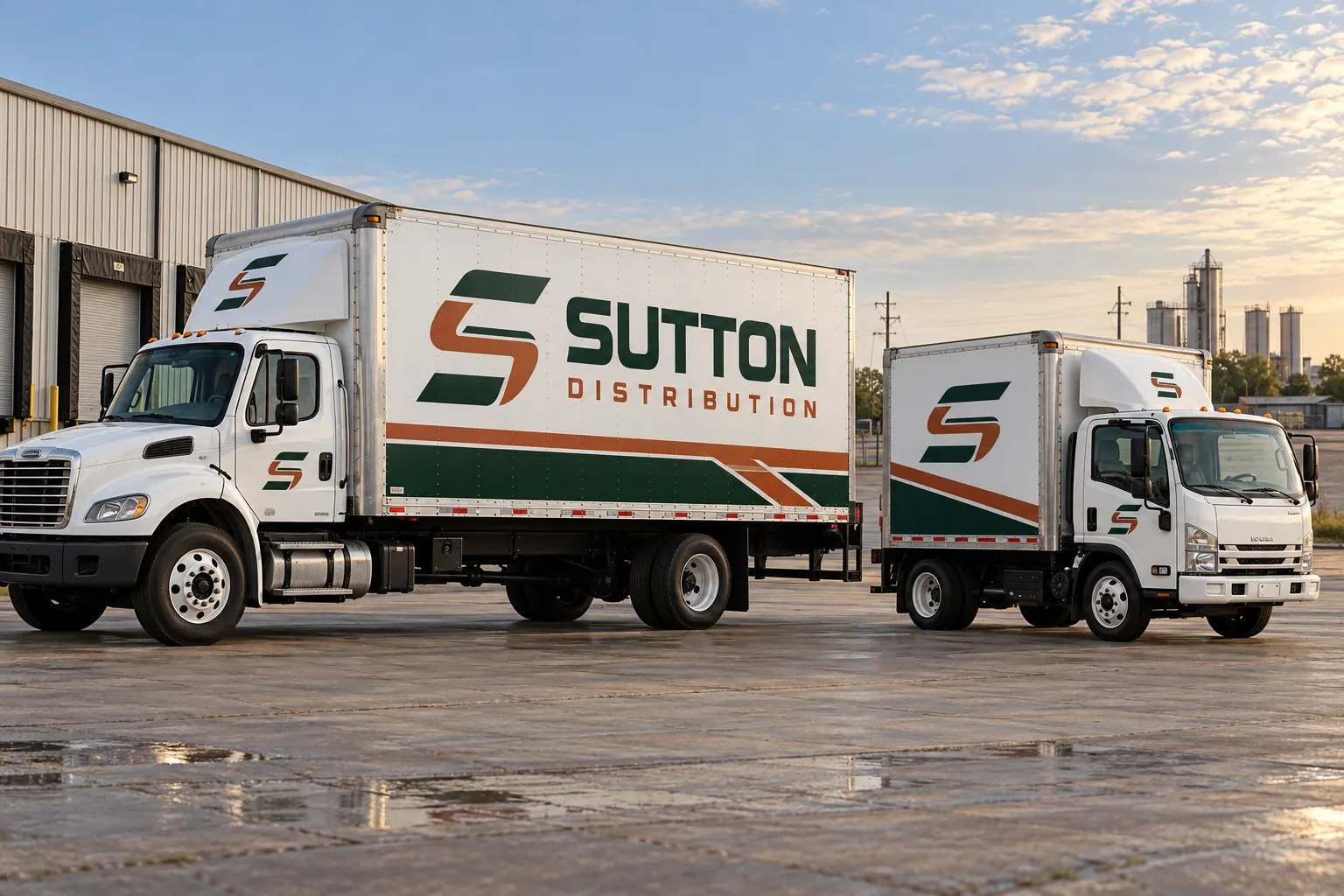
Fictional commercial wrap design concept; not a completed customer installation.
Separate the cab, box sides and rear as related layouts
A box truck offers several different graphic surfaces. The box side can carry the primary commercial composition, the cab can identify the operator in its own available area and the rear needs a focused layout around doors and hardware. Connect them through one identity rather than assume one large design can simply wrap around every face unchanged.
Define what each face should communicate and rank the message. Keep the approved company name, service context and contact route consistent while allowing different compositions. A useful standard explains both the shared brand and the face-specific priorities so the next truck order does not become another independent design exercise with an unrelated hierarchy.
Group the actual box bodies and cab configurations
Record body dimensions, construction, doors, liftgates, refrigeration equipment and other relevant differences. Include year, model and actual aftermarket-body information where available. Trucks with similar cab names may carry different boxes, and body length alone does not define the full usable graphic area.
Use the inventory worksheet and survey guide to build the configuration record. Identify which units genuinely repeat a layout and which require an exception. Keep the current photographs linked to the dimensions so a drawing cannot silently become a generic template disconnected from the working equipment.
Define the side hierarchy and adaptation rules
Establish the primary identity position, supporting message and contact relationship within the usable side area. Account for seams, rivets, rails, side doors and accessories. If several box sizes are used, define how the composition adapts rather than scale everything indiscriminately until a familiar logo fills the available space.
A longer body may offer room for additional supporting content, but the hierarchy should remain recognizable. Keep essential information clear and factual. The box-truck service page addresses the application while the design mistakes guide helps review crowding and fit. Do not let a larger panel become permission to give every service equal visual priority.
Three faces, one identity system
| Face | Primary planning question |
|---|---|
| Box sides | How does the main composition adapt to body size and interruptions? |
| Cab | What identity fits the actual door and panel area? |
| Rear | How do the message and contact fit doors and working hardware? |
| Unit record | Which accepted layout and material references belong to this truck? |
Create rear and cab versions with their own constraints
Document rear-door construction, bars, latches, hinges, liftgates, lighting and protected markings. Use rear-door planning to develop the appropriate arrangement instead of compressing the side design onto a more interrupted face. Keep the cab identity fitted to its actual panel and door layout.
Have the responsible fleet contact identify operational requirements and clear areas. The brand standard should distinguish them from optional decorative coverage and preserve the necessary information on the actual equipment. A consistent visual identity is useful, but it does not independently certify every vehicle requirement or resolve a hardware question omitted from the survey.
Keep color, material and unit data under control
Retain the master source artwork, accepted color references, relevant output approval and actual product construction. Record the finish and any intentional variations across the fleet. Color consistency planning helps connect those references without promising identical appearance from every screen, material and lighting condition.
Verify variable identifiers against the current asset register as a separate check. A shared layout can still carry the wrong unit number, department or contact detail. Keep the accepted data list linked to the proof and configuration. The standard should make it easy to identify what repeats across all trucks and what must be confirmed individually before each batch is produced.
Control first configurations and subsequent changes
Review the fitted layouts and source information for each meaningful class before repeating the system. Name the final approver and record the accepted version, coverage and applicable units. A representative first configuration can help resolve questions, but it does not approve an unrecorded body variation or later equipment change automatically.
When a new model, longer box or different rear arrangement joins the fleet, adapt the accepted identity through a defined review. Use new-model planning rather than stretch an unrelated production file. Update the standard when business wording or contact information changes so another repeat order does not reproduce the outdated version by accident.
Retain a panel-ready history for maintenance and additions
Keep the accepted side, cab and rear artwork, configuration details, product references, unit IDs and installed photographs. Record later damage, repaired panels and replacement graphics. These records help define a focused enquiry, while current condition and matching still need review for the actual job.
Use panel replacement for damaged areas and graphics management for continuing additions. To begin, send a box-truck fleet brief with the configuration list, photographs, source identity and release constraints. The resulting standard should preserve recognition across the fleet while giving each real truck a clear and usable production record.
Frequently Asked Questions
Turn Your Vehicle Details Into a Clear Project Brief
Send current photographs, vehicle quantities, logo files, coverage preferences and timing. Identify old graphics and paint concerns so the project review can address the actual equipment.
Explore planning resources or request your commercial wrap quote.
