
Education Fleet Graphics for Shuttles and Campus Support Vehicles
An education organization can bring one recognizable identity to passenger shuttles, maintenance vans and administrative vehicles. Plan the graphics around approved institution assets, the role of each unit and the real windows, doors and equipment on the fleet.
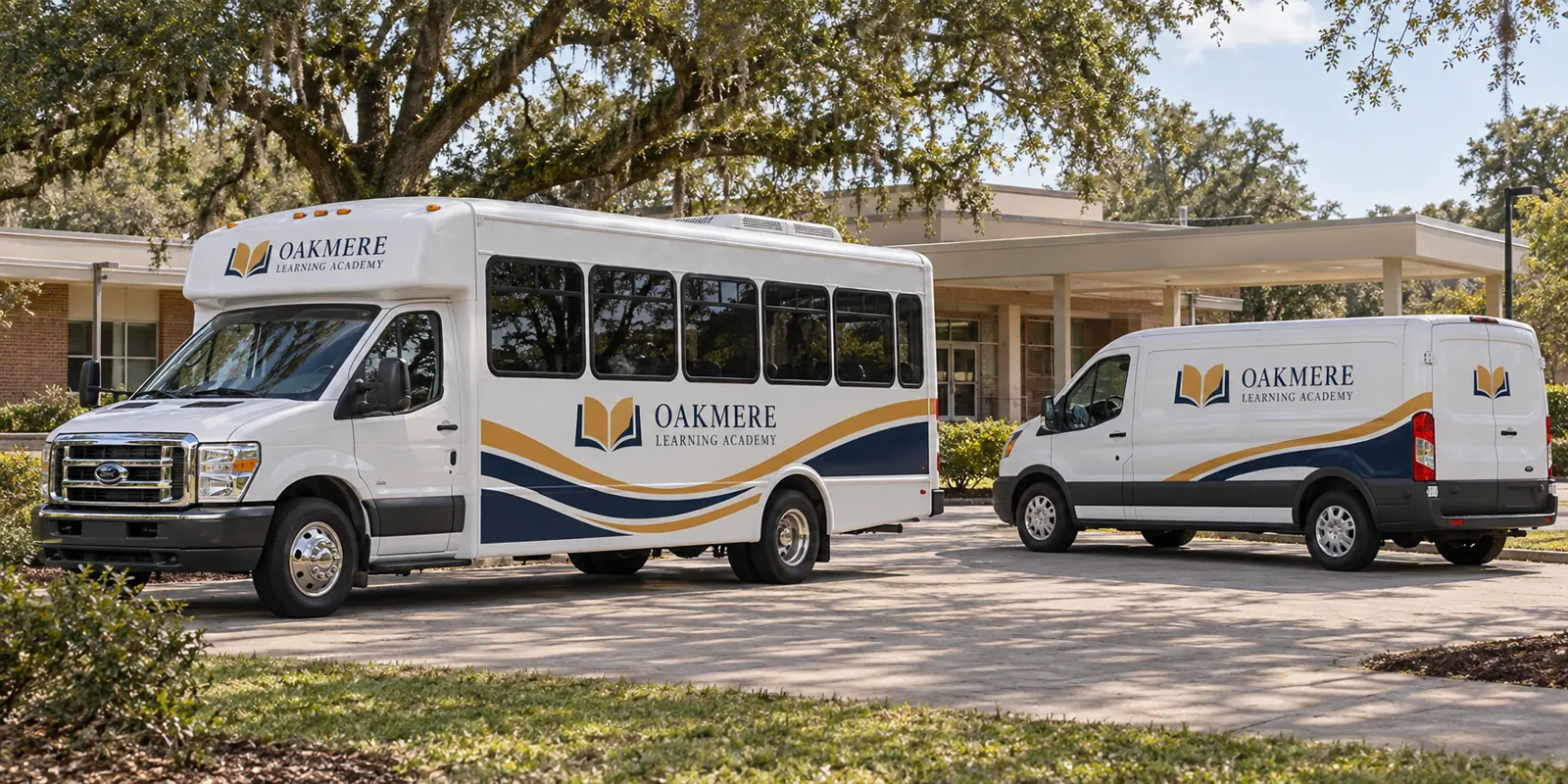
Fictional commercial wrap design concept; not a completed customer installation.
Define the institution identity and vehicle roles
Start with the organization name and the purpose of the vehicles included in the project. Passenger transport, facilities maintenance, outreach and administrative work can call for different wording. A clear approved identity helps the fleet remain recognizable without forcing every unit to carry the same service description.
Choose the contact route appropriate to the role and verify it with the institution. A transport enquiry route may differ from the general website or another department contact. Keep the message focused enough to be understood quickly, with the institution identity leading rather than a long list of programs or slogans.
Collect authorized assets and assign review ownership
Supply the current logos, colors, naming conventions and any existing vehicle standards. Identify who approves institutional identity and who owns transport, fleet or other required information. If partner assets are requested, provide the authorization relevant to their use. An old photograph should not replace the actual approved source package.
Choose a coordinator to consolidate feedback against a dated proof. Keep the required reviewers involved without allowing conflicting revisions to become an unclear production reference. Record the vehicle version, wording and identifiers being approved. A finished-looking layout is most useful when the institution can connect it to a defined scope.
Inventory passenger and support bodies separately
List shuttles, vans, pickups and other vehicles by configuration and quantity. Photograph both sides and rear, including windows, doors, racks, compartments and fitted equipment. A passenger body and a maintenance van can share a badge while offering very different graphic areas. Record exact details rather than assuming a blank template represents both.
Use the bus and shuttle page, van route and service-body page for the body-specific decisions. Keep unusual or modified units separate in the inventory worksheet so later approvals can be tied to the correct reference.
Review windows, access and existing information
Passenger glazing, entry doors and rear hardware can divide the available surface. Review essential wording against current photographs and assess the rear as its own composition. An unchanged smaller copy of side artwork may not remain clear around a center gap, handle or window.
Identify existing information, equipment labels and access areas that must remain visible and usable. Any proposed glass treatment should be raised explicitly rather than assumed to be included with painted-body graphics. If the project has prescribed transport or other specifications, provide the current written requirements and identify the responsible reviewer before the scope is approved.
Choose coverage and keep the fleet recognizable
Lettering can provide a restrained institution identity with original paint visible. Partial graphics can establish a recognizable color system, while fuller coverage offers another direction where the surfaces and goal support it. Compare defined options using the same approved message and actual vehicle photographs.
Preserve the logo treatment, hierarchy and colors while allowing placement to adapt. A maintenance pickup should still look related to a passenger shuttle even when the compositions differ. Keep department or unit identifiers in a defined role and retain approved proofs for the configurations that need separate artwork versions.
Plan the rollout around the institution's operating calendar
Identify priority vehicles, release windows and the number available at one time. Explain calendar constraints early, then coordinate access, delivery and collection against the confirmed project arrangement. A desired break or event date should not be treated as a reservation before scope and scheduling are agreed.
Disclose old vinyl, residue, repairs and damaged finishes with close photos. Graphics should not be treated as a repair for an underlying surface concern. Removal, preparation and suitability need review. The scheduling guide helps connect approved body versions and availability without assuming a universal installation duration.
Prepare an education fleet graphics brief
Send the equipment list, quantities, current photographs, authorized identity sources and essential wording. Include specifications, verified identifiers, approval ownership and timing. Identify coverage preferences and existing information to preserve. Make unknown details visible rather than guessing a body configuration or using an outdated proof as the only reference.
Read the artwork guidelines and submit an education fleet graphics brief. The academy shuttle and van shown here use a fictional institution identity. They illustrate a possible design direction without presenting a customer project, accreditation, transport qualification or operational result as evidence.
Frequently Asked Questions
Turn Your Vehicle Details Into a Clear Project Brief
Send current photographs, vehicle quantities, logo files, coverage preferences and timing. Identify old graphics and paint concerns so the project review can address the actual equipment.
Explore planning resources or request your commercial wrap quote.
