
Beverage Distribution Fleet Graphics That Work Across Body Types
A beverage distributor may run side-bay trucks, box trucks, vans and support vehicles under one identity. Build a fleet system that keeps the distributor recognizable, organizes product information clearly and adapts to the different doors and loading arrangements on the equipment.
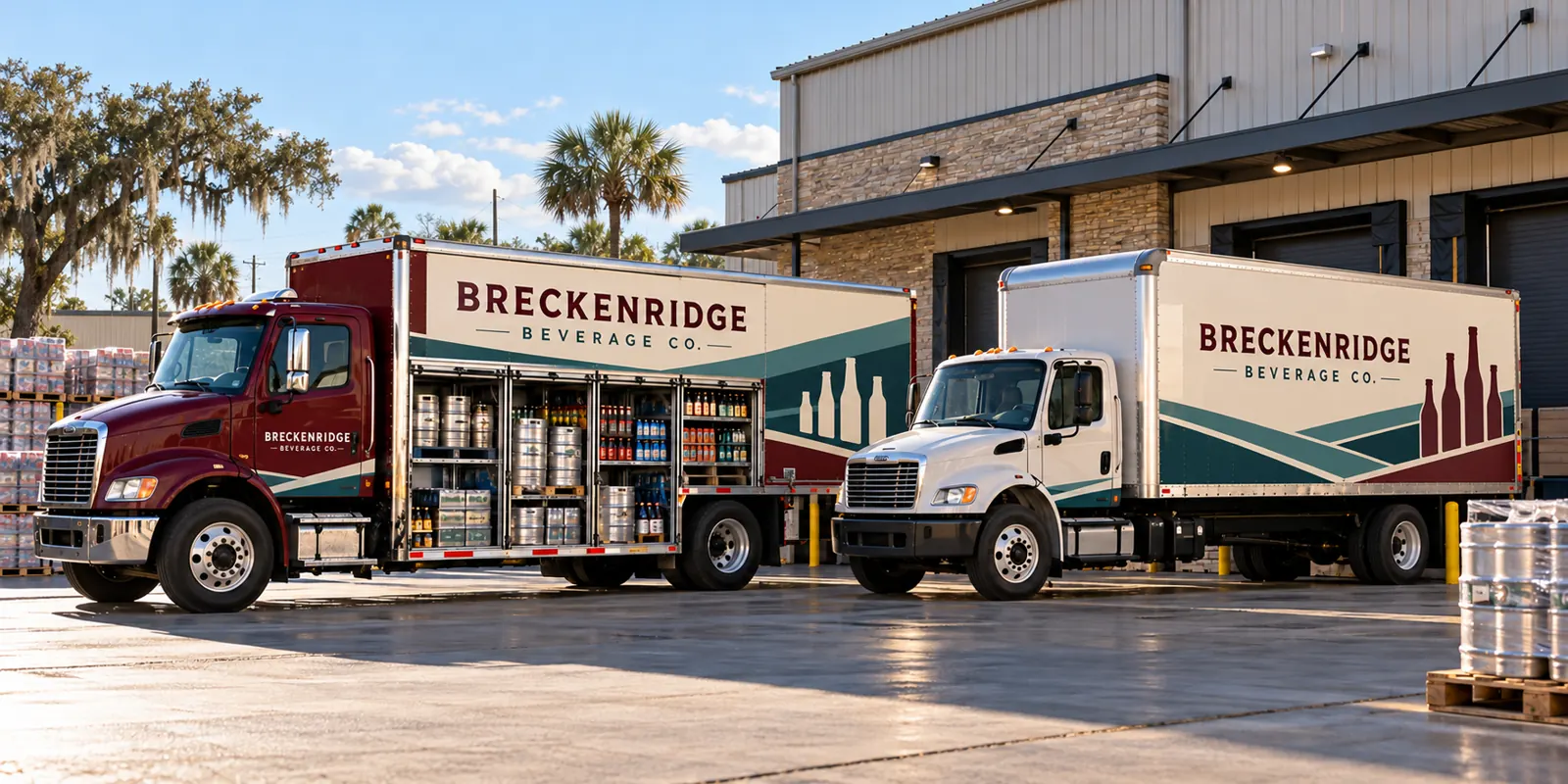
Fictional commercial wrap design concept; not a completed customer installation.
Decide whether the distributor or a product brand leads
Start with the commercial purpose of the fleet identity. Some distributors need customers to recognize the company that makes the delivery; others have approved product campaigns to display. Those goals should be stated clearly before layout work. Do not let a large product image accidentally obscure the business responsible for the route or make the contact route difficult to find.
Identify which brands and images the business is permitted to use, and who approves them. Supply current artwork rather than copying a bottle or logo from an unrelated source. The food and beverage overview covers broader sector choices. This page focuses on distribution fleets with several vehicle bodies and brand-approval relationships.
Inventory the actual delivery equipment
List side-bay trucks, box trucks, vans and other units separately, with quantity and configuration details. Photograph both sides and the rear of each version. Include bay doors, latches, refrigeration equipment where fitted, liftgates and accessories. A vehicle model name alone may not describe the delivery body or its usable graphic panels.
Distinguish standard fleet versions from unusual or older bodies. Record which vehicles have existing campaigns, operator graphics or plain paint. The artwork and scope should reflect those differences. For the body-specific route, use box trucks or refrigerated delivery trucks when those configurations are part of the equipment list.
Build layouts around bay doors and loading hardware
A side-bay body divides the graphic surface into repeated sections. Review how business names, product images and contact details align with those divisions. A composition designed for a flat box panel may not transfer cleanly across multiple doors. Use the actual closed-body photographs and explain the normal loading setup.
Rear views need their own review around hinges, door splits and liftgate components. Identify access areas, labels and equipment information that must remain clear. The graphic scope should state the included surfaces and exclusions rather than assuming every part shown in a photograph is suitable for branding.
Create a repeatable system for corporate and campaign content
Define the elements that remain stable: distributor identity, core colors, contact route and vehicle identifier treatment. Then identify campaign content that may change. Keeping those roles clear can support future updates without redesigning the entire identity every time a product program changes. Any proposed replacement approach still needs review against the layout and material condition.
Use approved imagery and accurate wording. Do not add health statements, product certifications, market rankings or commercial claims merely because they make a concept look persuasive. Assign an approval owner for both corporate and supplied product assets. Keep a dated record of the final proof and the campaign version on each vehicle.
Keep different vehicle bodies recognizable as one fleet
A tall box, side-bay truck and smaller van can share a visual language while using different placement. Preserve the hierarchy and brand treatment, then adapt the composition to each body. Do not assume one print file fits the entire fleet or that a short van should carry all the detail possible on a large truck panel.
The fleet solutions page connects these decisions with quantities and phased rollout. If the distributor is changing identity, the fleet rebranding route can support a coordinated transition. Confirm the approved vehicle versions before adding later units to the same program.
Coordinate condition review and route availability
Share close photographs of old graphics, residue, repairs, peeling finishes and damaged panels. Existing campaign removal and preparation should be explicit in the scope. Graphics are not a repair for an underlying surface problem. Record known body changes so the proposal does not depend on outdated fleet photographs.
Identify priority trucks, delivery windows and the number that can be released at once. Clarify who transports the vehicles and handles access or collection. Build the route-coverage plan around the confirmed project arrangement. A phased rollout may be discussed, but its practical sequence should reflect the approved artwork, body differences and actual vehicle availability.
Prepare the distributor's project brief
Send the vehicle list, quantities, current photos, corporate artwork, approved product assets and essential wording. State whether the work is a new fleet identity, a campaign update or replacement graphics. Identify who can approve corporate content and any other supplied brand content. Include condition issues, coverage preferences and the timing you want considered.
Review the artwork guidelines and request a beverage-fleet graphics quote. Retain the final vehicle and campaign references for future updates. The trucks shown here use a fictional distributor identity; they are design concepts rather than completed customer projects or evidence of a relationship with a beverage brand.
Frequently Asked Questions
Turn Your Vehicle Details Into a Clear Project Brief
Send current photographs, vehicle quantities, logo files, coverage preferences and timing. Identify old graphics and paint concerns so the project review can address the actual equipment.
Explore planning resources or request your commercial wrap quote.
