
HVAC, Plumbing & Electrical Fleet Graphics
Your service vehicle should identify the business before a technician reaches the door. Pelican Wraps plans trade-focused fleet graphics for HVAC, plumbing and electrical companies, with clear service messaging and a repeatable identity across vans, pickups and box trucks. Begin with the work you want to attract and the equipment your crews actually drive.
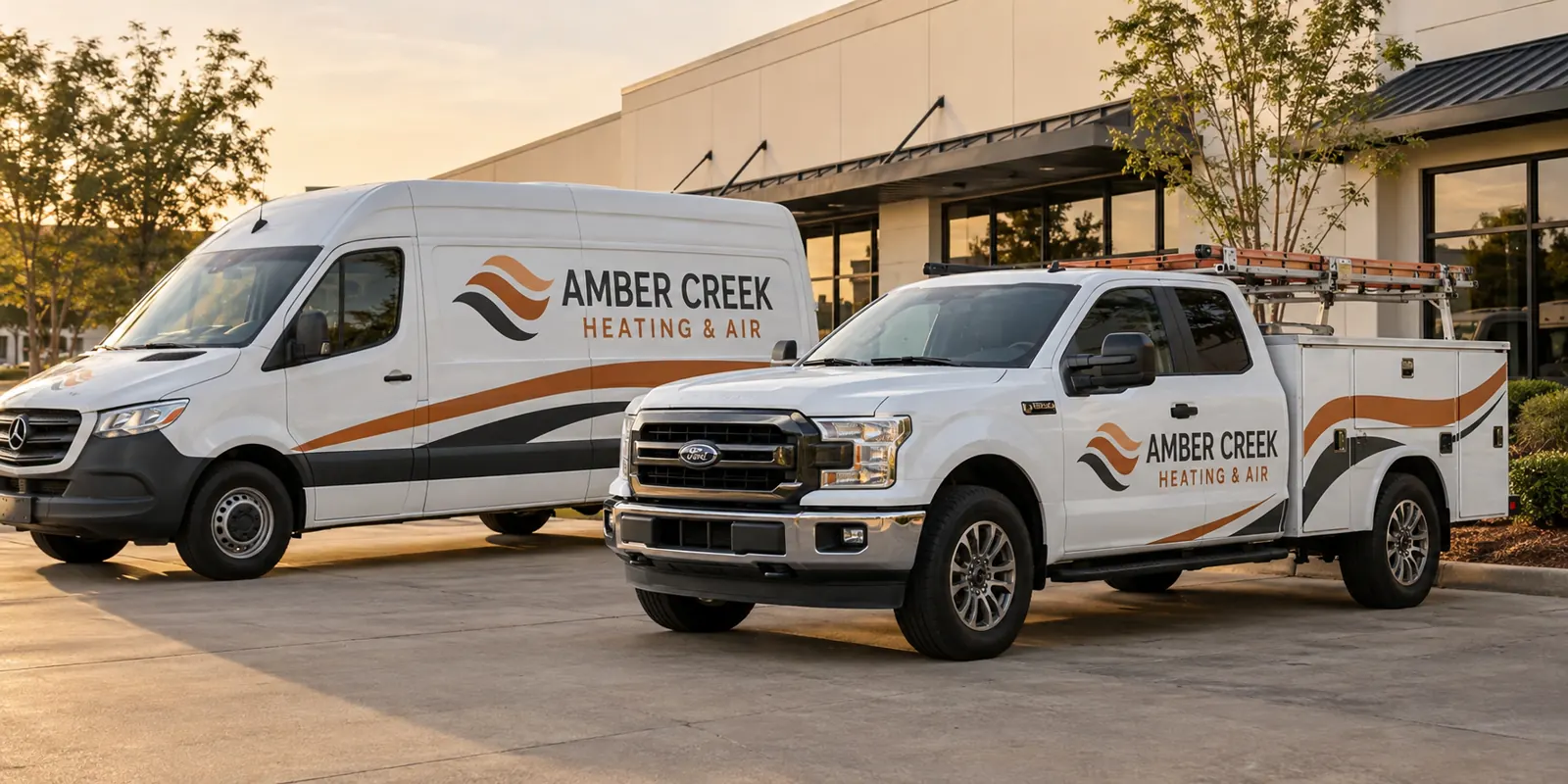
Fictional commercial wrap design concept; not a completed customer installation.
Make the trade and company name clear together
A customer seeing a service van should understand both who the company is and what kind of help it provides. Establish that relationship before adding a long list of services. An unfamiliar company name may need a strong trade description; an established name may need more disciplined placement so the identity stays recognizable across the fleet.
Choose an accurate primary message. If HVAC replacement, commercial electrical service or plumbing repairs are the priority, say so clearly. Avoid squeezing every specialty onto the same panel. Supporting service information belongs where it can be read without competing with the name and main contact route.
Map how the service vehicle is used
Service vans operate in driveways, loading areas, parking lots and traffic. The side view and rear view have different audiences. Give the side a strong company identity and use the rear deliberately for the contact information or message people should remember while following the vehicle.
Photograph sliding doors, rear windows, ladder racks, storage access, handles and body damage. Show doors open as well as closed when that changes the visible message. The graphics should fit a working service vehicle, including the hardware that stays on it during daily calls, rather than an empty template with those details omitted.
Keep mixed vehicle models looking like one business
A compact service van, a high-roof van and a parts-delivery box truck offer different proportions. Create a shared hierarchy for the name, colors, trade wording and contact route, then adapt the layout to each body. Consistency comes from those decisions, not from stretching one artwork rectangle until it fills every template.
Record the models and body versions before asking for a fleet estimate. Include new purchases and the vehicles expected to leave service soon. This inventory helps distinguish a repeat installation from a new adaptation and supports a rollout that follows the useful life and availability of the equipment.
Choose full wraps, partial coverage or lettering
Full coverage may suit a major appearance change or a fleet with conflicting original paint colors. Partial wraps can incorporate suitable paint into the design, while lettering and selected printed graphics can support a restrained identity. Compare the actual proposed layout before treating any coverage category as the automatic winner.
Condition matters. Disclose peeling clear coat, rust, repaired panels, old adhesive and unusual finishes. Graphics do not repair an unstable surface. If the vehicle is leased, confirm the owner’s restrictions and end-of-term expectations before committing to the coverage and removal arrangement.
Approve business wording before the print file
Give the designer the exact approved company name, services and contact details. If the fleet carries license information, membership marks, financing claims or another qualification, have the appropriate company contact verify the wording and permission to use it. A visually convincing badge should never substitute for evidence that the business can actually make the claim.
Keep one proof approver for the fleet. Check phone digits, spelling, web addresses and unit identification on every version. A layout may be correct for one branch or department and wrong for another, so document those differences rather than relying on a verbal note after approval.
Install in phases around technician availability
List the units that can be released without disrupting every crew at once. Identify whether removal or preparation is included and which vehicle will serve as the pilot. Artwork approval, production and installation are separate milestones; the schedule should reflect all three instead of assuming a vehicle can arrive while the design is still changing.
For an expanding service company, keep the approved file version and installation record for each body type. A later van addition can then begin with a known standard. Fresh photographs are still needed because racks, doors and body changes may require a revised layout.
Prepare a quote that reflects the actual service fleet
Send the logo, fleet inventory, photographs, service priorities, contact details and desired timing. Identify whether the work is a rebrand, a first branded vehicle or additions to an existing program. If an earlier provider created the graphics, explain which files are available and whether you have permission to use them.
Explore commercial van wraps, service-body truck graphics and box truck wraps for equipment-specific questions. For a coordinated multi-unit program, use the fleet wrap planning page. Pelican Wraps reviews local commercial projects from Harvey; confirm the vehicle and schedule details before arranging delivery.
Frequently Asked Questions
Turn Your Vehicle Details Into a Clear Project Brief
Send current photographs, vehicle quantities, logo files, coverage preferences and timing. Identify old graphics and paint concerns so the project review can address the actual equipment.
Explore planning resources or request your commercial wrap quote.
