
Landscaping Company Truck & Trailer Wraps
A landscaping crew's pickup and trailer often spend hours in the neighborhoods it serves. Clear, coordinated graphics help residents recognize the company and understand the type of work it wants to win. Pelican Wraps plans commercial branding around the truck, trailer, equipment access and real operating routine of your landscape business.
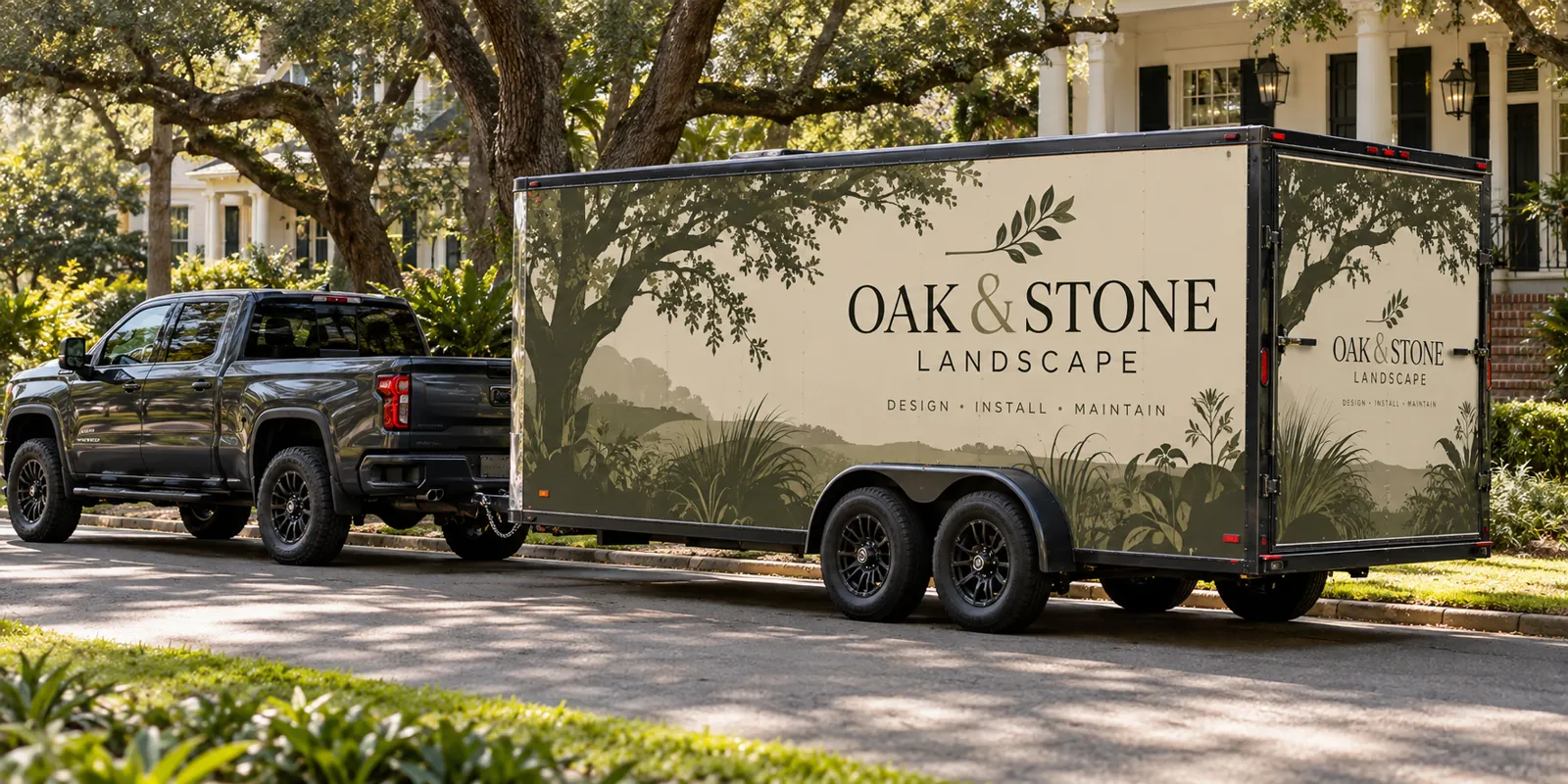
Fictional commercial wrap design concept; not a completed customer installation.
Lead with the kind of landscaping work you want
A landscape design-and-installation company and a weekly lawn-maintenance crew may use similar equipment while selling different services. Start by choosing the primary message. If the goal is larger landscape projects, give design and installation the strongest role instead of filling every panel with a long list of small maintenance tasks.
Keep the company name and service category easy to recognize together. Use supporting wording to qualify the offer when it helps: installation, landscape maintenance or another accurate specialty. The graphics should help a person identify a relevant business quickly, then remember one practical way to contact it.
Design the truck and trailer as a connected pair
The pickup establishes the identity when the trailer is detached. The trailer supplies a larger uninterrupted brand surface. Share the color system, logo and message hierarchy, but adapt each composition to the space available. A small pickup door should not carry the same information density as a tall enclosed-trailer side.
Photograph the complete combination from both sides and the rear. Include the trailer’s shape, fenders, diamond plate, handles and existing graphics. If trucks and trailers are exchanged between crews, make each unit independently recognizable rather than relying on a permanently matched pair.
Make equipment access part of the proof
Landscaping trailers have working doors and ramps that can hide graphics during loading. Show the designer how the equipment is opened and parked. Put the most important name and service wording on surfaces that remain useful in the positions where neighbors are likely to see the crew.
Review side doors, rear latches, ventilation and any storage compartments. A clean mockup on an imaginary blank trailer is not enough. The final proof should account for the actual unit and identify the boundaries of the printed panels, lettering and any surfaces excluded from the work.
Choose coverage around the existing finish
A full wrap can create a broad visual change, while partial graphics can incorporate suitable factory paint into the design. Large lettering and selected printed panels may also suit a disciplined commercial identity. Compare those options against the body condition, desired appearance and future fleet additions.
Send photographs of scratches, fading, old adhesive and repaired areas before choosing coverage. A wrap does not repair corrosion or unstable paint. If the fleet includes different paint colors, decide whether the design can accommodate them or whether a more extensive coverage plan is necessary for consistency.
Use landscaping imagery with restraint
Plant imagery can support the brand, but it should not compete with the name. A tightly cropped plant texture, a simple landscape illustration or a well-chosen project photograph can establish the trade while leaving room for clear lettering. Avoid putting detailed photos behind every line of text.
If you supply project photography, identify whether you own the images and have permission to use them commercially. Use work that represents the services you actually provide. Concept visuals can help compare design directions, but they should be identified as concepts rather than presented as photographs of completed customer properties.
Plan a crew-by-crew rollout
List trucks and trailers by crew or unit number, then identify when each can leave service. Include any seasonal schedule limits and tell the provider whether old graphics need removal. Approve the artwork and scope before arranging vehicle downtime, and nominate one person to resolve design questions.
For a growing business, keep a record of which body versions use each file. A replacement trailer may have different panel proportions even if its advertised size matches the old one. Treat additions as an adaptation of an approved system, with fresh photographs and a check of the actual unit.
Turn the next inquiry into a clear project brief
Send your logo, approved wording, vehicle inventory, current photographs, desired coverage and timeline. State whether the priority is landscape installations, maintenance contracts, tree-related work or another actual service. That business context helps the graphics support the jobs you are trying to attract.
Compare pickup truck graphics with commercial trailer wraps, then review the photo upload checklist. Pelican Wraps is based in Harvey and can review a local crew’s equipment combination before finalizing its production and installation plan. Start through the quote form and identify any preparation questions that remain open.
Frequently Asked Questions
Turn Your Vehicle Details Into a Clear Project Brief
Send current photographs, vehicle quantities, logo files, coverage preferences and timing. Identify old graphics and paint concerns so the project review can address the actual equipment.
Explore planning resources or request your commercial wrap quote.
