
Liftgate Delivery Truck Branding Layout
A liftgate delivery truck branding layout must account for the equipment that changes the rear view. The side panels, rear doors and lift equipment are separate parts of the visual problem. Document the actual configuration and ordinary parked states before approving placement. This page helps a buyer prepare the layout review; equipment operation, safety information and technical suitability remain with the appropriate project and fleet owners.
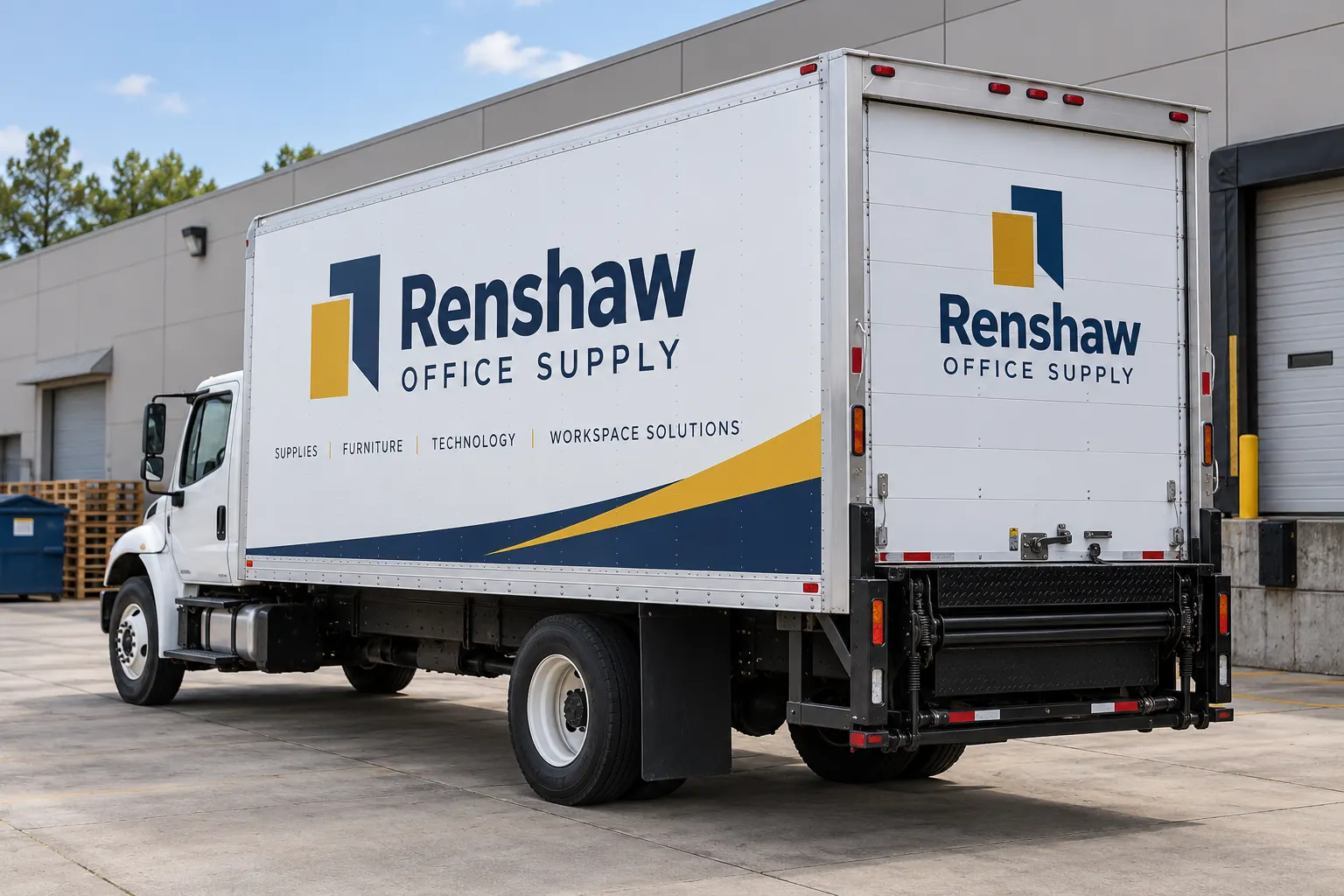
Original fictional commercial planning concept; not a completed customer installation.
Define the rear-view question before requesting artwork
Write down what the company needs someone to recognize from the rear: the business name, an accurate service category and the approved contact action. Identify the normal viewing situation, such as a parked receiving area. Do not assume every element of the side design belongs on the back. The available space and obstructions may differ substantially.
Describe what the liftgate obscures in its normal stored position. Use actual photographs and identify the equipment model where known. A generic box-truck template may show an uninterrupted rear that your truck does not have. The first useful decision is which real areas can carry the essential message without relying on an imagined empty surface.
Collect a configuration-specific photo package
Provide clear side, rear and rear three-quarter photographs, plus close views of relevant doors, handles, hinges, tracks, lights and equipment. Ask the authorized fleet contact to supply any additional safe configuration views needed for assessment. Do not ask untrained staff to move lift equipment merely to obtain a design photograph. Use the company’s normal operating process for equipment access.
Identify the unit and actual body. A chassis year and model do not establish the delivery box or liftgate arrangement. If the equipment will be changed, explain the intended configuration and what remains unconfirmed. Keep the layout dependent on the actual information rather than silently using the current temporary arrangement as the final specification.
Map essential wording to the relevant fixed areas
Review whether the business name and contact route remain coherent on the surfaces proposed for treatment. Identify door splits or equipment that interrupt letters. Ask the designer to show the essential rear message separately from decorative elements. A visually continuous stripe may be optional, while a divided or hidden contact line can undermine the intended action.
The fictional Renshaw Office Supply truck illustrates side and rear identity around a visible stored liftgate. The concept is not a measured template, an equipment approval or a completed installation. Your actual layout needs the real body information and review of the proposed areas. Do not infer a suitable treatment for lift equipment from the illustration.
Keep equipment information outside the branding decision
Have the responsible fleet contact identify labels, controls, reflectors, lights and other information or features that must remain visible and unchanged. Supply their requirements and any relevant equipment instructions through the normal project channel. The commercial artwork review should not guess whether a particular component can be covered, moved or reproduced.
If someone proposes graphics on equipment itself, identify that as a specific open assessment rather than assuming it is included with the rear doors. Ask the provider what can be reviewed and what information is needed. A large rear concept image should not quietly expand the scope from body panels into working equipment or imply approval for an unassessed surface.
Review the side identity independently
The broad side can establish the company name and service category even when the rear is more constrained. Review its actual panel divisions, rails, doors and known surface condition. Keep the side and rear messages coordinated without forcing the exact same composition onto both. Each should support the approved hierarchy within its own relevant surfaces.
If the fleet includes several delivery bodies, identify which side and rear versions apply to each. A truck with another liftgate arrangement may need a different rear proof while retaining the same side direction. Record these differences in the unit list so a later reorder does not use the most convenient file regardless of equipment.
Compare quotes by included surfaces and review work
State whether the request covers cab doors, box sides, rear doors or other defined areas. Identify quantities, body versions and existing graphics. Ask how artwork adaptation, removal work, condition assessment and installation arrangements are addressed. Keep any proposed equipment treatment separately described until its availability and suitability have been assessed.
Compare the scope descriptions with the totals. Two proposals can display similar side mockups while differing in the rear work, number of body adaptations or removal assumptions. Ask questions against those concrete differences. Do not choose a total under the assumption that every visible area in a concept rendering is automatically included.
Use a layout review record before release
Record the unit, liftgate and body references, photograph set, essential rear message and areas requiring further assessment. Have the business approve the wording and the fleet contact verify the configuration and information to preserve. Keep those decisions distinguishable from the provider’s technical review and the actual authorization for production.
When a concern is found, point to a feature and a specific consequence: the stored equipment hides the lower contact line, or a door split breaks the company name. Assign the next action and retain the revised proof reference. A factual review record is easier to resolve than a general comment that the back needs to look better.
Send a project inquiry that includes the rear equipment
For Pelican Wraps, provide the actual body and liftgate information, safe current photographs, approved brand files, requested areas and quantities. Identify equipment features and information that must remain unchanged through the responsible fleet contact. Include vehicle release constraints and open configuration questions. Ask for the proposed work to be assessed rather than assuming a generic rear layout defines it.
Use the broader box truck and logistics pages for overall fleet choices. The working record below helps keep this request focused on the liftgate-related layout question. Download the text and retain the supporting photographs and instructions through your own process. It is a preparation record, not an equipment operating guide or confirmation that a particular surface can receive graphics.
Draft and Download Your Working Record
Draft your entry, then download a copy before leaving. Send any project decision through the communication process agreed with your supplier.
Frequently Asked Questions
Take the Next Step with a Clear Project Brief
Continue with the resource that matches your next decision:
- Box Truck Wraps
- Logistics & Delivery
- Box Truck Fleet Branding Standards
- Commercial Vehicle Photo & Measurement Guide
- Request a Quote
Send the actual vehicle or surface photographs, quantities, approved brand files, requested coverage and timing constraints. Identify open questions so the project review can address your equipment and business needs.
