
Commercial and Charter Boat Wrap Design: Plan Around the Actual Vessel
Build the operator identity around hull geometry, dockside viewing and the vessel working environment. Commercial marine graphics need an actual application and product review; a recreational-boat illustration or material reference does not establish suitability for a charter or workboat.
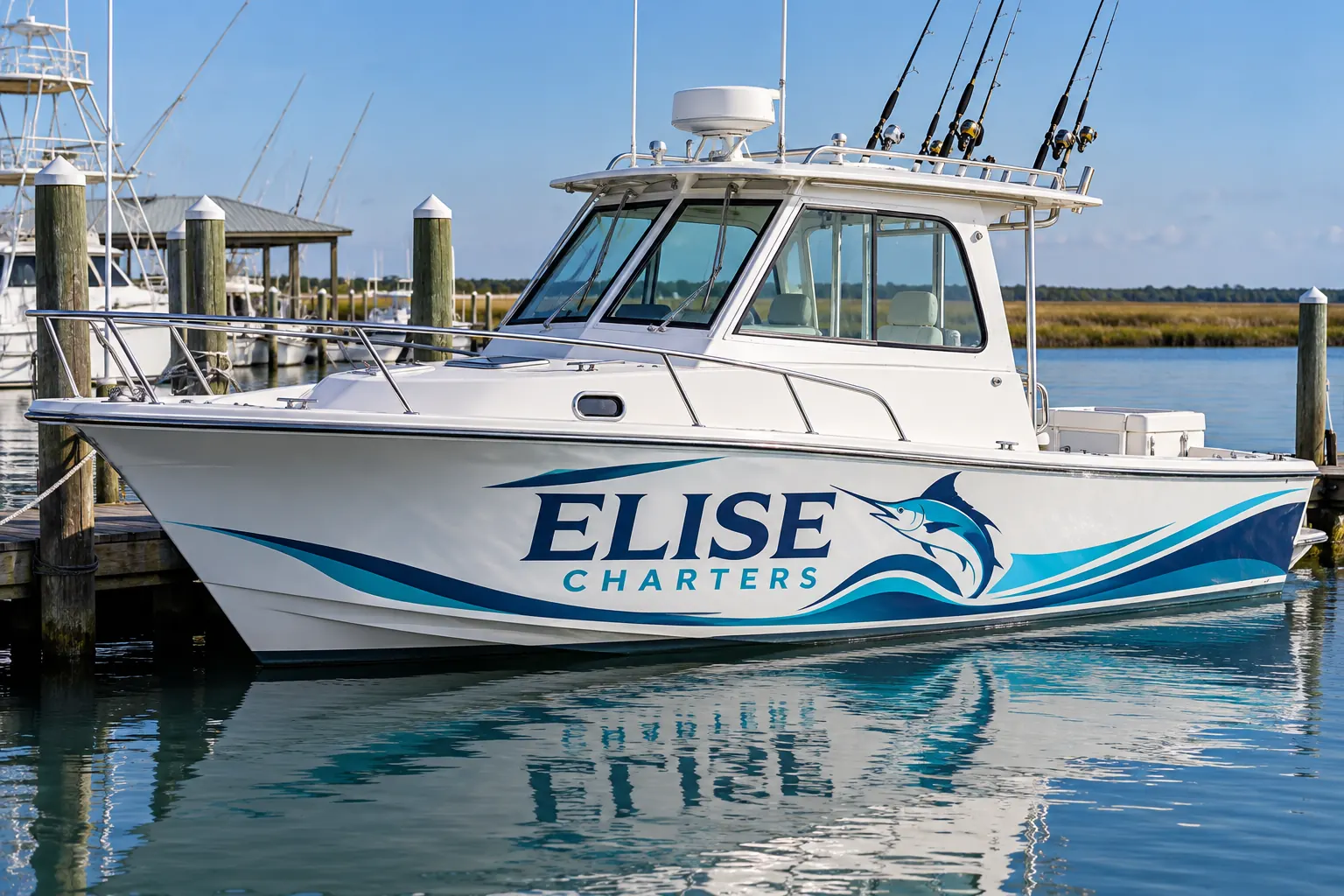
Fictional commercial wrap design concept; not a completed customer installation.
Define the commercial use and message before the artwork
Identify the actual vessel, operator and service the graphics should communicate. A charter fishing boat, sightseeing vessel and marine workboat may have different identity priorities and operating conditions. Use the approved business wording and choose a clear booking or contact route where it belongs in the design.
Record the vessel dimensions, make or model if known and intended coverage. Keep the business identity distinct from required vessel information that the responsible operator must identify and approve. The graphics project should communicate the real operator and service, without inventing maritime qualifications, endorsements, customers or results to make the design appear established.
Survey port, starboard and other intended areas separately
Photograph both hull sides and any additional proposed graphic surfaces. Include rails, fittings, rubbing areas, drains, openings, access points and equipment. Record how the vessel is normally viewed from the dock and where fenders or other items can obscure the identity. A stock side profile may not represent the actual working arrangement.
Use a connected photo and dimension record with estimates clearly labeled and final fit responsibility agreed. Do not assume port and starboard are perfect mirror layouts. The business identity can remain consistent while placement adapts to the actual available areas. The artwork guide supports the source-file handoff, while the vessel survey defines where that identity can be fitted.
Check the scope of manufacturer guidance carefully
The 3M watercraft application bulletin explicitly defines a recreational scope and excludes boats used for commercial or business enterprises. It should not be treated as automatic approval or warranty coverage for a charter or workboat. Confirm the actual commercial application with the proposed product provider and technical review.
Identify the substrate, paint or gelcoat condition, previous repairs and existing graphics. Provide the operating environment, intended coverage and relevant exposure to water, abrasion and cleaning. A general marine product category or a handsome illustration cannot establish that every hull surface and commercial use accepts the same material system. Keep the specific product suitability and accepted limitations in the project scope.
Make the waterline and working contact areas explicit
Show the static waterline and the intended coverage boundaries in the survey and review. Identify areas exposed to fenders, dock contact, lines, equipment or repeated handling. Graphics are not an underwater coating or structural repair, and the design should not imply that a decorative printed area solves those different jobs.
Review the proposed system and commercial application requirements before approving coverage near those boundaries. Do not infer permanent-submersion suitability from a general vehicle-film description. The illustration here is a fictional branding concept rather than a fitted material specification. The actual vessel and proposed construction need their own review, with exclusions and responsibilities recorded before production or related access arrangements are treated as confirmed.
Build dockside recognition with a restrained hierarchy
Give the operator or vessel identity enough clear space to be recognized in the intended setting. Choose supporting service wording and a contact action deliberately. Several competing destinations or detailed decorative scenes can weaken the identity when the hull is viewed at an angle or partly obscured by ordinary marina equipment.
Review the composition against actual photographs and measurements, including the normal dock position. Check wording and the supplied destination separately from appearance. Keep required vessel information visible under the responsible operator review. Use the marine graphics service route to connect the design discussion with the actual surface, product and installation scope rather than approve a generic hull mockup in isolation.
Confirm access, preparation and vessel availability
Identify where the vessel is kept and the access available for inspection and the proposed work. Discuss any movement, haul-out, marina consent or work-area arrangements through the responsible parties. An enquiry or artwork approval does not automatically book those services or establish that installation can happen at every berth.
Record known finish treatments, repairs and preparation concerns for review. Keep technical preparation tied to the actual selected system and commercial application rather than copy a generic automotive cleaning process onto every marine surface. Define the people who can approve changed conditions and scheduling decisions so the project has a clear handoff when the physical vessel differs from the earlier information.
Retain a vessel-specific standard for care and later work
Keep the accepted artwork, coverage boundaries, product references, relevant application confirmations and installed photographs with the vessel record. Retain care guidance for the actual installed system and identify the owner of inspection and issue reporting. Later damage or equipment changes should be reviewed against current photographs as well as the original files.
For the first discussion, send a commercial marine brief with the vessel details, intended use, finish information, photographs and timing. For the broader business story, see charter-operator planning. A useful design process preserves recognition while keeping commercial application suitability, access and operator responsibilities explicit.
Frequently Asked Questions
Turn Your Vehicle Details Into a Clear Project Brief
Send current photographs, vehicle quantities, logo files, coverage preferences and timing. Identify old graphics and paint concerns so the project review can address the actual equipment.
Explore planning resources or request your commercial wrap quote.
