
Charter Boat Wraps for Gulf Coast Operators: Connect the Vessel with the Business Brief
Plan commercial marine identity around the actual operator, vessel and customer contact route. Separate the marketing decision from product suitability, working-surface review and vessel access, then connect the accepted records in one commercial project brief.
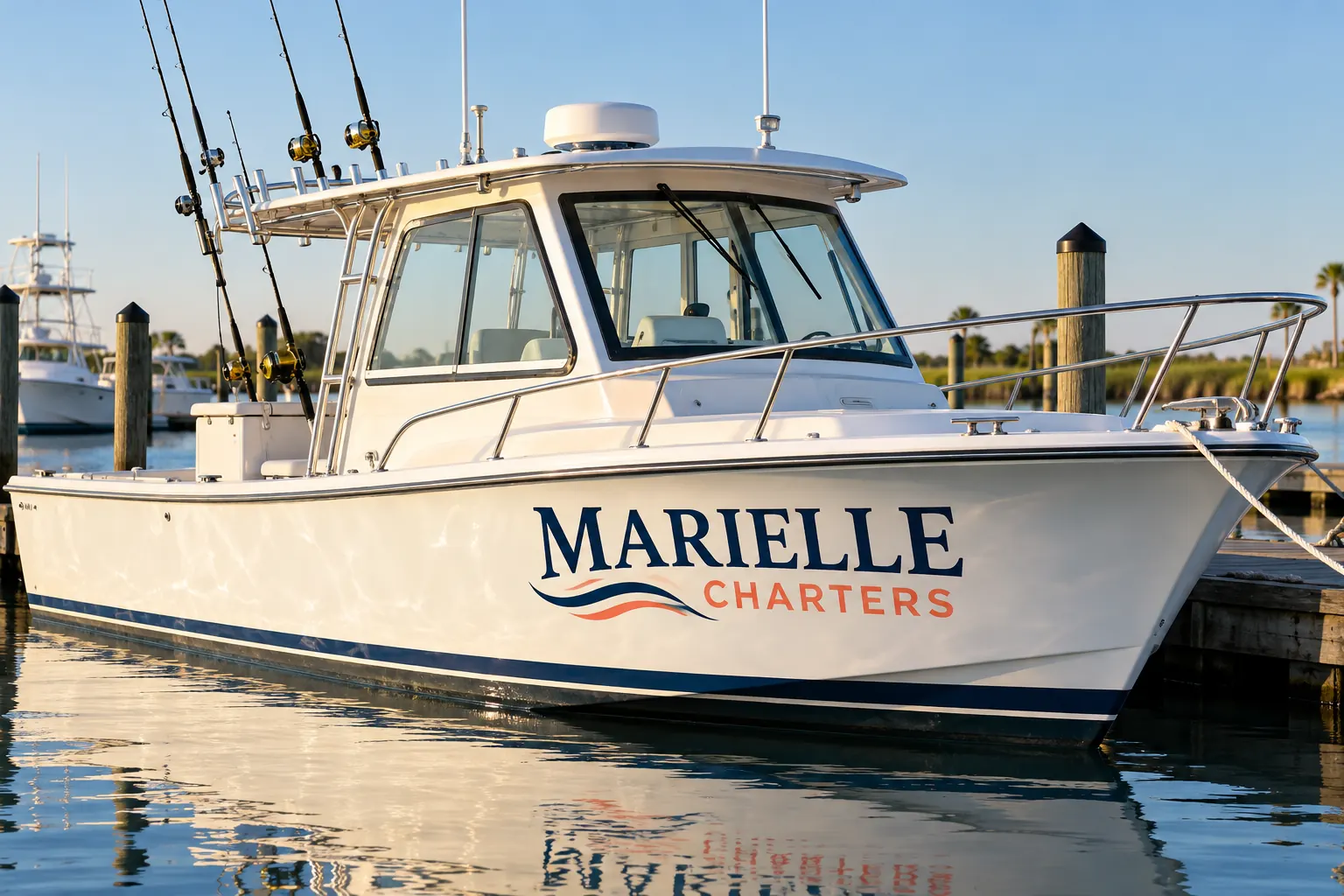
Fictional commercial design concept; not a completed customer installation.
Choose the identity customers need to recognize
Clarify how the operator business name, vessel name and service context should relate in the optional graphics. Use approved wording and decide which element leads the commercial message. A buyer may recognize the operator from an online enquiry and then look for the same identity at the marina; the brief should explain that actual contact journey.
The fictional Marielle Charters image illustrates a restrained hull-side identity, not a real operator, installed system or documented customer project. Supply the actual business and vessel information and identify the responsible approver. Do not invent maritime qualifications, endorsements, customer reviews or booking results to give a visual direction authority. The design can communicate the real service without implying evidence that has not been supplied.
Connect vessel-side identity with the intended contact route
Choose the useful next action for someone viewing the boat in the intended setting. Confirm the actual supplied destination and decide how much supporting text the surface can carry clearly. The identity should work with the operator existing enquiry or booking process rather than assume the graphic itself creates that service.
Consider the normal dock position and what a visitor sees on arrival. Provide photographs from the relevant approach as well as the vessel faces. The buyer can then review recognition and placement in context. A concept viewed on a screen does not establish visibility from every berth, response from customers or a measured improvement in enquiries. Keep the intended marketing purpose distinct from unsupported performance promises.
Survey the actual commercial vessel and its working surfaces
Provide port and starboard photographs, relevant dimensions and intended coverage. Include rails, fittings, fenders, access points, equipment and areas subject to ordinary contact. Record the substrate, paint or gelcoat, repairs, finish treatments and previous graphics where known. Label estimates and gaps in history for review.
Use the commercial boat design guide for the more detailed placement questions. Port and starboard may share an identity while requiring different fitted layouts. A generic recreational hull outline is not a verified survey of the actual commercial vessel, and a broad white surface in a photograph does not independently establish product suitability or readiness.
Review commercial suitability without borrowing recreational approval
The 3M watercraft application bulletin defines a recreational scope and excludes boats used for commercial or business enterprises. Do not use that document as automatic approval or warranty evidence for a charter or workboat. The proposed commercial application and selected product need their own relevant technical review.
Describe the actual use, intended coverage and exposure, including the waterline and contact areas that matter to the project. A generated image can show a business identity but cannot select the material system. Keep the product reference, relevant confirmations and accepted limitations in the actual scope rather than treat a general marine category as an approved solution for every commercial vessel.
Preserve required vessel information and working access
Have the responsible operator identify information, markings and equipment that must remain clear. Keep optional marketing identity distinct from those requirements and review both hull sides and any other proposed faces. Name the person accepting the supplied vessel and business data rather than assume a brand-style approval confirms the operational details.
Use the artwork guide for source-file handoff. Retain separate layout, wording and fit decisions. This article does not classify maritime requirements or certify a vessel arrangement. The actual operator and technical process must resolve the relevant information and clear areas before optional graphics become a production instruction.
Make marina, movement and work arrangements explicit
Explain where the vessel is kept and what access is proposed for inspection and the work under discussion. Identify the responsible contacts for movement, any marina consent and work-area arrangements. Do not assume every berth offers the same access or that artwork acceptance books related services.
Explore the marine graphics service for the actual enquiry route. Ask the response to distinguish design, removal, preparation, production, installation and related arrangements where applicable. Mark unresolved condition and commercial suitability questions. A useful scope explains what has been accepted and what still needs confirmation, without promising a universal dockside process, haul-out inclusion or installation duration.
Retain a vessel record that supports care and later changes
Keep approved artwork, fitted layouts, supplied product references, relevant commercial-application confirmations and installed photographs with the vessel record. Provide the care guidance for the actual supplied system to the responsible contact. If equipment, finish or identity changes, review current photographs before ordering a repeat from an older file.
To begin, send the charter-operator brief with vessel details, intended use, photographs, identity files, coverage and timing. State the actual access contacts and open questions. The goal is an agreed application and commercial scope connected to the operator identity, without claiming a completed Marielle project, a guaranteed material life, warranty qualification or measured increase in bookings.
Frequently Asked Questions
Turn Your Vehicle Details Into a Clear Project Brief
Send current photographs, vehicle quantities, logo files, coverage preferences and timing. Identify old graphics and paint concerns so the project review can address the actual equipment.
Explore planning resources or request your commercial wrap quote.
