
DOT Markings and Unit Numbers: Keep Carrier Data Separate from Branding
A company logo, an internal unit identifier and required carrier markings serve different purposes. Establish which requirements apply to the actual operation, confirm the current issued information and approve its placement alongside the optional commercial identity.
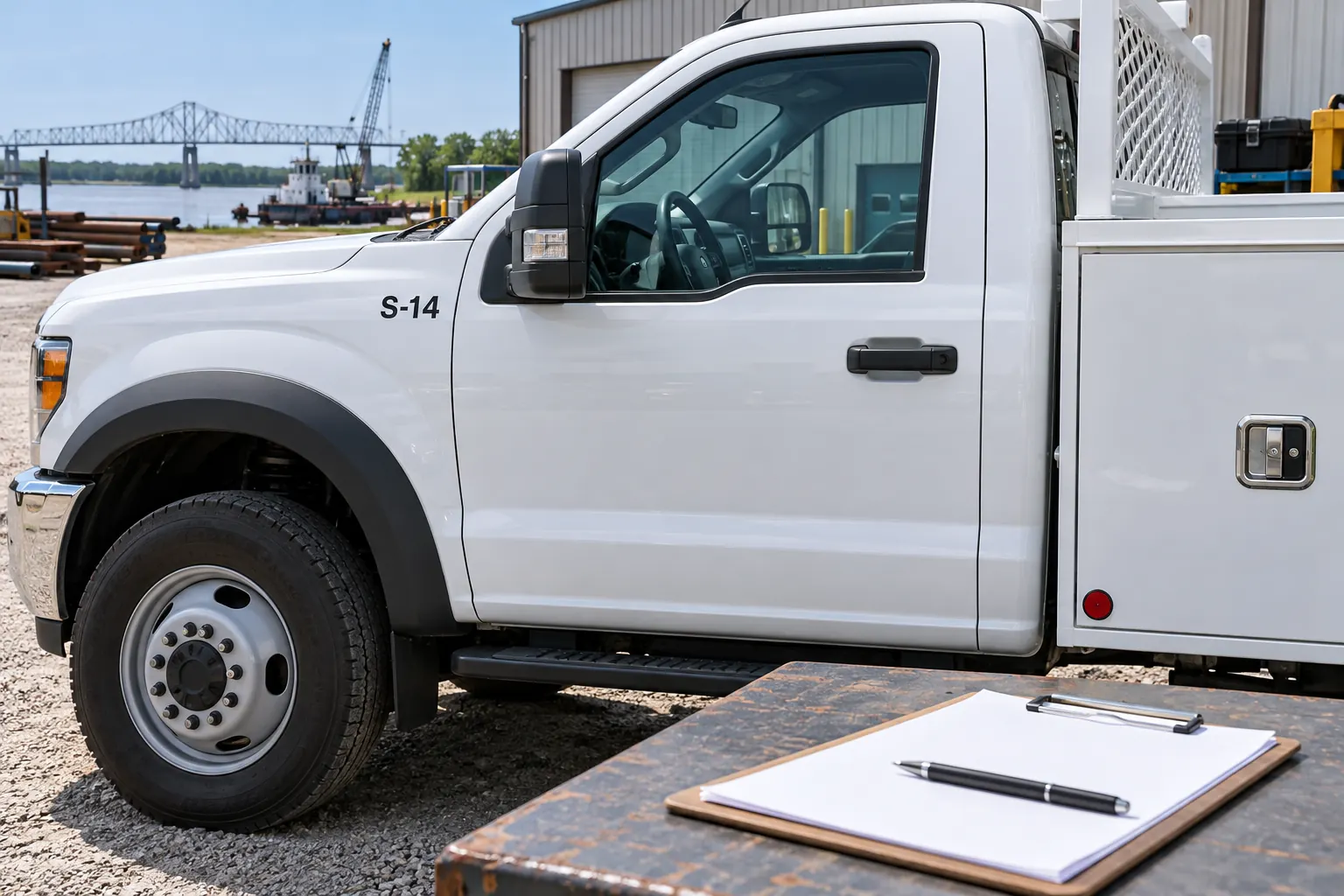
Fictional commercial wrap design concept; not a completed customer installation.
Identify the operation before choosing the marking content
Ask the responsible carrier or fleet contact which requirements apply to the actual vehicle and operation. Record the operating entity, vehicle configuration and intended use before preparing a marking file. Avoid assuming every commercial-looking pickup has the same requirements or that a logo approval establishes the applicable carrier rules.
The graphics brief should identify who supplies and approves regulated information. Keep that role separate from the person choosing brand colors if the responsibilities belong to different people. When an answer is uncertain, mark the item for the operator review rather than invent a plausible carrier number or borrow information from another unit. A useful artwork process begins with correct source data, not a convincing-looking mockup.
Use the current official requirement as the reference
For self-propelled commercial motor vehicles subject to the relevant federal subchapter, 49 CFR 390.21 sets out carrier marking requirements. Its provisions include the carrier name and issued USDOT number, both sides, contrast and daylight legibility from fifty feet while stationary. Applicability and special provisions must still be reviewed for the actual operation.
Do not turn this guide into a claim that one generic decal satisfies every federal, state, rental or equipment case. The responsible operator should confirm the exact current content and requirements. The design task is then to carry those verified instructions into the relevant artwork, with the accepted reference and approval retained in the project record.
Distinguish an internal unit number from an issued identifier
An internal unit identifier helps the organization connect a vehicle to inventory, service and artwork records. The business controls that reference within its own system. An issued carrier identifier has a different origin and purpose. A unit code such as the fictional S-14 in the illustration is not evidence of a USDOT registration or compliant carrier marking.
Prepare a data schedule with separate fields for the business display name, operator-approved carrier wording, issued number where applicable and internal unit code. Avoid placing several unlabeled number columns into an artwork email and expecting the designer to infer their meaning. Clear field labels reduce the chance of copying an internal asset number into a regulated-information area or repeating another branch operator data.
Fit the verified information to both actual sides
Provide clear photographs and usable-area dimensions for the proposed marking locations. Identify door seams, handles, body accessories, existing graphics and other interruptions. Review both sides separately because equipment and usable areas can differ. A generic side outline does not establish that the final text remains readable on the actual assembled vehicle.
Coordinate the carrier information with the commercial identity without hiding one behind the other. The cited federal provision uses a legibility standard; this guide does not invent a universal two-inch letter rule. The responsible operator must confirm the accepted layout meets the applicable requirement. Keep that approval tied to the actual text, dimensions and placement rather than only a logo proof with unreadable placeholder lines.
Control operator changes and mixed-fleet exceptions
Record the operating entity and accepted marking set for each relevant vehicle group. A merger, lease, branch transfer or change in operating arrangement may require review even if the marketing identity remains familiar. Another company name appearing on the vehicle can raise additional questions under the applicable provisions; do not assume a co-branded layout needs no operational review.
Use the inventory worksheet to connect unit records with the accepted files. Identify rented or otherwise exceptional arrangements for their own review instead of applying one fleet-wide file blindly. A design standard should show which information is fixed and which data must be checked before each production release.
Approve the variable data independently from the design
Create a proof or schedule where the supplied carrier wording, issued identifier and unit code can be read and checked directly. Name the person accepting those entries and record the version and date. A designer can fit supplied information but should not silently certify that the business is registered, qualified or operating under a particular authority.
Check each unit row against the source record and flag missing information before production. Use the artwork handoff guide to retain editable master files and approved variants. Where an operational or regulatory question remains open, resolve it with the responsible carrier process before treating an attractive proof as a release instruction.
Keep markings legible and records current after installation
Retain installed photographs and connect them to the unit, accepted text and production version. Include marking condition in the relevant inspection routine and review changes to operator information. A correctly entered number in an old file does not establish that current markings remain readable or current after repairs, transfers and graphic replacements.
For a project enquiry, send the marking and identity brief with vehicle photographs, quantities and operator-approved data. For the wider identity, compare commercial vehicle lettering. The next step should define the actual data, fit and approval responsibilities so required information and optional business branding work together in the completed scope.
Frequently Asked Questions
Turn Your Vehicle Details Into a Clear Project Brief
Send current photographs, vehicle quantities, logo files, coverage preferences and timing. Identify old graphics and paint concerns so the project review can address the actual equipment.
Explore planning resources or request your commercial wrap quote.
