
Fleet Graphics RFP Template: Build a Response Suppliers Can Compare
Start with the editable template below, replace the prompts and attach the actual vehicle records. Use the surrounding guide to decide what the request must explain, which questions belong in the response and who will approve the final scope.
Edit and Download Your RFP Draft
Your entries stay in this page and are not saved or sent. Download your record before leaving. Use the quote form separately when you are ready to share information.
Replace the bracketed prompts, attach actual records and review the draft before issuing it. The download does not send a request or confirm supplier participation.
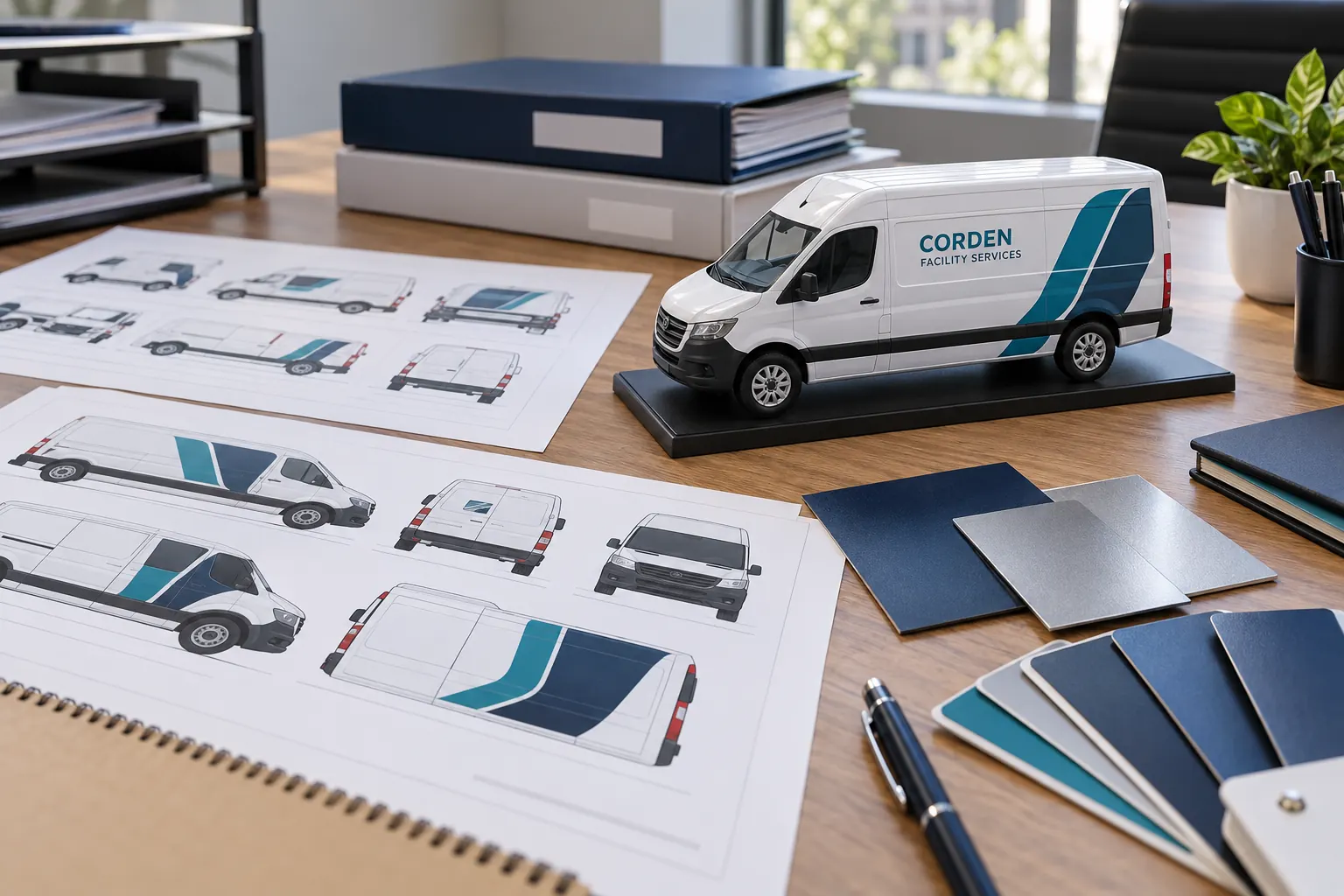
Fictional commercial wrap design concept; not a completed customer installation.
Choose an RFP when the proposed approach needs explanation
Use a request for proposal when you want suppliers to explain how they would organize design, product selection, configuration changes, vehicle release and the commercial scope. The buyer should still provide enough information to establish the actual project. An open request to wrap a fleet leaves too much uncertainty for a meaningful comparison of approaches.
For a more defined scope where the main task is confirming quantities and included pricing, use the RFQ readiness checklist. These resources have different jobs: this page gives you an editable request structure; the checklist tests whether the underlying facts and responsibilities have been recorded. Neither sends a solicitation or confirms that a supplier has accepted your dates.
Replace the project and inventory prompts with actual records
Identify the business, decision contact and reason for the project. Explain whether it is a new identity, a phased rebrand, an extension of an existing standard or replacement work. Attach a unit schedule with quantities and the relevant configurations, rather than provide a single total that combines vans, service bodies and trailers with different usable areas.
Use the inventory worksheet to organize the attachment. Label photographs by unit or genuine repeat group and distinguish estimated dimensions from verified measurements. Include old graphics, finish concerns and known repairs. A proposal can then say which assumptions need inspection instead of silently price every vehicle as a clean, identical blank surface.
Define the message and coverage without prescribing an imaginary fit
Provide approved identity files and describe the main commercial message. State the intended faces and approximate coverage and identify any unit, branch or operator data that changes. If the design scope is undecided, ask respondents to explain their proposed approach and the decisions still needed. Do not present an illustrative image as a verified production drawing.
Link the coverage request to the coverage comparison worksheet when you want to consider alternatives. Ask each option to identify its boundaries and exclusions. Full, partial and lettering are useful starting categories, but they do not independently define the exact panels, preparation, products or production files that the supplier would deliver.
Ask for a technical response tied to the actual application
Request the named proposed material system and relevant construction, along with the application assumptions and restrictions. Identify body details, working hardware and any required markings that need to remain clear. Give the respondent a way to list questions and required survey work instead of forcing an unsupported declaration that every unit is ready.
Ask how final measurements, paint concerns and configuration exceptions would be resolved before production. Keep the responsible operator approval of regulated information separate from the brand artwork review. The RFP should expose these dependencies clearly enough for the buyer to compare responses. It should not pretend that a product category, stock outline or attractive concept establishes technical suitability for every fleet asset.
Request itemized scope and proposed release assumptions
Ask respondents to distinguish one-time design or setup work from vehicle-specific items and relevant removal, preparation, production and installation. Identify access, transport, taxes and optional work where applicable. Unknown or provisional amounts should be labeled rather than hidden inside an apparently complete per-vehicle figure. This makes differences easier to resolve before a purchasing decision.
Provide proposed vehicle release windows and the people who control access. Request the supplier availability and assumptions rather than declare a schedule accepted by issuing the document. Use the planning resource hub to connect the request with rollout and timeline records. A useful response explains dependencies and capacity questions alongside the commercial amount.
Set evaluation and approval responsibilities before comparing responses
Choose the buyer criteria and who will make the decision. Consider equivalent coverage, technical clarity, unresolved condition, deliverables, release arrangements and commercial exclusions. If you use weights, define them yourself before evaluation rather than adopt an arbitrary score from a template. Keep clarification answers attached to the response they change.
Name the people who can accept brand artwork, variable data, final measurements and release instructions. Ask how changes after approval would be recorded. A proposal evaluation should make the actual tradeoffs visible; it should not reward a low amount that omits essential work or imply that a high score is independent product approval. The final accepted scope still needs a clear written record.
Download, review and share through your chosen purchasing process
Edit the working draft in the browser and download a text copy before leaving. Your entries are not stored or sent by this worksheet. Replace all bracketed prompts, attach the records and review the response instructions before using your own purchasing route. The template is a starting structure and does not issue a government solicitation or create supplier commitments.
For a Pelican Wraps enquiry, send the actual project brief with inventory, photographs, identity files and target timing. Identify open questions so they can be discussed in the scope review. Retain the issued version, attachments, responses and agreed clarifications together so the final production handoff can be traced to the decisions that shaped it.
Frequently Asked Questions
Turn Your Vehicle Details Into a Clear Project Brief
Send current photographs, vehicle quantities, logo files, coverage preferences and timing. Identify old graphics and paint concerns so the project review can address the actual equipment.
Explore planning resources or request your commercial wrap quote.
