
Roofing Truck and Trailer: A Planning Example for a Separable Brand Pair
This fictional contractor scenario coordinates a pickup and enclosed trailer that may be seen together or separately. It shows how a shared identity can retain a clear message on each asset while keeping fit, condition and release records distinct.
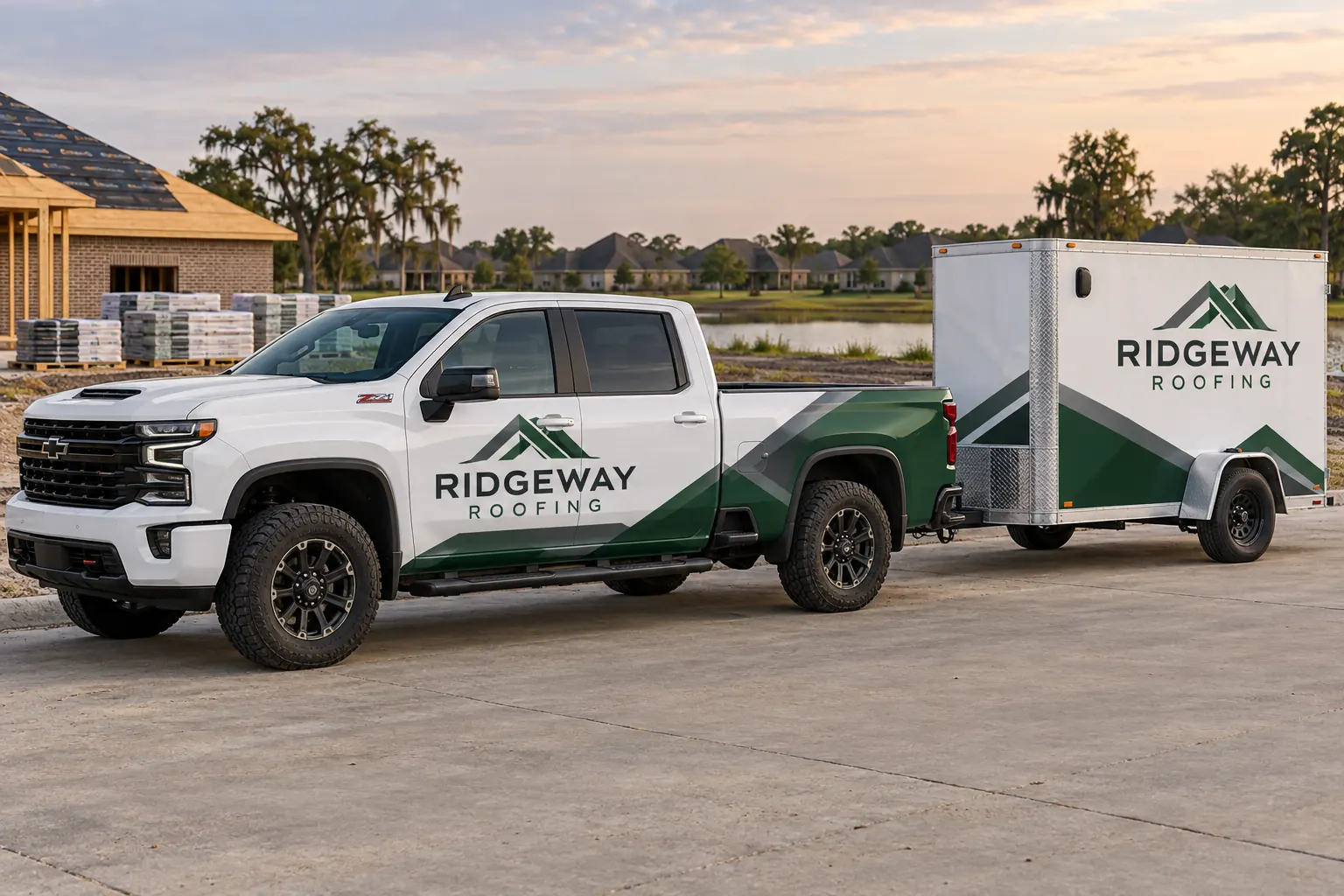
Fictional project-planning illustration; not a completed customer installation or measured project result.
Scenario: one contractor, two assets that do not always travel together
Consider a roofing business that uses a crew-cab pickup and an enclosed work trailer. The fictional Ridgeway Roofing image illustrates a related graphic family on both. The planning question is how each asset communicates the business when the trailer is unhitched or the truck is assigned to another task.
Define the approved company name and lead service wording before creating a connecting graphic theme. Avoid a design whose only complete identity depends on the truck and trailer remaining in one exact position. The buyer needs two useful layouts that work together, with actual coverage and technical review for each. This scenario does not document a customer job, known fleet arrangement or measured marketing performance.
| Decision | Record to retain | Purpose |
|---|---|---|
| Independent identity | Complete name and useful message on both assets | Keep the pair understandable when it is unhitched. |
| Separate survey | Pickup cab/bed and actual trailer faces | A shared photograph does not establish shared geometry. |
| Rear-door decision | Text areas, hardware and protected information | Give the trailer rear its own layout review. |
| Commercial boundaries | Coverage and preparation by asset; optional items | Compare the work behind each quoted amount. |
| Future replacement | Truck and trailer records linked to the identity master | Replace one asset without losing the other record. |
Survey the pickup and trailer as separate configurations
Record the truck cab, bed, accessories and intended faces and photograph its current condition. For the trailer, record actual side dimensions, rear doors, hardware, vents and other relevant construction. Identify unit references and permission to alter each asset, and label estimated measurements clearly.
Use survey guidance to connect overall and close photographs. A trailer model or nominal length does not establish the usable side after doors and equipment are considered. Keep the pickup and trailer references separate even when they are photographed hitched together. The designer and buyer should be able to identify exactly which layout and condition record belong to each asset.
Make each asset carry a complete identity
Choose a clear name treatment and supporting service context that can be understood independently on both assets. Carry the palette and graphic language between them while allowing different spacing and scale. A narrow truck door and broad trailer side do not need identical compositions to read as the same contractor.
Review partial coverage and lettering against the actual faces. Keep the contact action deliberate and confirm its destination. Do not invent certifications, insurer relationships, awards or service guarantees to fill the available space. The identity should communicate the real business rather than imply authority that has not been supplied and verified.
Review the trailer rear as its own message
Photograph the closed rear face and identify seams, hinges, bars, latches, lights, reflectors and required information. Place important words in useful clear areas rather than let the side design determine every rear position. Ask the responsible operator to identify protected areas and requirements.
Use rear-door planning for the interrupted-layout decisions. The trailer may be parked where only the rear is visible, so the buyer should decide what identity or contact action belongs there. That viewing question does not establish regulatory compliance or product fit; retain the operational review and actual proposed construction alongside the accepted appearance.
Price the actual pair without hiding different starting conditions
Describe old graphics, repairs and finish concerns on each asset. The trailer and pickup may need different removal or preparation work even if the new identity is coordinated. Ask the response to distinguish design, coverage, proposed system, production and installation and identify which relevant access, transport or other items are excluded.
Use the coverage worksheet for alternatives on a defined configuration, not a single invented unit amount for both assets. Keep optional items visible, such as a different trailer rear scope. The commercial comparison becomes useful when the buyer can see what each figure covers and which condition or fit questions still need resolution.
Coordinate release without assuming the pair must be installed together
Ask the operator whether both assets can be released at once and who controls their movement and access. Record any dependency created by towing or by other work scheduled on the pickup or trailer. Confirm the actual arrangement and supplier availability rather than assume one enquiry automatically books both assets into the same window.
Keep the approved file and unit reference visible in each release instruction. If only one asset is ready, agree how the other scope will be handled and retain the current identity standard for the later work. The scenario offers a planning sequence, not a promised duration or guaranteed ability to divide every project into identical phases.
Retain independent records for replacements and future vehicles
Keep separate accepted placement sheets, installed photographs and relevant product information for the pickup and trailer, linked to the common identity master. Record care instructions for the actual supplied systems. If the truck is replaced while the trailer remains, the new truck needs its own fit review rather than a simple assumption that the earlier door artwork will transfer unchanged.
For a similar enquiry, send the truck-and-trailer brief with photographs, identity files, desired faces and release constraints for both. Visit the planning-example index for other fleet situations. The output should be a clear coordinated scope with traceable approvals, without claiming an actual Ridgeway installation or a measured improvement in enquiries.
Frequently Asked Questions
Plan a Similar Project with Your Actual Equipment
Send current photographs, vehicle quantities, logo files, coverage preferences and timing. Identify old graphics and paint concerns so the project review can address the actual equipment.
Explore planning resources or request your commercial wrap quote.
