What to Know
Vehicle Wraps • Fleet Graphics • Business Branding
Commercial Vehicle Wraps Built to Make Businesses Visible
Pelican Wraps plans, designs, produces and coordinates commercial vehicle graphics for service companies, contractors, delivery operations, institutions and public agencies. Every project begins with the way the vehicle works in the real world: where it travels, how quickly people see it, which surfaces stay readable and how the graphics will be reproduced as the fleet changes.
Commercial graphics designed for the road
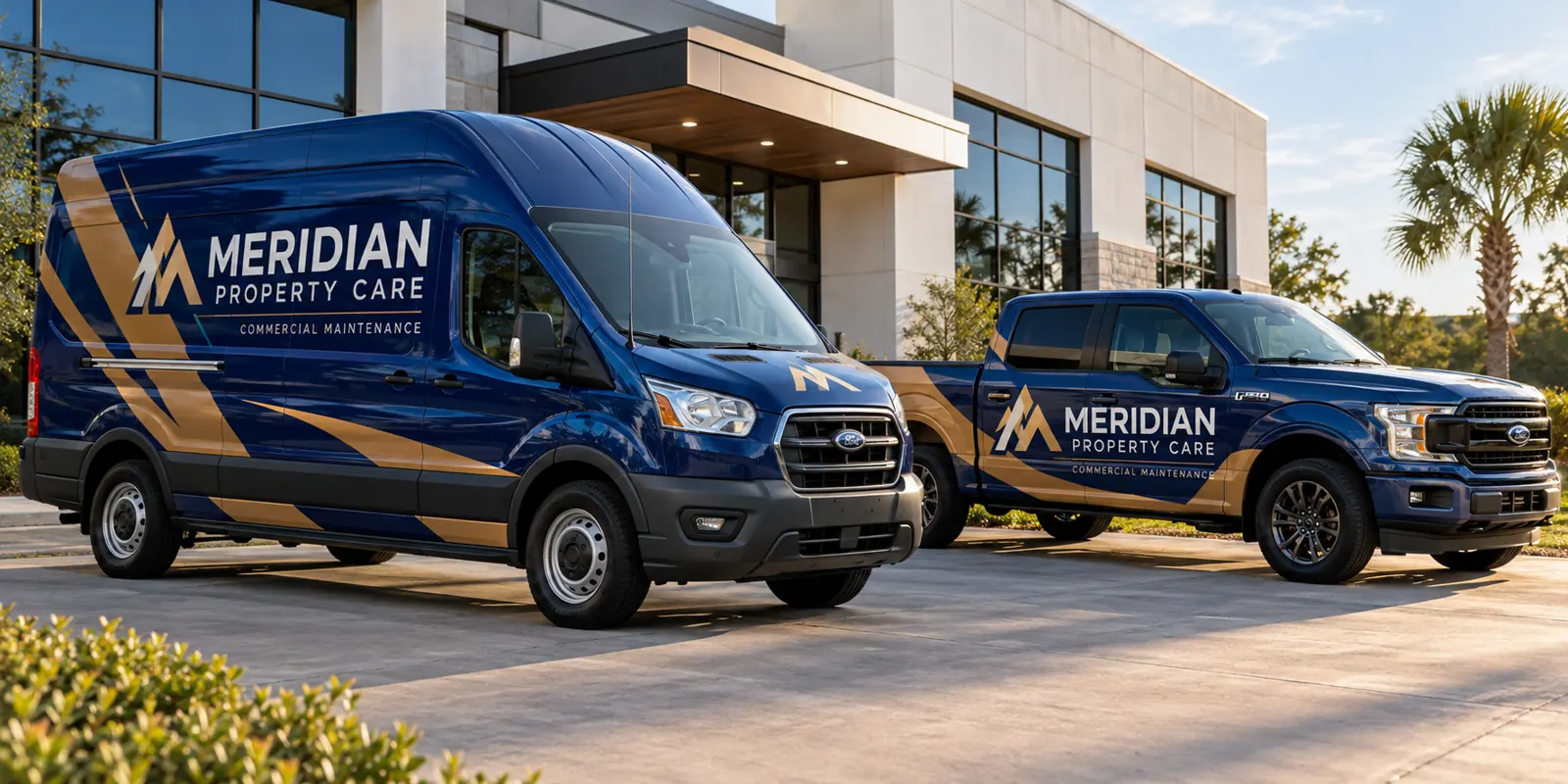
A business vehicle is viewed in motion, across traffic and from inconsistent distances. Effective wrap design gives priority to recognition, service clarity and a direct response path instead of treating the vehicle like a crowded brochure. We organize the logo, primary service, contact information and supporting message so the brand remains understandable on a van, pickup, trailer or box truck.
- Full and partial commercial vehicle wraps
- High-impact lettering, logos and regulatory markings
- Box truck, van, pickup, trailer, shuttle and specialty-vehicle graphics
- Reflective and safety graphics where visibility requirements apply
- Replacement panels and graphics for fleet additions
Choosing the right coverage level
A full wrap creates the greatest visual transformation and can unify vehicles with different paint colors. A partial wrap uses strategic printed areas with the existing finish to control cost. Lettering and spot graphics can be the best choice when the vehicle color already supports the brand or when rapid fleet deployment matters most. We compare surface condition, expected service life, campaign goals and budget before recommending coverage.
Compare full vehicle wraps, partial wraps and vehicle lettering and decals.
A production process that protects consistency
The process includes vehicle documentation, artwork review, scaled proofs, material planning, production, surface preparation, installation and final documentation. Fleet customers also benefit from approved templates, color references, panel records and vehicle assignments that reduce guesswork when another unit is purchased or a damaged panel must be replaced.
For multi-vehicle programs, explore fleet wraps and our fleet wrap planning guide.
Common Questions
Choose the Message Before the Coverage
A commercial vehicle graphic should make the business recognizable before someone has time to read a brochure. Start with the company name, one plain-language description of the service and the preferred way to make contact. A plumbing contractor, a delivery operator and a charter business need different information. Give the designer a priority order rather than a list of equally important messages. The layout can then support the customer action instead of becoming a crowded directory.
Consider where people encounter the vehicle. A work van parked at a customer's property presents a different viewing opportunity from a trailer moving through traffic. Side panels, rear doors and cab doors should be evaluated separately. Check whether equipment, open doors, toolboxes or racks interrupt the message during normal use. For a local service business, a clear trade description is often more useful than decorative detail that only makes sense close up.
Compare a Wrap, Partial Coverage and Lettering
Full coverage can create a complete visual system across an existing vehicle color. Partial coverage uses selected areas, while lettering and spot graphics keep the identity focused. Compare these choices on the same vehicle drawing, with the same core message. Coverage alone does not determine whether the result communicates well. A simpler layout with generous spacing may be the better choice when the business name and service need to stand out quickly.
Ask the proposal to identify exactly which surfaces are included. Cab, body, rear doors, roof areas and specialty surfaces should not be assumed to be part of every package. Have the existing finish assessed and disclose previous wraps or paint repairs. Film selection depends on the actual surface, intended service period and operating conditions; an attractive mockup cannot establish material suitability. Approval should cover both the visual layout and the physical installation scope.
Make a Mixed Fleet Look Intentional
Different models do not have to use identical artwork files to share a recognizable identity. Keep the same logo proportions, color targets, service language and contact hierarchy, then adapt the layout to each body. Record the vehicle make, model, year, unit number and visible equipment. Even apparently similar models can have different panel shapes or door arrangements. A design approved for one vehicle should be checked before it is reused on another.
Keep approved proofs and the unit list together. Identify who can authorize a new model, a phone-number change or a replacement panel. For a small business adding vehicles over time, this record is useful because it prevents each addition from becoming a separate brand interpretation. Ask how future production files and material details will be retained. The aim is a repeatable decision process, with enough flexibility for the vehicles the business actually operates.
Start with a Practical Project Brief
Send photographs of both sides, the front, rear and any unusual hardware. Include a close view of existing graphics and areas of damaged finish. Tell Pelican Wraps which vehicles can be released first and which must remain available. Share the best logo files you have, the approved business wording and a realistic contact route. If an asset is missing, identify it rather than substituting a low-resolution screenshot and assuming it is production-ready.
The shop location is in Harvey on the Westbank. A project inquiry is the place to confirm vehicle access, inspection and scheduling before making a trip. For equipment based elsewhere, explain where it operates and who controls its availability. Do not treat a service-area page as evidence of another physical branch. A useful next step is a scoped conversation about coverage, artwork, preparation and installation, followed by a project-specific proposal.
Commercial Wrap FAQs
Keep Planning Your Project
Box Truck Wraps→Fleet Wraps→Wrap Cost Guide→Ready When You Are
Turn Your Fleet Into A Consistent Brand Asset.
Get a Project-Specific Recommendation
Tell Pelican Wraps about your vehicles or commercial graphics project, the message you need to communicate and your timing. We can identify the details still needed for an accurate scope.
A Practical Service-Fleet Design
This fictional electrical-contractor van concept illustrates readable business branding. It is not a completed customer job.