
Emergency and Response Fleet Graphics Planning
Response fleets need clear organizational identity and carefully controlled vehicle information. Start with an authorized brief, the actual equipment list and the people responsible for approving the design. This page explains graphics planning for agency, organizational and private-support vehicles without treating a visual concept as a specification for operational markings.
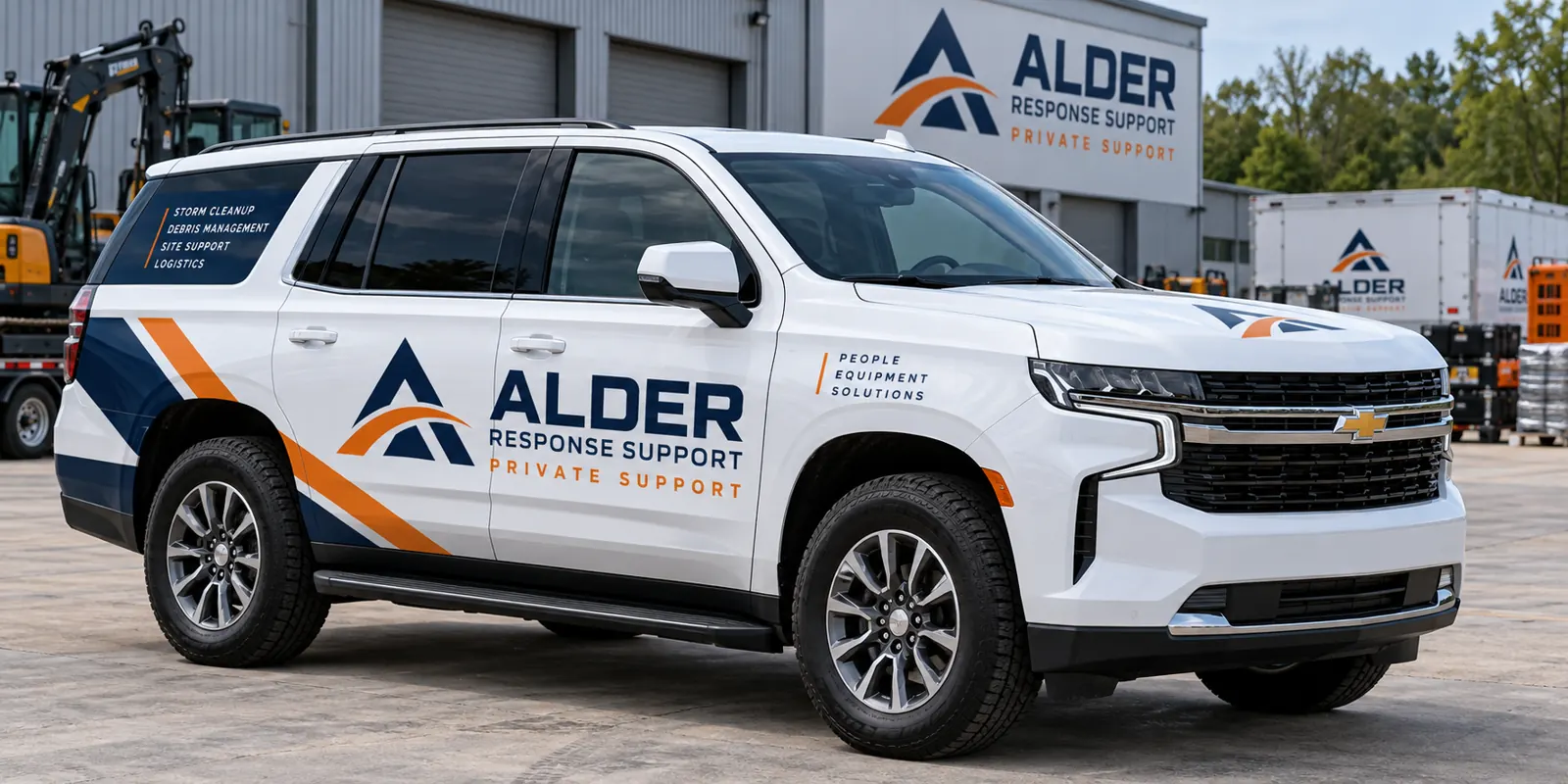
Fictional commercial wrap design concept; not a completed customer installation.
Define the organization and the vehicle's actual role
Identify whether the project concerns an agency vehicle, an organizational support fleet or a private commercial support business. Explain the role of each unit and the identity it is authorized to display. Different roles should not be merged into a generic emergency appearance. Start with the business or organization name and the message the vehicle needs to communicate.
List the equipment and the responsible approval owner. This page addresses the vehicle graphics brief. The public-safety industry route connects wider organizational planning, while the vehicle directory helps identify the underlying bodies. The example image uses a fictional private-support identity with no claim of agency affiliation.
Use approved identity sources and a clear review chain
Supply the original authorized logos, colors, wording and any existing graphic standards. Explain who owns those assets and who can approve their use. Do not reconstruct an official identity from an unrelated internet photograph and assume it represents the current brief. If a procurement or communications team maintains the standard, use its current source package.
Choose one person to consolidate feedback while retaining the required subject-matter reviewers. Record which details need fleet, operational or organizational approval. A clearly dated proof helps each reviewer assess the same version. The design process should support the authorized brief rather than invent claims, affiliations or identifiers to fill empty space.
Document the actual vehicle and all existing markings
Send current photographs from both sides, front and rear, together with the year, make, model and body configuration. Show racks, equipment, access panels and any fitted components that affect the graphic area. List quantities by vehicle version. An SUV, van and utility body can share an organizational identity while needing different layouts.
Identify existing warnings, equipment labels, unit numbers and other information that must remain visible and usable. Mark the requested exclusions and supply verified replacement details only where they are part of the approved brief. Current photographs help avoid planning around a simplified template that omits operational equipment or important existing information.
Keep branding scope distinct from operational specifications
State whether the request is for ordinary organizational branding, replacement of an established design or another defined graphics task. If the project includes reflective products or prescribed operational markings, provide the applicable current specifications and identify the reviewer responsible for them. Do not infer those requirements from a decorative concept or a material’s appearance.
This planning page does not certify a design against a standard or promise vehicle visibility performance. Any such requirements need their own documented review within the actual project. The written scope should identify included surfaces, materials to be assessed and exclusions, so the parties are discussing the same work before production is authorized.
Adapt the layout without losing identity or accuracy
Preserve the approved hierarchy and identifier treatment across the fleet, then adapt placement to each body. Handles, windows, door splits and equipment can interrupt important wording. Review side and rear views separately. An identical production file should not be assumed to suit different roof heights, wheelbases or aftermarket bodies.
Keep unit identifiers linked to the correct vehicle and verify them during proof approval. If a unit is reassigned or its equipment changes, review the affected layout before ordering a replacement. The fleet solutions page connects this detail with a wider rollout and a consistent artwork record for future additions.
Plan condition review and vehicle release with the owner
Disclose existing vinyl, adhesive residue, repairs, corrosion and damaged finishes with close photographs. Graphics should not be used as a substitute for reviewing an underlying surface problem. Removal and preparation need to be addressed explicitly, with any exclusions recorded before approval. A previous fleet design does not establish current surface suitability.
Identify priority units, available release windows and who authorizes access, delivery and collection. Explain operational constraints early. Do not change equipment or remove components based on a guessed graphics plan. Coordinate around the confirmed project arrangement and the responsible vehicle owner’s instructions so fleet availability is planned against the actual work.
Prepare a complete brief and retain the approved record
Send the equipment list, current photos, authorized artwork sources, essential wording and approval requirements. Include existing information to preserve and any specifications the project must address. State whether the request is new branding or an adaptation of an established approved layout. Keep the final proof linked to each vehicle version and identifier.
Use the artwork guidelines to organize source files and submit a response-fleet graphics brief for review. The private-support image on this page is illustrative and fictional. It is not an agency vehicle, a completed customer project or evidence that a proposed marking meets an operational standard.
Frequently Asked Questions
Turn Your Vehicle Details Into a Clear Project Brief
Send current photographs, vehicle quantities, logo files, coverage preferences and timing. Identify old graphics and paint concerns so the project review can address the actual equipment.
Explore planning resources or request your commercial wrap quote.
