
Truck Toolbox Graphics Clearance Guide
A truck toolbox graphics clearance guide should help the buyer document the real equipment and the message it can interrupt. It should not invent a universal gap around every lid, latch or storage box. Start with the actual toolbox configuration, photographs obtained through the normal safe process and the areas proposed for graphics. Then keep layout, surface and equipment questions connected to the appropriate project reviewers.
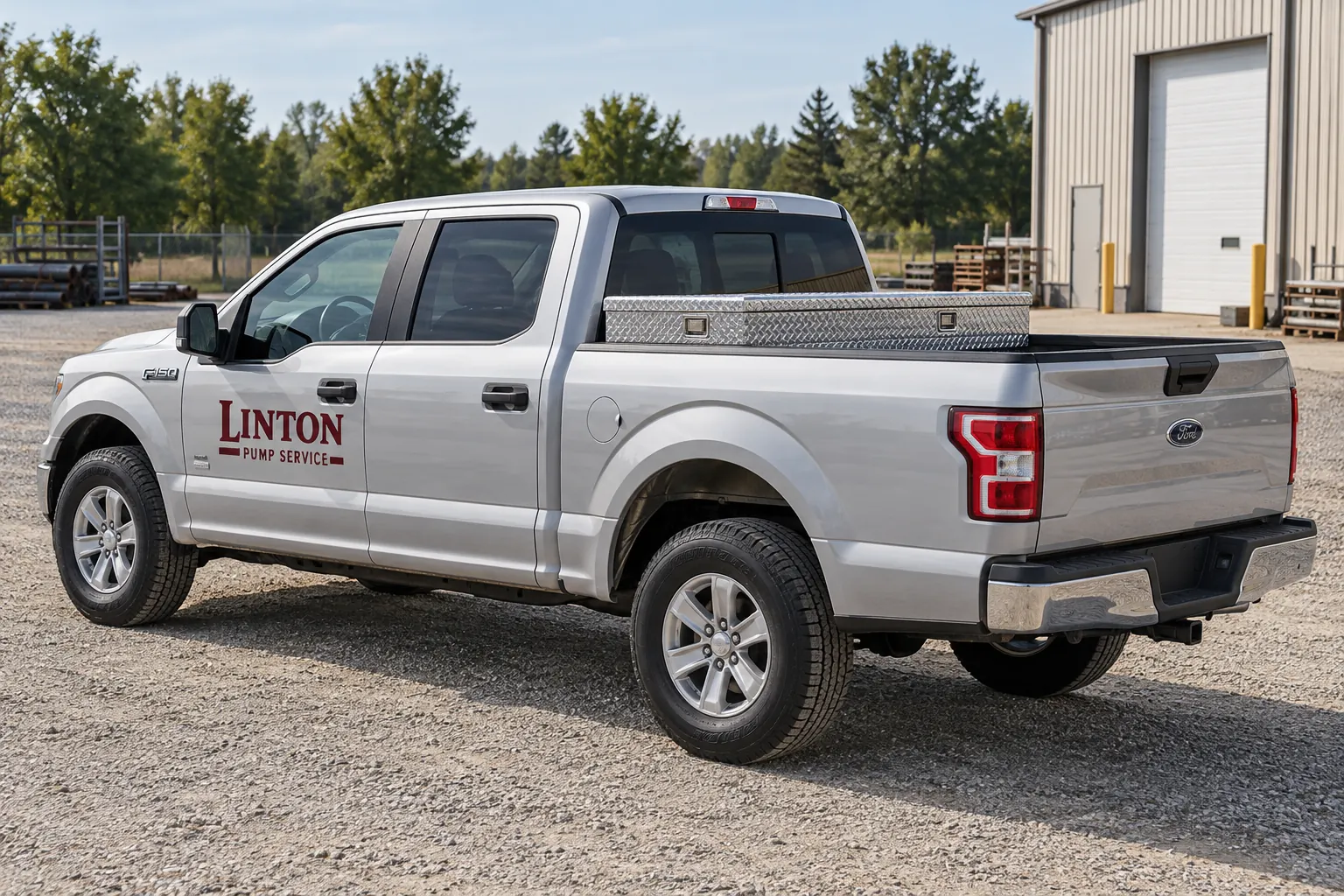
Original fictional commercial planning concept; not a completed customer installation.
Identify the toolbox as part of the vehicle configuration
Record the unit and the actual storage arrangement: a cross-bed box, side storage, service-body compartments or another defined configuration. Provide the supplier or model reference where available. Identify whether the requested graphics concern adjacent truck panels, the box itself or both. A general statement that the pickup has a toolbox does not define the proposed work.
Photograph the truck and the equipment together, then add clear details of the relevant lid, latches, hinges and surrounding areas. Keep existing graphics and known condition concerns visible. If a different box is planned, label the current images accordingly. The provider should not have to discover that a clean reference photograph shows equipment that will be replaced before the graphics job.
State the communication conflict in practical terms
Choose the message component being reviewed: company name, service descriptor, contact information or a supporting visual element. Explain what the toolbox changes in the ordinary view. It may obscure part of a rear-window area, affect the visual relationship between cab and bed, or occupy an area another brief treated as available. Keep the observation tied to the actual truck.
For fictional Linton Pump Service, a restrained door identity remains separate from a cross-bed box. The concept illustrates one planning direction, not a measured clearance or an approved treatment for the box surface. Your own brief should state the desired message and actual equipment so the layout discussion can address the relevant conflict rather than borrow the illustration’s proportions.
Collect relevant equipment-state references safely
Ask the responsible vehicle contact which normal equipment states need to be documented and how suitable photographs can be obtained through the company’s authorized process. Do not ask an unfamiliar reviewer to operate equipment, remove a box or enter an unsafe access position for artwork. Use the actual instructions and appropriate personnel where equipment access is necessary.
Label the views and explain what each establishes. A closed-lid view and a safely obtained relevant open view can answer different layout questions. Do not treat a single photograph as a complete account of movement or clearance. Identify the specific uncertainty and ask what further assessment is needed before the dependent area is included in a final layout or work scope.
Keep equipment clearance separate from visual spacing
A buyer may want more visual separation between the logo and the storage box, while a physical clearance question concerns actual equipment and its instructions. Record those as different issues. The designer can discuss composition, but should not be asked to invent the operating allowance or decide that a decorative gap settles a mechanical requirement.
If supplied equipment guidance limits the proposed work, retain its exact source and identify the responsible reviewer. Keep uncertain areas pending. Do not transfer a dimension or treatment from another box simply because the two look similar. A useful record connects the actual equipment, proposed graphic area, relevant instruction and decision status without pretending to be a universal toolbox installation manual.
Define whether the box itself is part of the request
If graphics are proposed on the toolbox, identify the actual exterior area and provide the relevant surface information, existing treatments and condition. Ask whether the proposed work can be assessed. Do not assume that suitability for the painted truck also establishes suitability for a separate storage box or that every visible panel in a concept belongs in the quote.
Keep cab, bed and equipment work separately described where needed. List quantities and configurations across the fleet. A shared identity can guide the visual system while the actual surfaces and included tasks differ. Compare proposals by those descriptions, including artwork adaptation, existing graphic work and installation arrangements, rather than by the amount of color shown on the truck.
Record the decision before later equipment changes
Retain the actual toolbox reference, photographs, approved layout and any supplied requirements that influenced the scope. Identify the unit or controlled group covered by the decision. When a box is replaced or moved, review the affected assumptions before reusing the earlier artwork. Similar dimensions or exterior color do not establish that the same relationship and condition remain.
For a later concern, provide factual photographs and the relevant project reference. Describe what is observed without assuming cause or responsibility. Ask for the actual issue and scope to be assessed. A clear equipment-linked record makes that discussion more useful than an isolated close-up and a request to send another decal that may belong to a different box version.
Prepare a clearance-question handoff
Use the working record below to capture the unit and toolbox, photograph references, proposed areas, message conflict, supplied equipment information and review owner. Save the text and retain supporting instructions and images through the normal project process. This is a preparation record; it does not provide measured clearances or authorize changes to the equipment.
For Pelican Wraps, send the actual truck and storage details, approved identity files, desired coverage and specific open questions. Identify who can confirm equipment information and vehicle release. Use the broader pickup and service-body resources for the overall program while keeping this brief focused on the real toolbox arrangement and the evidence required to assess the graphics request.
Draft and Download Your Working Record
Draft your entry, then download a copy before leaving. Send any project decision through the communication process agreed with your supplier.
Frequently Asked Questions
Take the Next Step with a Clear Project Brief
Continue with the resource that matches your next decision:
- Pickup Truck Wraps
- Truck Wraps
- Service Body Truck Wraps
- Commercial Vehicle Photo & Measurement Guide
- Request a Quote
- Vehicle Wraps
Send the actual vehicle or surface photographs, quantities, approved brand files, requested coverage and timing constraints. Identify open questions so the project review can address your equipment and business needs.
