
Vehicle Ladder Rack Graphics Visibility Guide
Vehicle ladder rack graphics visibility planning starts with the rack and ordinary carried equipment that actually accompany the vehicle. A clean bare-body concept may not show what remains visible in everyday parked use. Record the real configuration, the message priority and the views relevant to your audience. Then ask the layout to be reviewed without treating a graphics checklist as a rack installation, loading or equipment safety guide.
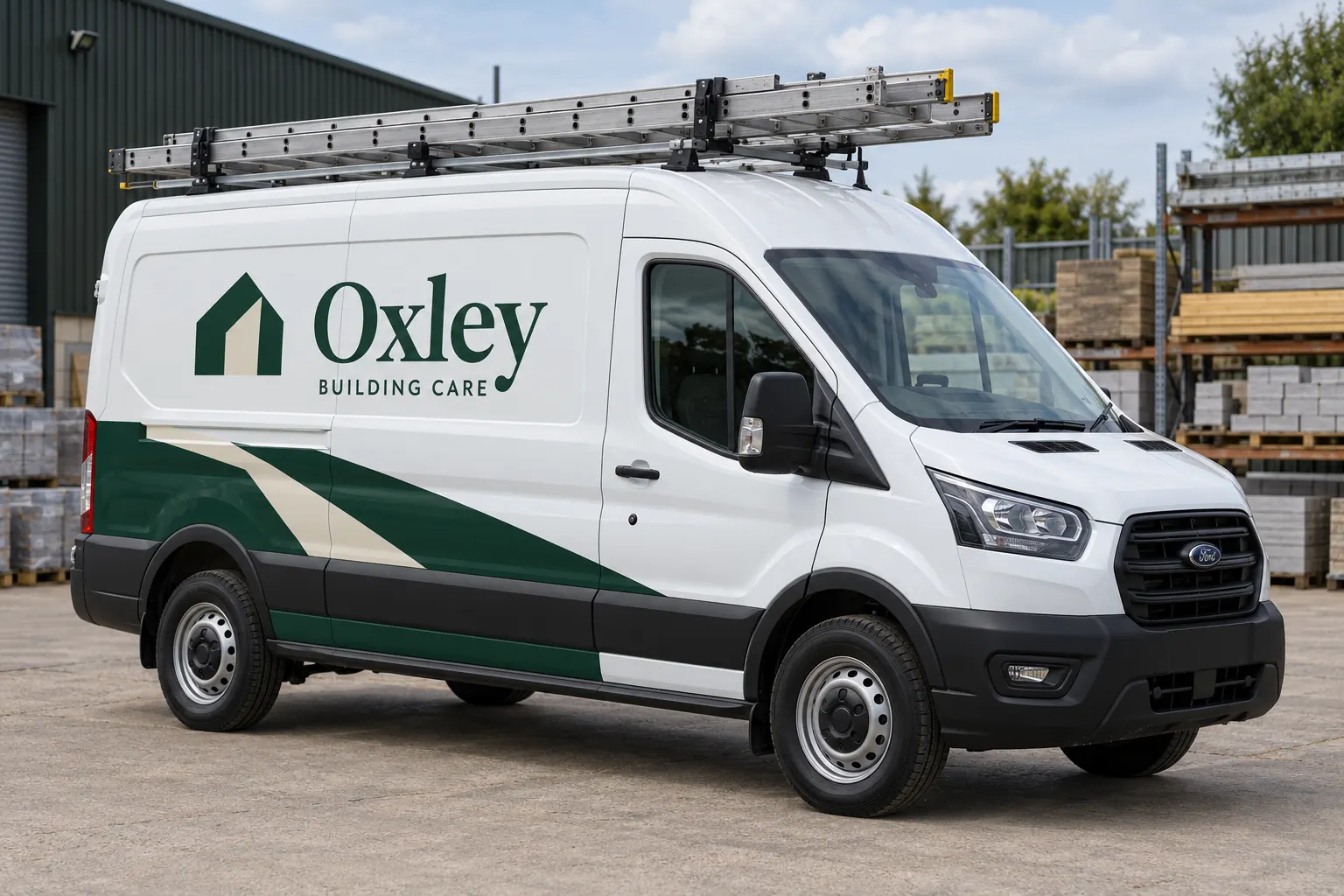
Original fictional commercial planning concept; not a completed customer installation.
Identify the actual rack and planned vehicle configuration
Record the unit, body and rack reference where available. Provide current photographs showing the vehicle and rack together, plus relevant details of mounts and other exterior equipment. Identify planned fit-out changes. Do not assume a rack on another van or pickup establishes the same relationship to the proposed graphics areas.
If the equipment has not arrived, mark the configuration pending and identify who will supply the actual evidence. A preliminary design discussion can still establish message direction. Keep dependent placement decisions distinguishable from that early discussion so the final artwork is not released against a bare vehicle that will look materially different after the fit-out.
Describe ordinary carried equipment without directing loading
Ask operations which normal configurations are relevant to visibility and obtain suitable references through the company’s authorized safe process. Identify what the photographs show and any important limitation. Do not ask unfamiliar staff to change equipment, arrange loads or create a new setup for artwork. The graphics review should follow actual evidence while loading and rack use retain their own operating process.
Avoid a vague note that the van usually carries ladders when the relevant concern is a specific upper name or rear contact line. Describe the visible relationship in the selected view. Keep the information factual and focused on the message. A photograph does not establish a loading approval, rack capacity or a universal visibility result.
Choose what the viewer must recognize first
List the company name, concise service descriptor and approved contact action. Identify the ordinary audience and parked view relevant to each. A roof-rack-equipped vehicle may offer several useful message areas, but the business should choose the hierarchy rather than treating every visible strip as an opportunity to add more copy.
The fictional Oxley Building Care concept illustrates a restrained identity below a roof ladder rack. It is a commercial planning image, not a rack specification or completed customer installation. Your actual layout needs the relevant vehicle and equipment views. Use the concept to discuss direction without transferring its apparent clearances, carried arrangement or proportions into the project assumptions.
Compare the rack-equipped view with the proposed proof
Use the actual reference set to identify what equipment obscures or visually competes with the essential message. Record the unit, view, proof version and affected component. A concern about an upper company name is different from a rear line hidden by another accessory. Keep each observation specific enough that the provider can assess a relevant layout response.
Separate message visibility from physical contact or equipment questions. If a proposed area raises a surface, mount or technical concern, identify it as a pending assessment with the responsible reviewer. Do not prescribe a universal gap or ask the designer to move equipment to preserve a preferred composition. The business goal and actual equipment constraints need to be discussed together.
Review the rear and sides as related but distinct views
Provide clear current rear and side photographs with the relevant equipment present as supplied through the normal process. Check the approved public wording in each layout. A side identity that works well does not settle the rear, where doors, accessories and hardware can create another arrangement. Keep the intended contact action coherent in the views the business has selected.
If several rack types or vehicle bodies are in the fleet, list the configuration groups. Ask which artwork adaptations are included in the scope. Do not turn one reviewed van into a universal template for pickups, high-roof bodies and different exterior equipment. A shared identity can remain consistent while the actual compositions and assessment questions differ.
Keep changes connected to the artwork version
Retain the approved proof, relevant photograph set, rack configuration and message priorities under the unit or controlled body group. Identify who informs the artwork owner when equipment changes. A new rack, accessory or contact line should trigger a review of affected assumptions rather than a blind reorder of the older file.
For later concerns, provide factual current photographs and the relevant project reference. Ask for the actual issue and scope to be assessed without assuming a cause or a particular remedy. The record should help the parties locate the real vehicle and decision history, not imply that a graphics concept establishes equipment performance or the reason a condition developed.
Prepare a rack-aware graphics inquiry
Use the working record below for the unit and rack, ordinary relevant configurations, photo references, essential message, visibility concerns and open decisions. Save the text and retain supporting files through your normal project process. It is an administrative layout aid, not a loading instruction, capacity statement or measured clearance specification.
For Pelican Wraps, send the current rack-equipped vehicle photographs, approved identity files, desired areas and actual fleet quantities. Identify planned equipment changes and vehicle release constraints. Use the broader van, pickup and fleet design resources for the overall program. A focused brief lets the provider review the message against the real configuration instead of discovering the rack after an empty-body proof has already been treated as final.
Draft and Download Your Working Record
Draft your entry, then download a copy before leaving. Send any project decision through the communication process agreed with your supplier.
Frequently Asked Questions
Take the Next Step with a Clear Project Brief
Continue with the resource that matches your next decision:
- Van Wraps
- Pickup Truck Wraps
- High Roof Van Graphics Sightline Planning
- Fleet Wrap Design Standards
- Commercial Vehicle Photo & Measurement Guide
- Request a Quote
- Vehicle Wraps
Send the actual vehicle or surface photographs, quantities, approved brand files, requested coverage and timing constraints. Identify open questions so the project review can address your equipment and business needs.
