
Commercial Graphics by Surface & Application
Some projects begin with a vehicle. Others begin with a boat, a piece of equipment, a storefront or an interior surface. The application determines which details need review before artwork or materials can be specified. Use this directory to identify the surface, the message and the practical constraints, then connect the project to the relevant Pelican Wraps service and a defined quote brief.
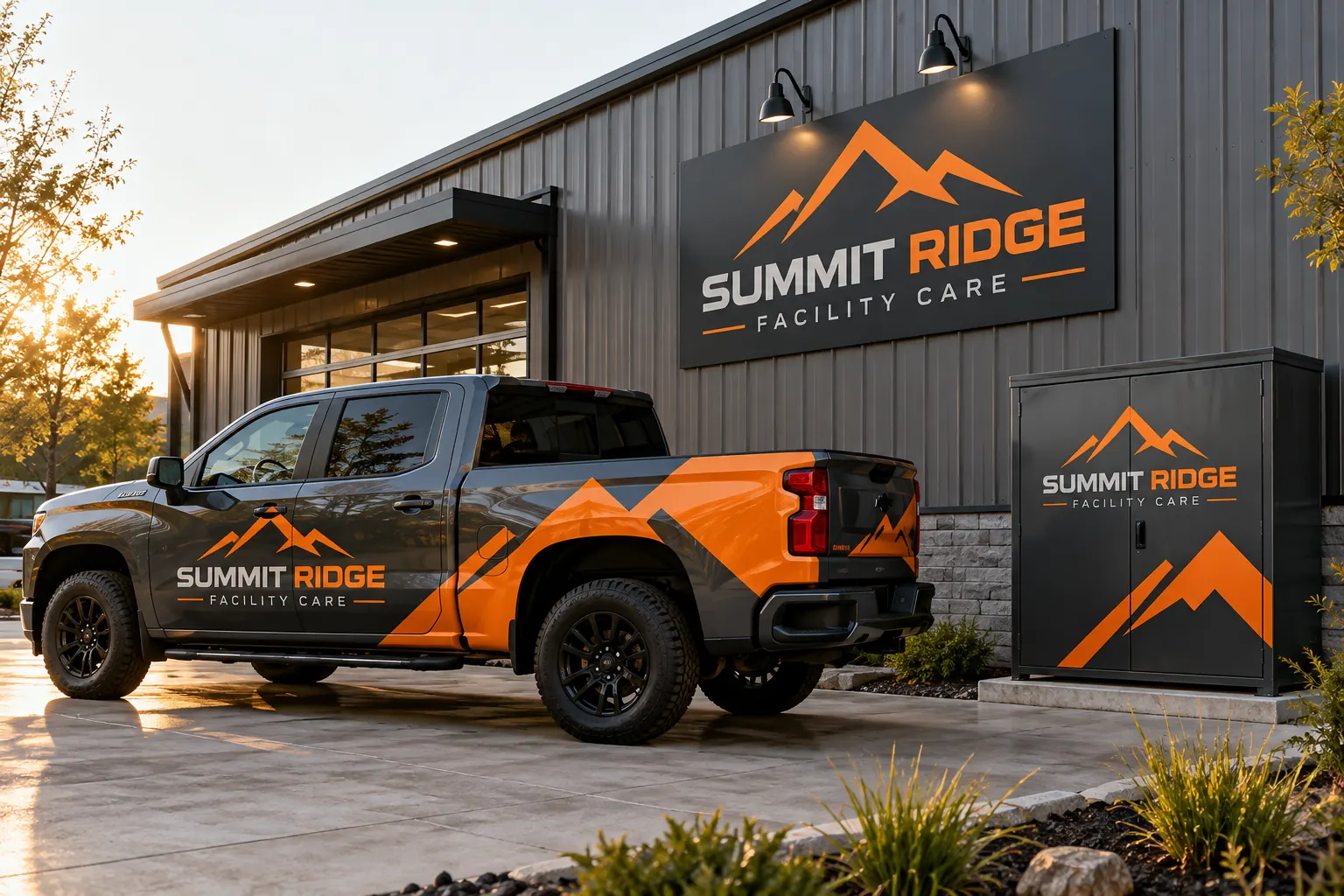
Fictional commercial wrap design concept; not a completed customer installation.
Identify the surface before selecting the appearance
A photograph of an attractive graphic does not establish that the same material will work on another object. Record the substrate, current finish, shape, dimensions, exposure and existing coatings. Include the conditions around the surface, such as heat, water, cleaning or frequent contact. Those details influence the questions that need answering before a production system is proposed.
Tell the shop what the graphic needs to accomplish: identify the business, organize equipment, communicate approved information or change a decorative finish. These purposes can overlap, but they are not interchangeable. A branding graphic should not be assumed to satisfy a separate safety, performance or regulatory specification simply because it looks similar.
Keep marine branding connected to the actual vessel
Marine and commercial boat graphics need the vessel identity, hull photographs, finish condition, proposed coverage and access plan. Explain whether the boat is used for charter trips, commercial work or another purpose. Confirm the approved name and contact wording, and identify existing graphics that may need removal before a new layout is considered.
Do not assume that a vehicle film choice, installation location or care routine applies unchanged to a vessel. Ask for a project-specific assessment of the surfaces and conditions. Confirm how the boat will be accessed and who is responsible for any movement or preparation. A fictional charter concept is useful visual direction, but it is not evidence of an installed vessel project.
Review equipment graphics around working access
Equipment and machinery graphics can carry a business identity or a controlled asset label. Photograph the actual panels, hinges, vents, access doors and existing information. Explain how the equipment operates and where its surfaces are touched or serviced. Keep the usable branding area separate from manufacturer information and any markings that require responsible approval.
Provide an equipment register when several units need graphics. Identify which wording remains fixed and which details vary by asset. A serial number or owner-specific identifier must come from the approved record. Ask how the proposed graphic will be fitted and maintained; do not cover an important label or operating instruction merely to create a larger decorative panel.
Treat safety and reflective work as a specified scope
Reflective and safety graphics require a clear description of the intended use and the applicable project requirements. If an agency, owner or other responsible party supplies a specification, include the actual document and approval contact. A bright color or reflective appearance alone does not establish compliance with an unstated requirement.
For utility unit markings, connect every identifier to the correct vehicle or asset. Confirm wording, placement, dimensions and any restrictions before production. Separate ordinary business branding from required information so both can be reviewed appropriately. Do not substitute a generic web guide for the responsible interpretation of a project’s marking obligations.
Plan storefront and interior graphics as installed surfaces
Storefront graphics can help a business present its identity at the premises as well as on the road. Supply photographs, measurements, surface descriptions, proposed wording and any owner or site restrictions. Identify which doors, glazing areas or existing signs are included. The desired appearance does not define permission to use a surface.
For interior changes, review architectural films and the relevant signs and graphics service. Explain the existing finish, wear, cleaning conditions and access arrangements. Confirm surface suitability and installation scope rather than treating a decorative concept as proof that every cabinet, wall or door can receive the same product.
Coordinate one identity across several physical applications
A commercial business may want its vehicle, equipment and premises to look related. Use common approved logo proportions, colors and message rules, then adapt the layout to each surface. A sign viewed from the street, a truck seen in motion and a cabinet label read at close range do not need identical information density.
List each application separately in the brief so dimensions, preparation, quantities and installation responsibilities are visible. Ask the proposal to distinguish the work instead of relying on a broad “branding package” label. Keep artwork approvals linked to the correct surface. This allows the business to retain one identity while making practical decisions about how each object is used and seen.
Send a surface-specific project brief
Include overall and close photographs, dimensions or the measurements still needed, the current finish, proposed message, quantity and intended service conditions. Identify existing graphics, damage and coatings that could affect the work. State who owns the object or premises and who can approve both the design and the installation arrangement.
Request an application review with the available information. Pelican Wraps is based in Harvey; confirm access, inspection and scheduling before transporting equipment or assuming work at another site. The directory below points to the relevant questions for each application. The next useful step is a defined assessment and proposal for the actual surface.
Frequently Asked Questions
Turn Your Vehicle Details Into a Clear Project Brief
Send current photographs, vehicle quantities, logo files, coverage preferences and timing. Identify old graphics and paint concerns so the project review can address the actual equipment.
Explore planning resources or request your commercial wrap quote.
