
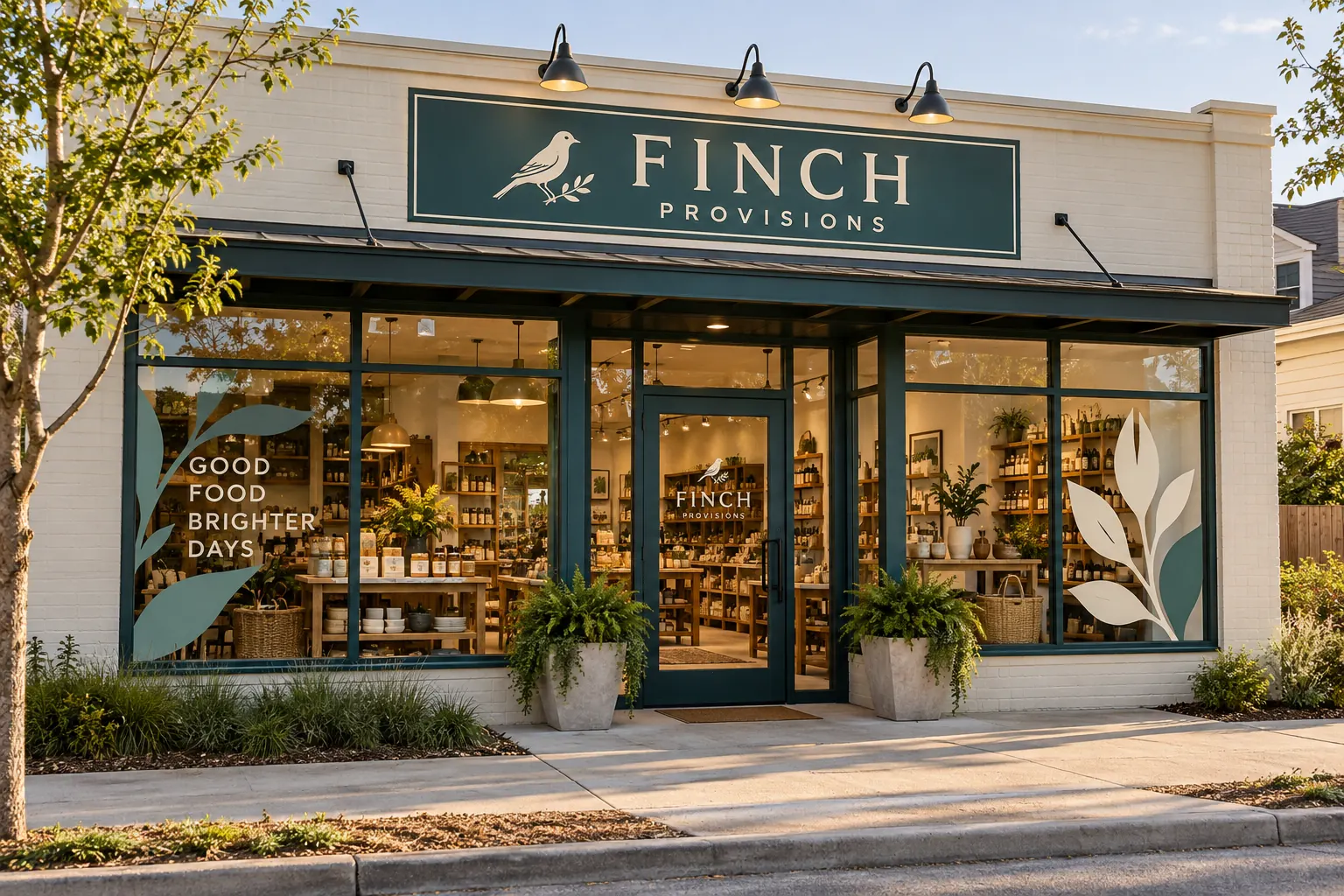
Fictional commercial graphics design concept; not a completed customer installation.
Map the visit from first recognition to the counter
Begin with how an unfamiliar person recognizes the store, finds the correct entrance and understands what to do inside. Walk that route and identify the decisions that need support. A storefront project is more than a list of surfaces to cover; it is a sequence of messages tied to real places.
Write the intended job of each item before designing it. The main sign identifies the business, the door confirms entry, a window can communicate a campaign and an interior marker can direct collection or service. If several items repeat the same full message, consider whether some of that space could make the next decision clearer. This gives the project a commercial purpose beyond decorative coverage.
Build an item schedule across the whole frontage
Photograph the approach, building face, entrance and relevant interior destinations. Label each proposed item and record dimensions, existing graphics, surface type and known condition. Use pane labels for glass and a separate reference for signs, wall areas or counter elements. A single overall frontage width cannot define the complete production scope.
Identify which areas are controlled by the tenant and which need property-manager consent. Include known building requirements and ask the appropriate authority about any location-specific approvals for the proposed work. Keep those dependencies with the schedule. This prevents a campaign deadline from pushing a sign or glass change into production before the required site questions have been resolved.
Make the entrance obvious while preserving the store experience
Review what customers should see through the glass and what information belongs at the door. Coverage that looks strong on an empty elevation can hide merchandise, an occupied reception area or the operating entrance. Balance the identity and campaign message against the value of a clear view into the business.
Use window graphics planning for pane-level design and commercial signs for the primary identity item. Keep the opening information current and separate changeable details when that makes maintenance easier. A coordinated frontage does not require identical coverage on every pane; it requires a consistent identity and a useful route into the store.
Give campaigns a defined beginning and ending
Decide which graphics carry the enduring business identity and which support a short promotion, launch or seasonal message. Record the campaign dates and the owner responsible for updating or removing the temporary elements. A display that remains after the offer changes can confuse customers even if the printed material is still present.
Choose a clear campaign action and the place where a visitor can complete it. Check the destination of any supplied QR code or web link before approval. Keep factual offer details, service claims and partner identities verified by the business. A strong storefront campaign should not rely on invented urgency, unsupported results or an affiliation that has not been approved.
Connect the interior message to the frontage
Once someone enters, use the same language for destinations that appeared outside. If a window directs collection customers inward, the collection point should be recognizable without another search. Review any wall, counter or floor wayfinding graphics as part of that route, with a separate surface and product suitability review for each application.
Keep the core identity consistent with delivery vehicles or service vans that the customer may also encounter. The fleet graphics system can share logos and current contact language while using a different composition. This is especially useful for a business whose first customer interaction may happen on the road before a later visit to the premises.
Approve the system and each location-specific execution
Review the overall customer route and identity first, then check the dimensions, wording and placement of individual items. Name a final approver so conflicting comments do not create several competing artwork versions. Keep accepted files labeled by item and property rather than relying on a generic final filename.
For multiple stores, maintain a shared design standard and a separate site schedule. Doors, neighboring businesses, glass arrangements and interior layouts can differ substantially. A standard campaign may need different item quantities or placement to achieve the same purpose. Record those exceptions so later reorders use the actual approved store arrangement instead of copying another branch without review.
Plan installation and future store changes together
Identify opening hours, delivery activity, access contacts and areas that must remain managed during work. Include old-graphic removal, preparation and any furniture or display movement in the scope. Record the target date alongside the decisions still pending so the schedule reflects actual readiness rather than an assumed all-inclusive appointment.
After installation, retain the item schedule, product references, approved artwork and location photographs. Review the graphics when store hours, services or campaigns change. For an initial plan, send a retail graphics brief with the customer objective, photographs and item list. The signs and graphics hub can help compare the individual applications within that coordinated project.
Frequently Asked Questions
Turn Your Project Details Into a Clear Brief
Send current photographs, quantities, logo files, dimensions and timing. Identify existing graphics, required specifications and surface concerns so the review can address the actual equipment or site.
Explore planning resources or request your commercial graphics quote.
Explore Related Project Guides
- Glass Door Graphics Hardware Clearance
- Multi-Tenant Window Graphics Responsibility Map
- Retail Window Campaign Changeover Plan
- Storefront Graphics Replacement Panel Record
- Storefront Graphics Sightline Review
- Storefront Hours and Contact Decal Brief
- Storefront Opaque vs Clear Graphics Planning
- Storefront Window Graphics Cleaning Handoff
- Storefront Window Graphics Survey Checklist
- Tenant Window Graphics Landlord Approval
