
Commercial SUV Graphics for Business and Field Teams
A commercial SUV can carry a clear company identity while supporting inspections, site visits, sales work and field coordination. Plan a layout around the doors, rear quarter and tailgate, with coverage that fits the role of the vehicle and the rest of the fleet.
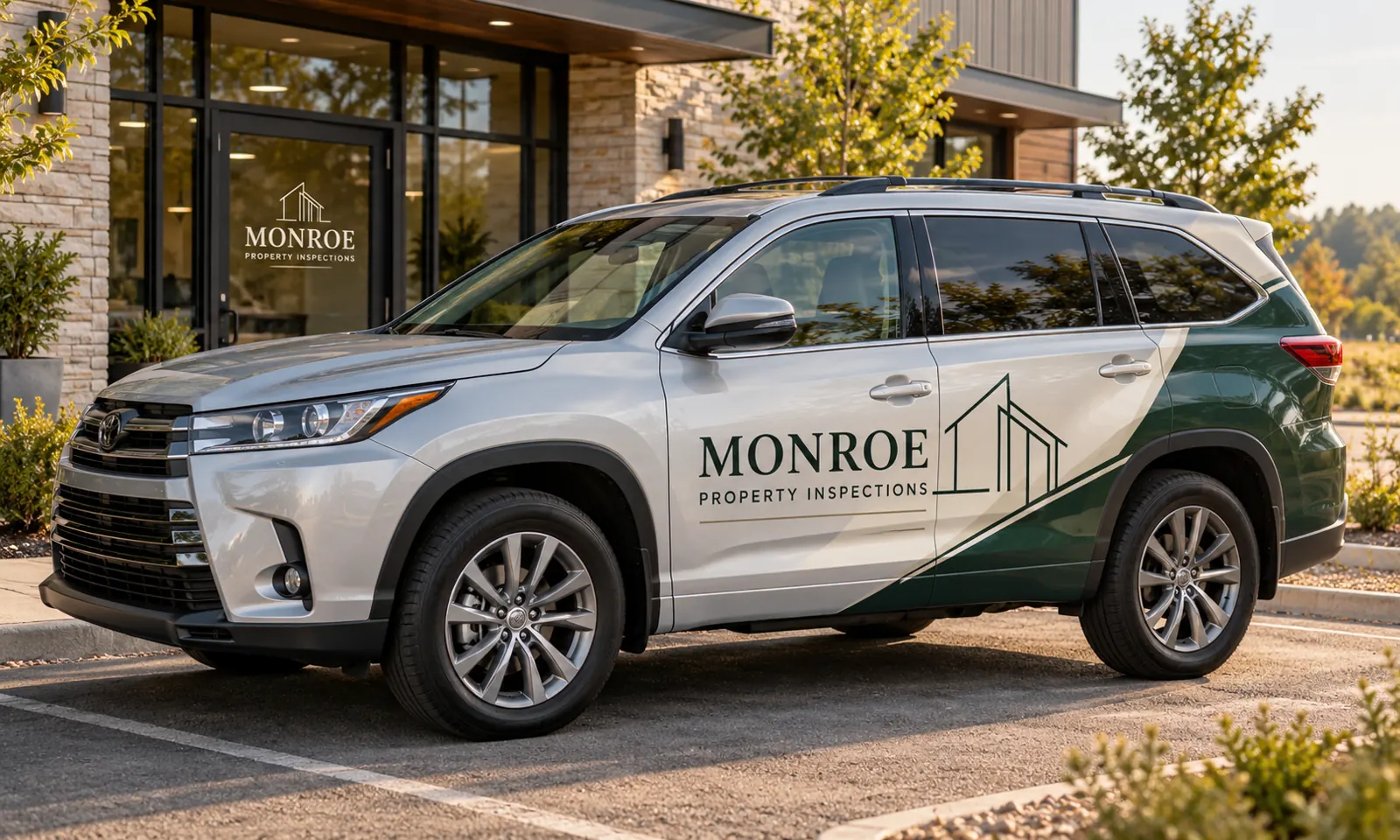
Fictional commercial wrap design concept; not a completed customer installation.
Define the SUV's role in the business
Explain who uses the SUV and where customers see it. A property inspector, project coordinator and sales representative may need different information emphasized. Start with the company name, a useful service description and the primary contact route. Keep the hierarchy clear rather than treating the smaller panels as a place to print the whole website.
This page focuses on SUVs used for normal commercial work. The vehicle directory connects other body types if the fleet includes vans or trucks. For a broader identity across field and service teams, use the fleet route to establish what should stay consistent before adapting individual layouts.
Identify the model, body features and current condition
Send the year, make, model and trim or body details available, along with current photos. Include both sides and the rear, then show roof racks, trim, badges and accessories that affect the surface. Different versions of an SUV can have different panel shapes and hardware. A marketing image of a similar model does not replace the actual vehicle reference.
Photograph old graphics, repairs, residue and damaged finishes closely. Graphics should not be treated as a repair for underlying surface issues. Disclose known refinishing and replacement panels before approval. Suitability, removal and preparation need to be discussed as part of the scope rather than assumed to be included with a new design.
Build a readable layout around doors and rear quarters
SUV side areas are divided by doors, handles, wheel arches and windows. Review the company name against those features before adding secondary text. A layout can use selected door and rear-quarter surfaces without needing one continuous graphic across every interruption. The actual body should determine how the identity is organized.
Keep the service description concise enough to support an unfamiliar business name. Choose a contact route that remains complete on a suitable panel. Evaluate the proof at a reduced size as well as close up. Small decorative details may be attractive on a monitor while contributing little to recognition when the SUV is parked across a customer property.
Compare restrained lettering with broader graphic coverage
Lettering can suit a business that wants a clean identity with much of the original paint visible. Partial graphics can introduce a recognizable color area and connect the doors to the rear quarter. Fuller coverage may be another option when the project goals and surfaces support it. Compare clearly defined treatments rather than treating the labels as fixed packages.
Use the lettering guide and partial-wrap guide to frame the decision. Ask which panels, roof areas and trim are included or excluded. Do not assume glass treatment is part of the same scope as painted-body graphics; raise any window request explicitly for separate review.
Give the tailgate a complete and useful identity
The rear view includes its own window, handle, camera, badges and panel contours. Review it separately from the sides. Place essential wording where the actual hardware supports readability, and make sure the business identity remains understandable without relying on a side view that may not be visible.
If the vehicle carries racks or accessories, show the normal working configuration. Mention planned changes before approving the layout. A new accessory or a different vehicle version can affect the visible graphic area. Keep the design reference tied to the actual configuration rather than assuming every SUV in the model range shares the same usable surfaces.
Connect the SUV with a wider commercial fleet
An SUV can share a logo, colors and hierarchy with a work van, pickup or trailer while using a more compact layout. Decide which brand elements remain fixed and which can adapt. Unit numbers, team labels and division names should have a defined role rather than grow into separate competing identities on every vehicle.
List fleet quantities by body type and maintain a dated proof for each configuration. The artwork guidelines explain how to prepare source files and approval feedback. Assign one person to verify spelling, phone numbers, domains and any supplied business claims so all versions use accurate current information.
Prepare a scope and schedule for the actual SUV
Send the vehicle specification, current photos, brand files, essential wording and coverage preferences. Identify old graphics and condition concerns, plus the timing you want. Explain when the SUV can be released and who manages delivery and collection. Plan around the confirmed arrangement for the agreed work rather than a generic installation-duration claim.
Review the cost guide, then request a commercial SUV graphics quote. Keep the approved proof and project reference for later replacements or additions. The property-inspection SUV shown here is a fictional concept, not a customer installation or evidence of inspection qualifications or business results.
Frequently Asked Questions
Turn Your Vehicle Details Into a Clear Project Brief
Send current photographs, vehicle quantities, logo files, coverage preferences and timing. Identify old graphics and paint concerns so the project review can address the actual equipment.
Explore planning resources or request your commercial wrap quote.
