
Commercial Van Wrap Cost: Compare the Actual Scope
A useful van-wrap budget starts with the exact van and coverage plan. Compare lettering, partial coverage and fuller printed coverage against the same artwork, preparation and installation assumptions before deciding which proposal fits the business.
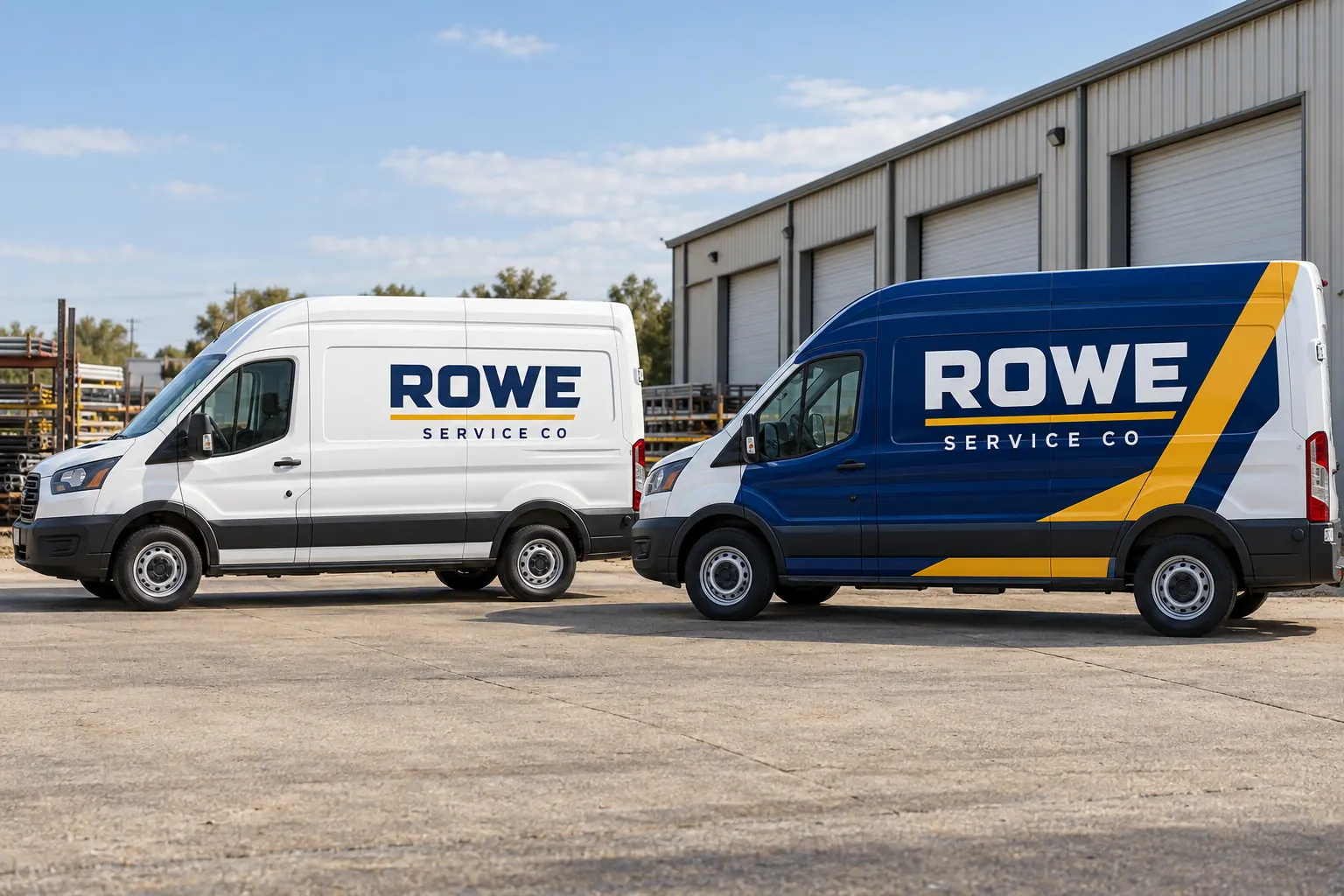
Fictional commercial wrap design concept; not a completed customer installation.
Identify the van before comparing the price
Record the year, make, model, wheelbase, roof height and body configuration. Include photographs of both sides, the front and the rear. Windows, sliding doors, ladders, racks and aftermarket equipment can change the usable area and the layout. A short description such as white work van leaves too many assumptions unresolved for a reliable comparison.
Separate mixed configurations in the vehicle list even when they belong to the same model family. A high-roof long-body van and a smaller van can share the identity system while requiring different artwork and installation scope. If a proposal covers several units, confirm which configuration each line describes. This makes the quoted work traceable to the equipment the business actually intends to release.
Compare coverage packages with the same message
Lettering, partial wraps and fuller printed coverage are different approaches to presenting the brand. Define the main company identity, service message and contact route first. Then ask how each coverage option will carry those elements on the actual van. A smaller graphic is not useful merely because its initial scope is lower if the intended message becomes crowded or incomplete.
Use the commercial van wraps page for the service layout discussion and partial-wrap cost planning when body color is part of the design. In every proposal, identify the included surfaces and exclusions. The phrase full wrap should not leave roof areas, bumpers, glazing, trim or rear-door coverage open to conflicting interpretations.
Separate shared design from configuration adaptation
A first van may require identity cleanup, a new composition or preparation of supplied artwork. Later vans may use that accepted creative system but still need changes for a different body, door arrangement or service message. Ask the quote to distinguish initial design work from model-specific adaptation and per-unit production.
Provide current source logos and the accepted business wording rather than a screenshot of an old van alone. Identify the final approver and how revisions will be handled. A proposal that assumes production-ready files is different from one that includes development from rough references. The commercial design cost guide helps define that part of the brief without confusing creative work with the printed area.
Account for old graphics and actual paint condition
Photograph old vinyl, adhesive, scratches, repairs and any coating concerns. State whether removal is required and whether the condition beneath existing graphics is unknown. Keep that uncertainty visible in the scope rather than comparing a ready-to-install vehicle with one that needs an undefined preparation stage.
Wrapping is not a body repair allowance. Identify repair or repainting responsibilities separately and review readiness using the relevant coating and film requirements. If a van arrives with additional damage or a changed surface, the project needs a scope review. The removal cost guide explains how to describe an older graphics job before assuming it is included in a replacement price.
Include business downtime in the planning comparison
Record when each van can leave service, who delivers it and how it returns to operation. A fleet may need staggered release windows rather than one large batch. Keep travel, driver coordination and any internal replacement-vehicle expense in the business plan even when those items are not part of the graphics supplier proposal.
For comparison purposes, use the same scheduling assumptions across options. A lower production line item does not by itself describe the operational effect of several separate handoffs. Confirm which appointments are agreed and which dates remain targets. Avoid treating an early planning conversation as a guaranteed turnaround for a vehicle whose artwork, condition and configuration have not yet been reviewed.
Build a scope comparison before entering budget figures
Create one row for each configuration and coverage option. Record the vehicle count, included surfaces, design status, removal scope, installation arrangement and exclusions. Ask each proposal to address those fields so the comparison measures the same work. A single total beside a concept image leaves too much room for hidden assumptions.
Enter only actual proposed or internally selected planning amounts in the budget worksheet available through the resource hub. Record the source and date of each amount so the planning total remains traceable when a proposal changes. Keep taxes, delivery and other excluded items explicit. A self-entered subtotal organizes the budget; it does not turn an unknown supplier rate into a quote.
Turn the comparison into a decision and retained record
Choose the option that fits the message, actual vehicle and operating plan. Confirm the selected material system, approved artwork, included surfaces and responsibilities in the accepted scope. Preserve the layout and configuration record for later units instead of relying only on the first invoice description.
When adding a van or replacing a damaged panel, provide the current photographs and vehicle details with that record. A repeat identity can still require a different fit or preparation review. To begin, request a commercial van wrap quote with the van list, coverage preferences, source files and release windows. The overall cost guide can help organize mixed fleets that include trucks and trailers as well as vans.
Frequently Asked Questions
Turn Your Vehicle Details Into a Clear Project Brief
Send current photographs, vehicle quantities, logo files, coverage preferences and timing. Identify old graphics and paint concerns so the project review can address the actual equipment.
Explore planning resources or request your commercial wrap quote.
