
Towing and Roadside Assistance Fleet Graphics
A towing fleet needs a recognizable operator identity across flatbeds, recovery trucks and support vehicles. Plan graphics around the actual cab, body and working equipment, with accurate business information and a clear route for the enquiries the company wants to receive.
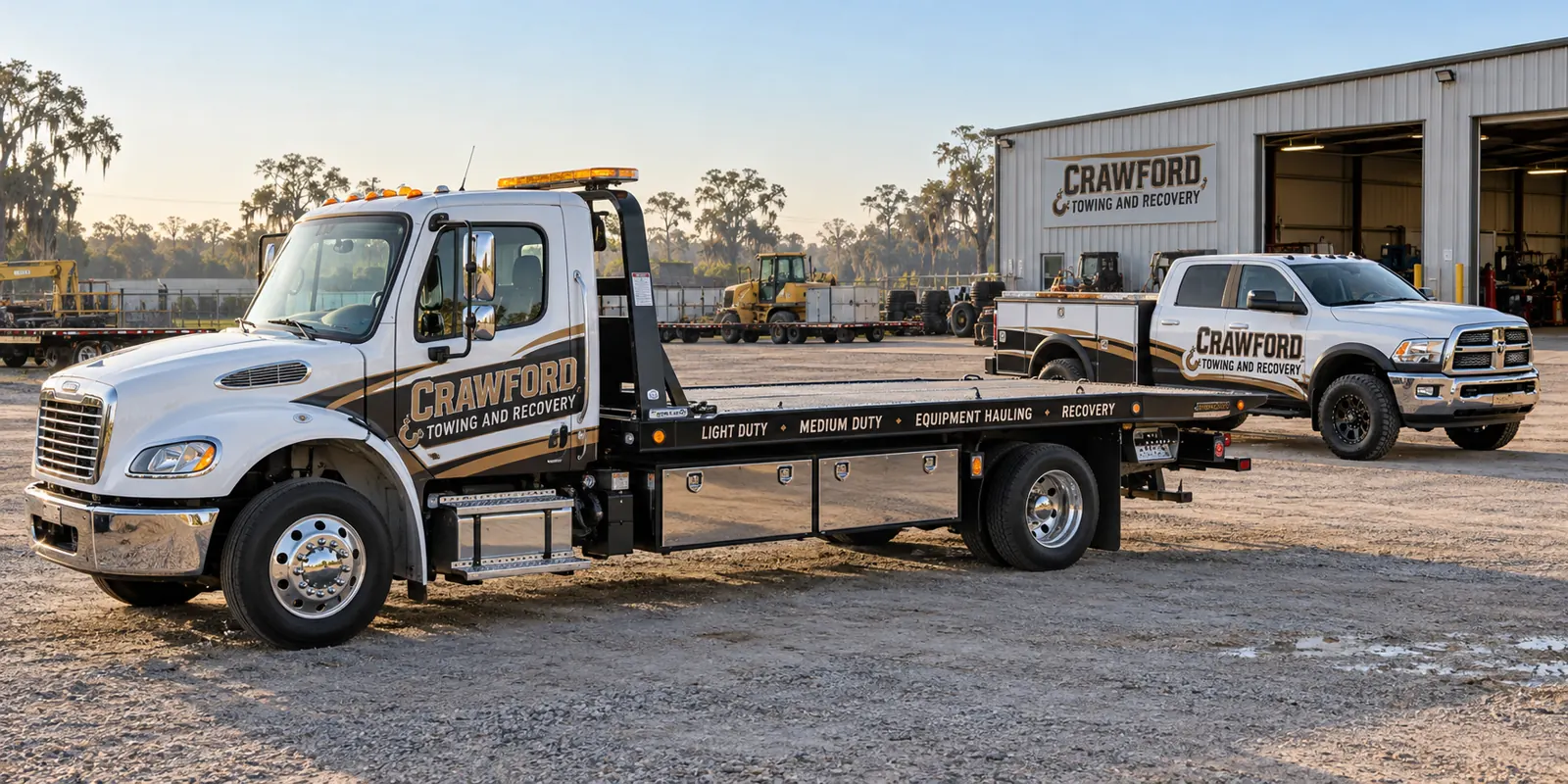
Fictional commercial wrap design concept; not a completed customer installation.
Identify the operator and the services it actually offers
Start with the company name and a concise towing or roadside-service description. A viewer should be able to recognize the business without interpreting a complicated recovery illustration. Decide which contact route should lead and give it a complete, readable position. A direct dispatch number and a general website may have different roles in the brief.
Use accurate approved service wording. If the business wants to display operating hours, vehicle categories or a particular service area, confirm those details internally before approval. Do not let a design concept create an unsupported response promise or affiliation. The intended message should reflect the actual operation and the enquiries it can handle.
Separate the fleet versions before choosing a standard layout
A flatbed, wheel-lift truck, heavier recovery unit and service pickup have different usable surfaces. List each configuration and quantity, with chassis and body details available. A shared cab model does not describe the equipment behind it. Photograph the actual vehicles rather than relying on a generic tow-truck outline.
Use normal parked views with equipment safely stowed. Show both sides and rear, then add close views of doors, compartments, rails and existing information. The commercial truck route connects the broader vehicle choices, while service bodies provide a narrower planning page for compartmented support units.
Work around recovery hardware and functional information
Review the name and contact route against the stable panels that can carry them. Equipment, rails, handles and access points can interrupt a composition that looks continuous on a simplified drawing. Mark the areas you want considered and the components that must remain excluded. The graphic scope should identify included surfaces clearly.
Record existing warnings, equipment labels and verified vehicle or business identifiers that need to remain visible and usable. Have the responsible operator or equipment owner review those areas. Branding artwork should support the approved information plan; it should not invent operational labels or imply that decorative graphics replace an equipment specification.
Choose coverage around clear identification
Cab-door lettering can provide a compact identity while suitable larger panels carry a broader visual system. Partial graphics may connect the cab and body without requiring every component to become part of one uninterrupted image. Fuller coverage needs an explicit discussion of the actual surfaces and access requirements.
Compare lettering and partial coverage using the same message and vehicle photos. More coverage does not automatically make the operator easier to identify. If the brief includes prescribed or reflective markings, supply the applicable current specifications and identify the reviewer responsible for those requirements before approval.
Maintain accurate identifiers and artwork references
Supply the business name, approved logos, phone numbers, domain and identifiers from your own current records. Confirm relevant display requirements through the appropriate authority where needed. Choose one coordinator to consolidate feedback and identify other reviewers who own equipment or operational details. Keep the proof clearly dated.
Link the approved version to the actual unit and body configuration. A replacement vehicle or changed recovery body may need a new layout even when the brand remains the same. The artwork guidelines help organize source files and review ownership so later graphics requests do not depend on an uncertain older file.
Plan condition and availability around a working fleet
Identify priority units, release windows and how many vehicles can be unavailable at one time. Clarify access, delivery and collection against the confirmed project arrangement. Do not organize operating coverage around a generic installation duration that has not been agreed for the actual vehicles and preparation requirements.
Disclose old vinyl, residue, repairs, corrosion and damaged finishes with close photos. Graphics should not be treated as a repair for an underlying surface concern. Removal and preparation need to be explicit in the scope. The inventory worksheet can connect unit references, photos, condition questions and availability before the proposal is approved.
Prepare a towing-fleet graphics brief
Send the equipment list, quantities, current photographs, brand files and essential wording. Identify coverage preferences, old graphics, condition concerns and timing. Include any specifications the project needs to address and the approval owner for those details. Make unknown information visible rather than assuming a familiar truck category resolves it.
Review the cost guide to compare complete scopes, then request a towing-fleet graphics quote. The tow truck and support pickup shown here use a fictional company identity. They illustrate a possible coordinated design without presenting customer installations, operating qualifications or response results as evidence.
Frequently Asked Questions
Turn Your Vehicle Details Into a Clear Project Brief
Send current photographs, vehicle quantities, logo files, coverage preferences and timing. Identify old graphics and paint concerns so the project review can address the actual equipment.
Explore planning resources or request your commercial wrap quote.
