
Swap Body Delivery Graphics Planning
Swap body delivery graphics planning needs two connected asset records: the vehicle that moves the body and the body that carries the identity. A box can change position or assignment while keeping its own graphics history. Define which information belongs to each asset, how the public message should work when they are separated, and which actual body configurations the requested artwork must cover.
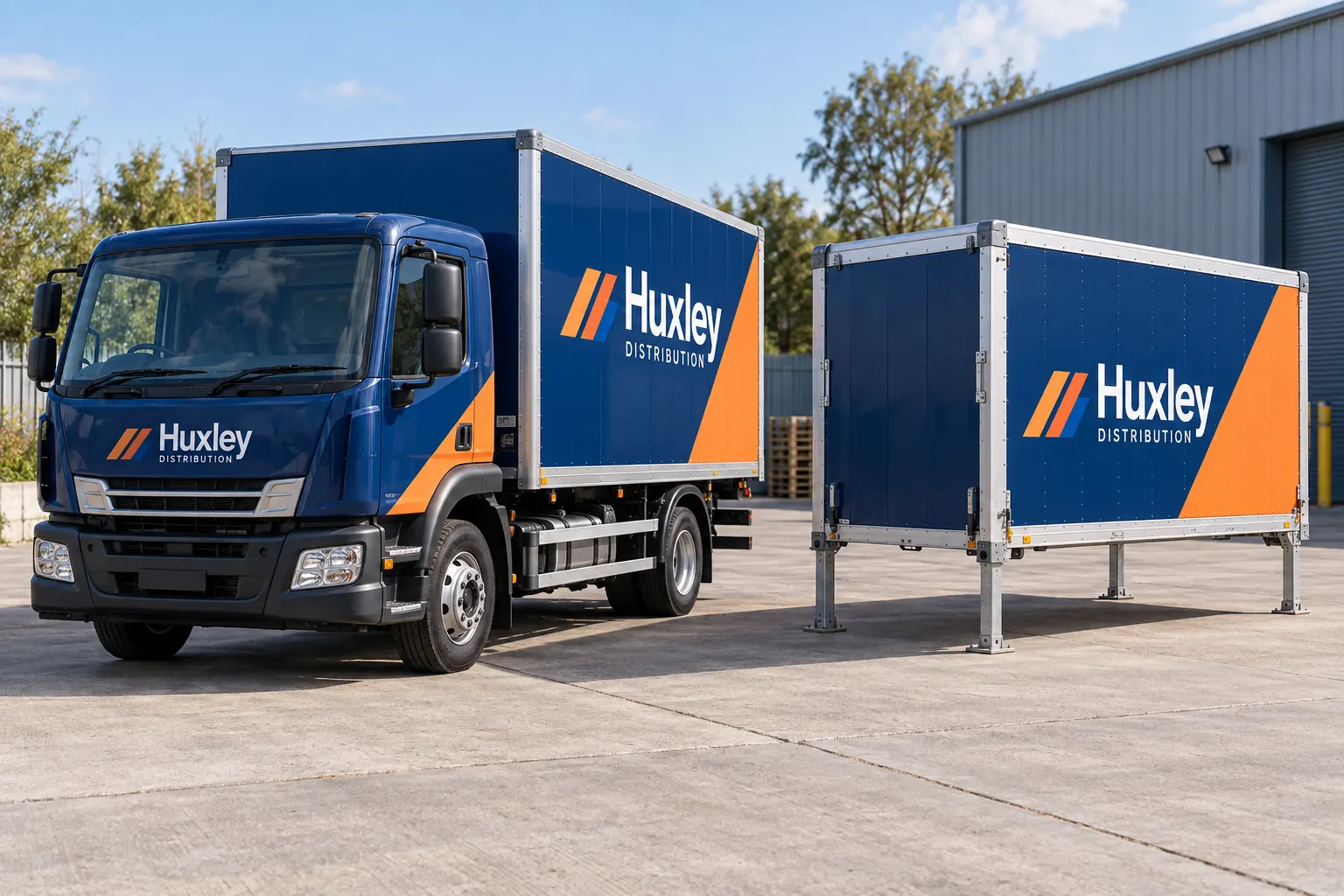
Original fictional commercial planning concept; not a completed customer installation.
Create separate chassis and body references
List the carrier vehicle and each body as distinct assets in the project register. Use the company’s actual identifiers and record the current pairing where relevant. Do not use the chassis number as the only reference for artwork carried on a body that may be assigned elsewhere. The provider needs to know which physical surface each proof and photograph represents.
Record the body configuration, quantity and current location. If several bodies look similar, identify them through reliable unit references rather than color alone. A separate body row can retain its own artwork version, condition photographs and approval history even when the vehicle carrying it changes. This is an administrative planning method, not an instruction for handling or exchanging equipment.
Decide which public message belongs on each asset
Choose whether the cab, body or both should carry the company name, service descriptor and approved contact route. Consider how the identity reads when the assets are viewed separately in their ordinary authorized locations. A paired design should not make an essential business name depend on two assets always remaining together if the actual operation regularly separates them.
For fictional Huxley Distribution, the concept shows a consistent identity on a delivery truck and a separate body. It illustrates a visual relationship, not a measured equipment configuration or operating procedure. Your actual brief should state which assets can be paired, what message each needs independently and who approves the public information.
Survey each body configuration independently
Provide current side, rear and relevant close photographs for the requested bodies. Show door hardware, panel divisions, rails, existing graphics and known condition concerns. Identify the actual body reference where available. Ask authorized personnel to supply safe views through the company’s normal equipment process; do not stage a body movement or exchange merely for a design photograph.
For the carrier vehicles, provide their own relevant views and hardware details. Mark planned equipment changes and unconfirmed configurations. A common fleet color or similar nominal size does not establish identical surfaces. Keep the actual evidence linked to the asset so a designer is not asked to infer which body is shown in an unlabeled group of yard photographs.
Keep temporary assignments out of permanent identity by default
Separate the stable company contact route from temporary route, depot or client information. Decide which variations are actually required and who controls them. If a body can move between branches, a branch-specific contact line may need a deliberate policy rather than being copied from whichever vehicle currently carries it.
Record the approved information source and affected assets. Avoid publishing customer schedules, access instructions or internal pairing details as decorative content. Those records belong in the operating process. The graphics brief should explain the selected public message and identify which assignment changes trigger a review, without asking the provider to determine the company’s dispatch rules.
Plan coherent layouts without assuming permanent pairings
Review the cab and body compositions together and separately. The identity can share a visual theme while each asset retains the information the business has chosen for it. Identify where hardware and door divisions interrupt the message. Ask the provider to show the relevant actual versions rather than extending one broad mockup across every asset in the system.
If a special paired design is requested, document the pairing assumptions and their owner. A layout that depends on one specific combination should not quietly become the master for bodies used elsewhere. Keep the general fleet standard distinguishable from a controlled exception. This makes later additions easier to assess without abandoning the shared identity.
Compare the quote by assets and adaptations
Count carrier vehicles and bodies separately, then state the requested areas for each configuration. Identify existing graphic removal, artwork adaptation, relevant condition review and installation arrangements. Ask how work on separately located assets is addressed. A total described only as a number of trucks can conceal the actual body quantity and the amount of artwork variation involved.
Keep optional or unconfirmed assets visibly separate from the committed request. If a body is awaiting repair or reassignment, identify the dependency and responsible contact. Compare scope descriptions alongside the totals. Do not assume that every body shown in a concept illustration or parked in the same yard is included in the proposed work.
Coordinate access and retain body-specific completion records
Identify who controls each asset’s availability and where it can be assessed or released. Explain actual operating constraints and ask the provider to review the project arrangement before dates are confirmed. Keep equipment handling within the company’s authorized process. The graphics handoff should identify the asset and work, not provide instructions for moving or supporting the body.
After work, retain the relevant proof and current photographs under the body’s own reference as well as any useful fleet cross-link. When damage, repairs or equipment changes occur, update that record. A later replacement request should not rely only on the chassis that happened to carry the body during the original project.
Build the next inquiry from an asset pairing record
Use the working record below to identify carriers, bodies, proposed public messages, actual photographs and assignment-related decisions. Save the text and keep supporting evidence in your normal project files. Mark unresolved pairings or wording policies clearly. Completing the record does not authorize equipment handling or establish that a proposed surface treatment is appropriate.
For Pelican Wraps, provide the separate asset quantities, current photographs, approved identity files, requested coverage and access constraints. Use the broader logistics and commercial body resources for the overall program. This focused brief lets the supplier assess the graphics work while the business retains clear ownership of pairing, release and public contact decisions.
Draft and Download Your Working Record
Draft your entry, then download a copy before leaving. Send any project decision through the communication process agreed with your supplier.
Frequently Asked Questions
Take the Next Step with a Clear Project Brief
Continue with the resource that matches your next decision:
- Logistics & Delivery
- Box Truck Wraps
- Commercial Trailer Fleet Graphics
- Fleet Graphics Unit ID Register
- Request a Quote
Send the actual vehicle or surface photographs, quantities, approved brand files, requested coverage and timing constraints. Identify open questions so the project review can address your equipment and business needs.
