
Storefront Graphics Replacement Panel Record
When one storefront pane needs new graphics, the request should identify that area without losing the context of the surrounding frontage. This replacement record links current evidence, the intended message and any known earlier artwork or supplier references. It concerns the graphics inquiry, not a glass-repair specification or a diagnosis of damage. Use it to explain what changed and what the provider needs to assess before archived artwork becomes an assumed replacement order.
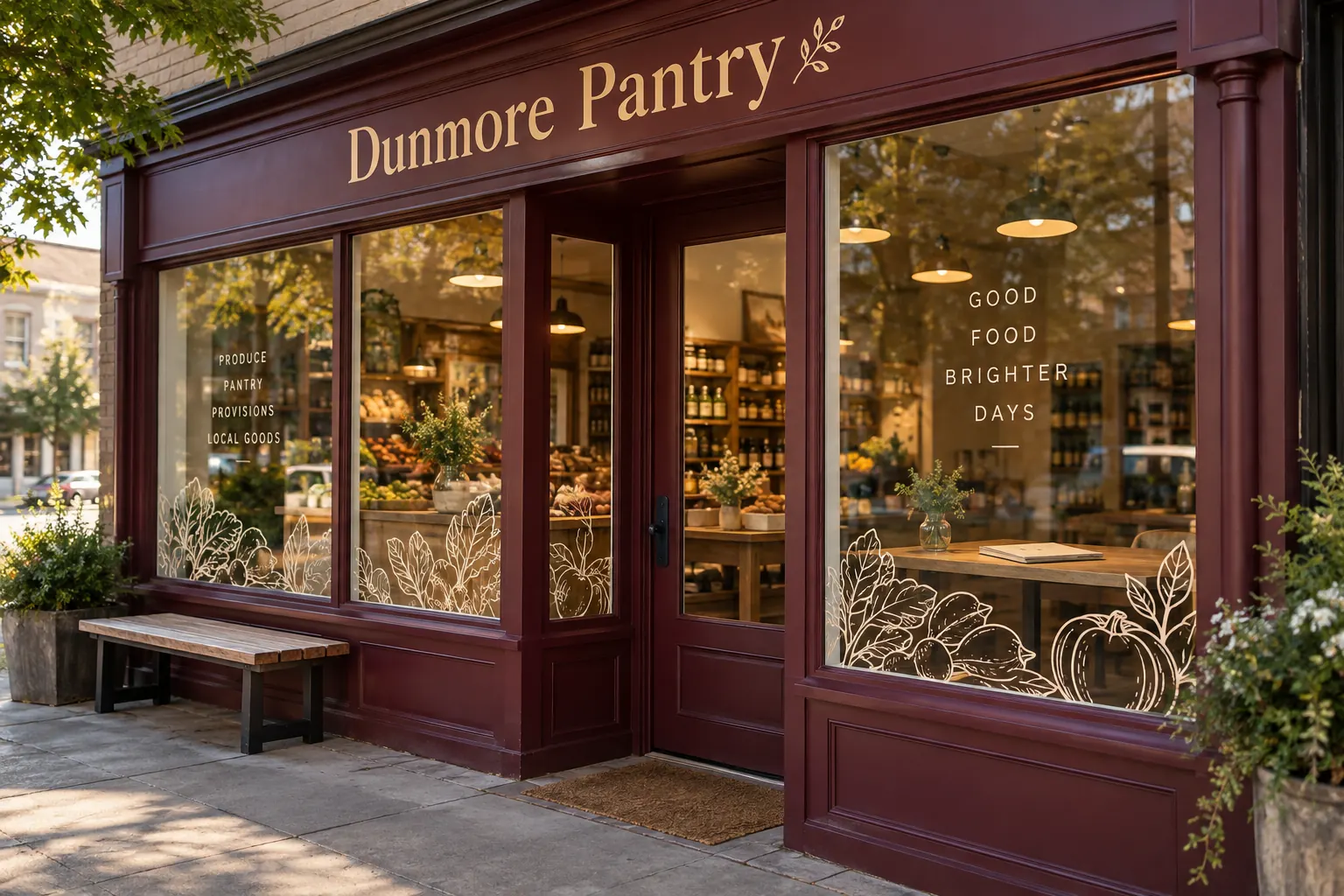
Original fictional commercial planning concept; not a completed customer installation.
Identify the affected pane in the whole frontage
Give the actual area a plain reference and provide an overall view showing its relationship to nearby panes and the entry door. Add useful detail photographs of the existing treatment. A close image alone can make it difficult to tell which area is involved or whether the requested message continues across neighboring windows.
Record the business and coordinating contact through the normal project channel. Keep the affected-area reference consistent with any prior survey or current storefront inventory. If the buyer cannot identify the earlier supplier panel name, use observations and photographs instead of guessing a production identifier. The provider can ask how the actual area should be mapped to available artwork or project records.
Describe the reason for the inquiry factually
State the observed or planned change, such as an updated message, a graphics concern or a pane that the premises team says is being replaced. Record the source and what remains unknown. Avoid assigning cause from appearance or describing a proposed repair outcome as established before the relevant assessment.
If glazing work is involved, identify the responsible premises contact and the current status of that separate work. Obtain available information about the actual new area when it is ready for review. The graphics request should not assume that an earlier pane’s surface information applies unchanged to a replacement. Keep the real project dependencies visible without turning the graphics record into instructions for handling or repairing glass.
Connect the current message to the intended replacement
Obtain the exact identity and wording the business wants now. Compare them with the existing visible graphics and available approved proof. A request to replace one pane may reveal that the old contact route or campaign is no longer intended. Ask the business owner to identify the current message rather than automatically reproduce a familiar old layout.
The Dunmore Pantry concept illustrates a frontage whose individual panes can be identified within a coherent identity. It is fictional and does not show a real repair or measured production panel. Your actual record should link the current business instruction to the affected area and explain what the neighboring treatment is intended to retain. Keep a new message decision separate from the historical description of what was previously installed.
Locate the relevant artwork and supplier references
Record available proof versions, artwork filenames, earlier project references and the custodian who can provide them. Describe each item accurately. A viewing photograph may help identify the design without supplying editable or production artwork. Use the provider’s actual panel or area references where they exist and keep buyer labels distinguishable.
If files cannot be found, state that gap and supply the evidence available. Do not select an uncertain old file merely to make the request appear complete. Ask what additional artwork work or assessment is needed for the actual inquiry. The useful record makes the available history findable while preserving the provider’s role in determining how it relates to the proposed replacement scope.
Explain the relationship with neighboring graphics
Identify any intended visual continuity, repeated wording or other relevant relationship between the affected pane and surrounding areas. Supply current context photographs and controlled sources. Ask the provider to assess how the actual proposed work should be discussed alongside the existing treatment rather than promising a particular match from the old artwork alone.
Keep the requested scope explicit. A single-pane inquiry should not silently become an order to change the whole frontage, and a preference for continuity should not conceal open questions about other areas. If the business wants alternatives, explain the decision each should answer. Compare their actual included work and references so the buyer understands whether the options concern the same area or a broader defined change.
Retain the new decision and actual completion reference
Record the current proof, exact area, business decision and remaining assessment or coordination actions. Keep requested timing separate from confirmed arrangements. If the underlying pane or message changes during review, identify which sources need updating. An earlier approval should not remain apparently current for a different area state.
After actual work, retain the normal project reference and current photographs, then update the storefront inventory and artwork pointer. Label superseded sources as history. The next buyer should be able to see which pane changed and which reference now applies without assuming that the entire frontage was replaced. Record any remaining questions or unfinished areas directly instead of hiding them under one replacement-complete label.
Send a defined storefront replacement inquiry
Provide Pelican Wraps the overall and affected-area photographs, exact pane reference, factual change description, current message sources and available earlier artwork. Include relevant supplied glazing information and the premises contact where that work affects the request. Explain neighboring graphics to retain, desired scope and open decisions.
The local record below captures area evidence, change reason, current copy, historical sources, continuity questions and next actions. Use window graphics for the commercial discussion and the survey checklist for missing premises evidence. A useful inquiry lets the provider assess a specific real area while the business can explain its current message and available history. It avoids treating one archived file or a cropped photograph as a complete instruction for replacement work.
Draft and Download Your Working Record
Draft your entry, then download a copy before leaving. Send any project decision through the communication process agreed with your supplier.
Frequently Asked Questions
Take the Next Step with a Clear Project Brief
Continue with the resource that matches your next decision:
- Window Graphics
- Retail & Storefront Graphics
- Storefront Window Graphics Survey Checklist
- Retail Window Campaign Changeover Plan
- Request a Quote
Send the actual vehicle or surface photographs, quantities, approved brand files, requested coverage and timing constraints. Identify open questions so the project review can address your equipment and business needs.
