
HVAC and Plumbing Fleet: A Planning Example for Vans and Service Bodies
This fictional trade-fleet scenario coordinates one business identity across a cargo van and a service-body truck. It follows the decisions that keep the name recognizable while fitting different panels, working compartments and service messages.
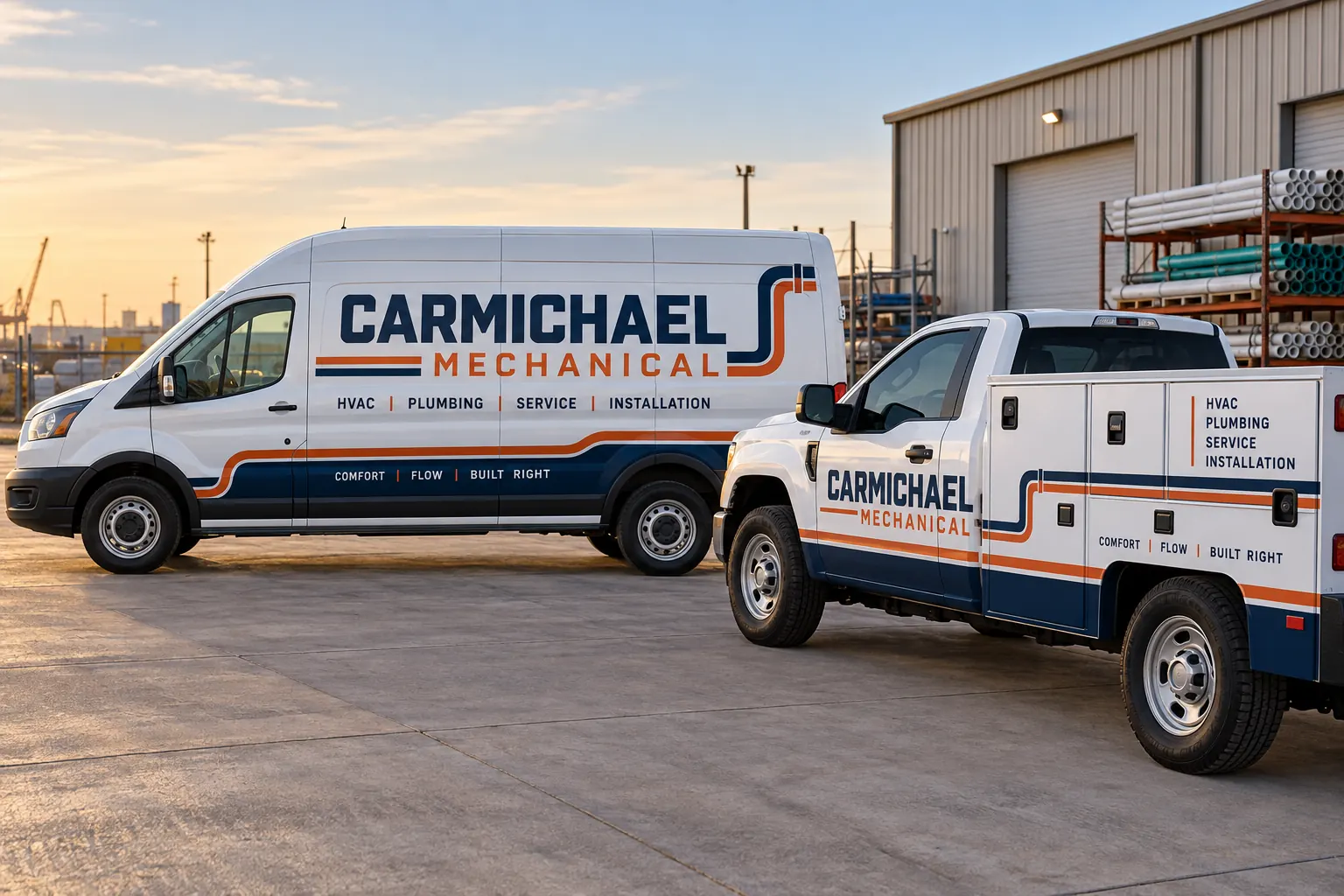
Fictional project-planning illustration; not a completed customer installation or measured project result.
Scenario: one mechanical business with two graphic canvases
Consider a mechanical-services buyer whose fleet includes cargo vans and service-body trucks. The business wants a coherent identity without pretending both vehicles have the same uninterrupted side. The fictional Carmichael Mechanical concept shows the relationship between the two layouts; it does not document a customer fleet, installation or verified production fit.
Start by deciding which business name and service wording remain fixed. Identify whether heating, cooling, plumbing or another service label is actually approved for the relevant units. Do not add qualifications or capabilities simply to make the design appear established. The shared identity should communicate the real business, while the actual equipment determines how much supporting information can be fitted usefully.
| Decision | Record to retain | Purpose |
|---|---|---|
| Trade wording | Actual services and approved business name | Avoid adding unsupported qualifications or capabilities. |
| Mixed configuration | Van doors; truck cab and compartment arrangement | Fit separate sheets within one visual family. |
| Coverage choice | Included faces and boundaries for each configuration | Matching identity does not require identical coverage. |
| Data acceptance | Current contact route and operator-approved variable fields | Keep changing information tied to an authorized source. |
| Repeat record | Unit, configuration sheet and equipment changes | Review new compartments or accessories before reordering. |
Survey compartments and doors before choosing text locations
Photograph the van sides and rear, then the service-body cab, compartments and rear arrangement. Include handles, hinges, locks, lighting, equipment and required information. Connect close photographs to overall views and label the unit. Clearly distinguish estimates from final usable-area dimensions.
Use the survey guide to organize the references. A broad van side can support one clear identity area, while a service body may require several smaller decisions. Keep important complete words in suitable clear areas where practical. A technically covered panel is not automatically a good place for a name if the normal equipment or compartment arrangement repeatedly interrupts it.
Give both layouts a shared hierarchy without identical composition
Set the relative priority of the business name, service context and chosen contact route. Retain the approved logo proportions and visual character while arranging each layout for its actual faces. On the van, the broad side may carry more supporting graphic area; on the truck, the cab or a suitable compartment face may carry the strongest identity.
Compare lettering and decals with partial coverage for each configuration. Do not assume both must use the same coverage category to look related. A coordinated palette and message hierarchy can connect different coverage boundaries when the decision is recorded in the actual placement sheets.
Separate service wording from controlled operational data
Ask the buyer to provide the approved wording for each unit group and identify any genuine variable information. Keep internal asset references distinct from carrier information the responsible operator must supply and approve where applicable. Confirm the destination behind any contact action rather than copy an old number from a previous proof.
Use the unit and carrier-data guide for the ownership questions. The person approving a logo may not be the person responsible for operational data. Retain both acceptances with the current artwork version. That prevents a visually consistent mixed fleet from repeating an incorrect service label, outdated destination or unrelated unit identifier.
Review starting condition and product assumptions by vehicle
Collect old-graphic and finish information for both configurations. A clean-looking van in a distant image does not establish the service-body compartments have the same surface history. Photograph repairs, damaged coatings and uncertain areas and identify preparation questions that need actual review.
Ask the proposal to name the relevant material system and describe included coverage, removal, preparation and installation. Use body-detail planning to organize hardware and construction concerns. Keep technical methods with the responsible product and installation review rather than use one generic recipe for every panel. The commercial comparison should explain which tasks repeat and which vehicle needs different work.
Release the right configuration against the right approved file
Build a unit schedule that links each asset with its placement sheet, variable data and proposed release window. Confirm who controls transport and access and ask the supplier to accept the actual availability. If a truck is substituted for a van, review the scope and file rather than assume the same identity makes the change irrelevant.
Use the rollout planner to keep dependencies visible. A mixed-trade fleet can have different service roles, so the operator should decide which units can leave work together. The scenario does not prescribe a universal batch size or guarantee a disruption-free installation; it shows the records that make the release discussion specific.
Keep the mixed-fleet standard useful after the initial work
Retain a master identity plus separate accepted configuration sheets for the van and service body. Connect unit records to installed photographs, product references and care guidance. When equipment changes or a compartment is replaced, add current fit information before ordering a repeat from an older file.
For a similar project, send the mechanical fleet brief with the actual inventory, photographs, approved wording, coverage preferences and release constraints. Browse other planning examples for a different operating problem. The intended result is an agreed scope and repeatable handoff, without invented customer evidence, qualifications, installation durations or measured business gains.
Frequently Asked Questions
Plan a Similar Project with Your Actual Equipment
Send current photographs, vehicle quantities, logo files, coverage preferences and timing. Identify old graphics and paint concerns so the project review can address the actual equipment.
Explore planning resources or request your commercial wrap quote.
