
Painting Contractor Vehicle Wraps for Vans, Trucks and Trailers
A painting fleet should make the contractor recognizable at a property and communicate the work it wants to book. Build a consistent identity across vans, pickups and tool trailers, with a readable message that works around ladder racks, doors and daily equipment.
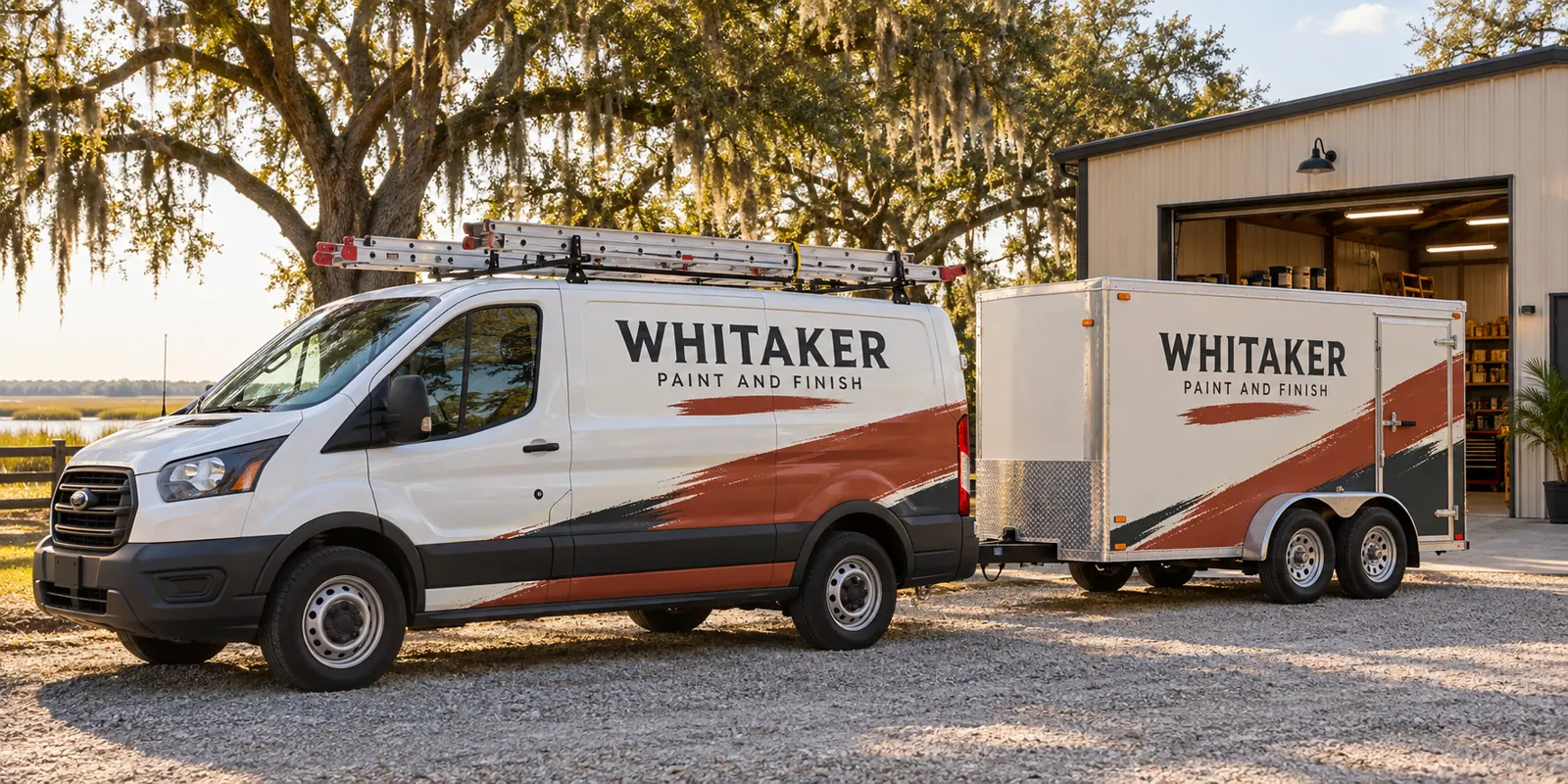
Fictional commercial wrap design concept; not a completed customer installation.
Make the contractor name clear at the property
Start with the business name and a concise painting-service description. A vehicle may remain parked while the team works, giving nearby people a chance to recognize the operator. The main identity should not depend on a complex mural or a large brush illustration. Keep the company and contact route easy to find.
Choose which service description helps the intended customer understand the business. Residential repainting, commercial work and specialist finishes can create different priorities. Use the company’s actual approved wording rather than printing every possible service in equal size. The website can carry the longer explanation after the vehicle has established the identity.
Use color purposefully without making the message difficult to read
A painting business can have a visually expressive brand, but too many competing colors can weaken the hierarchy. Decide which brand colors remain stable across the fleet and how a brush-stroke or finish motif supports the company name. Review contrast and spacing at a reduced size as well as close up.
If brand-critical colors need particular review, identify that early and ask how the proposed print system will be assessed. Do not treat a phone display or an unrelated paint sample as an automatic standard for the finished graphic. Record any agreed review step so the proof process has a clear reference rather than an assumption.
Work around ladder racks and practical vehicle bodies
Photograph vans and trucks in the normal working configuration, including ladders, racks, caps, storage and accessories. A logo placed where equipment usually blocks it will not serve the intended message. Send each side and rear, with close views of door hardware and existing graphics. List the quantities and configurations separately.
Use the van, pickup and service-body routes to prepare equipment details. The cab model alone may not identify an aftermarket work body. Review essential wording against the actual usable panels rather than a simplified blank-vehicle drawing.
Give the tool trailer a complete identity of its own
A trailer may remain at a job while the tow vehicle leaves. It should carry enough company identity and contact information to make sense independently. Use the same logo treatment and hierarchy as the vehicle, then adapt the layout to the trailer’s broader surfaces and different proportions.
Include side access doors, rear ramps or swing doors, hinges, latches and vents in the references. Review the rear separately so important wording is not divided by hardware. The mobile-service trailer page addresses work-base planning, while the general trailer page connects broader coverage decisions.
Compare coverage and keep approval responsibilities clear
Lettering can establish a restrained identity on clean, consistent paint. Partial graphics can create a larger branded area while using original paint as part of the composition. Fuller coverage provides another option. Compare defined treatments using the same message and actual body photos, with included panels and exclusions made explicit.
Collect the best logo sources, approved wording and brand references. Choose one person to verify spelling, phone numbers and domains, and consolidate feedback against a dated proof. The artwork guidelines help organize that review. An approved vehicle version should remain linked to its body specification for later additions or replacements.
Fit the rollout around jobs and actual surface condition
Identify which vehicles and trailers can be released and how the business will cover work while they are unavailable. Clarify delivery, access and collection before planning around installation. A desired window should remain distinct from a confirmed arrangement for the actual scope. Discuss a phased sequence where a complete fleet cannot be released together.
Disclose old vinyl, residue, body repairs, peeling finishes and other concerns with close photos. Graphics should not be treated as a repair for an underlying surface problem. Removal and preparation need to be addressed explicitly. Use the inventory worksheet to connect body versions, condition questions and release windows.
Prepare a painting-fleet brief with clear business information
Send the equipment list, quantities, current photographs, logo files, essential message and timing. State the coverage choices to assess and the approval owner. Supply accurate business identification from your own records where it needs to appear, and confirm the requirements relevant to the operation through the appropriate authority where needed.
Review the commercial cost guide, then request a painting-fleet graphics quote. The van and trailer shown here use a fictional company identity created for this page. They illustrate a design direction without presenting customer installations, painting qualifications, guarantees or marketing results as evidence.
Frequently Asked Questions
Turn Your Vehicle Details Into a Clear Project Brief
Send current photographs, vehicle quantities, logo files, coverage preferences and timing. Identify old graphics and paint concerns so the project review can address the actual equipment.
Explore planning resources or request your commercial wrap quote.
