
Property Management Vehicle Wraps for Maintenance Fleets
A property-management fleet often brings the company's identity directly to residents, tenants and commercial sites. Create a recognizable brand across maintenance vans, service trucks and supervisor vehicles, with a clear message and consistent records for future additions.
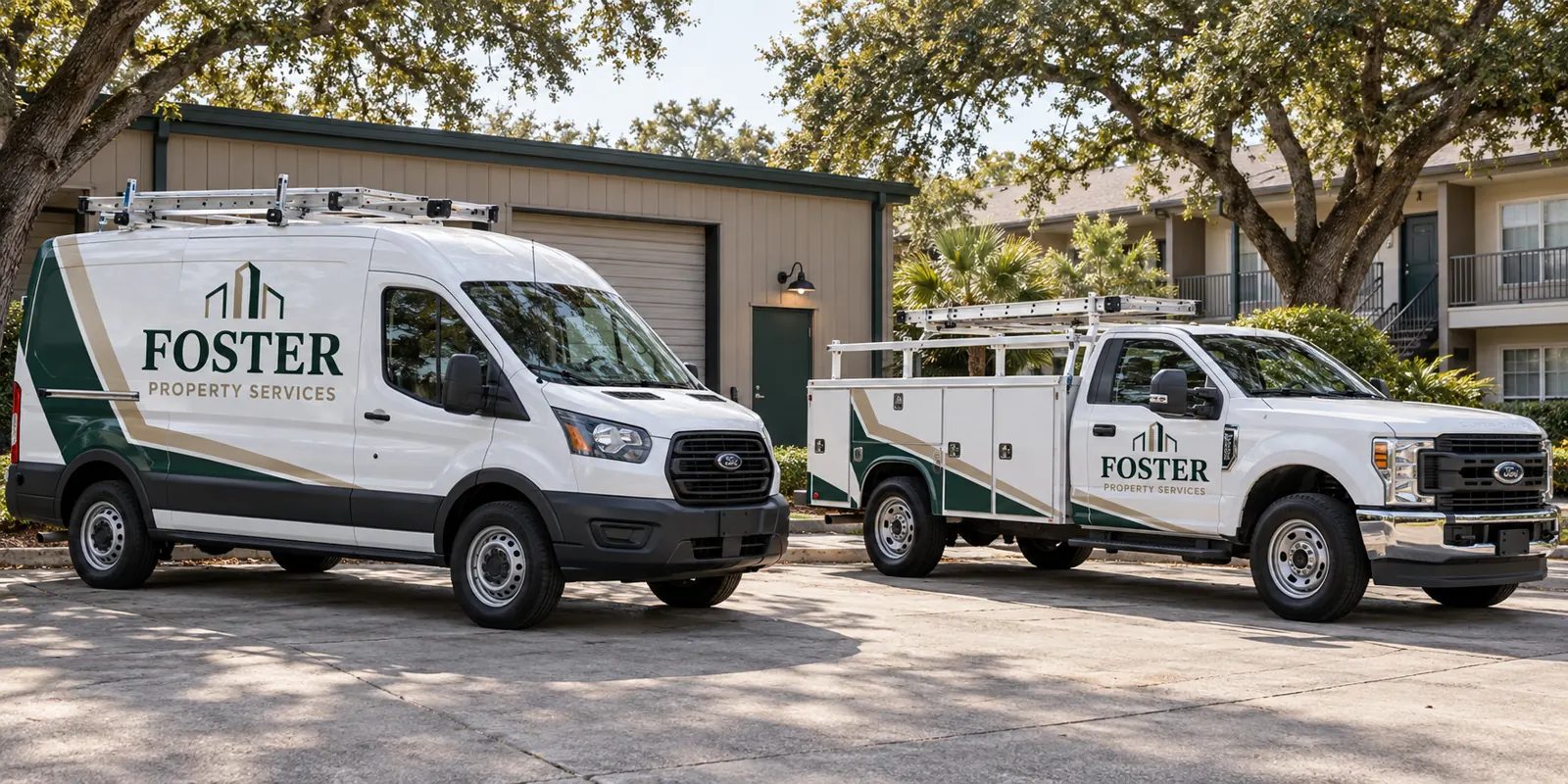
Fictional commercial wrap design concept; not a completed customer installation.
Make the operator clear at residential and commercial properties
Start with the company name and a concise description of its role. Property management, maintenance and facilities support can represent different services. A resident or tenant seeing the vehicle should be able to understand the business without reading a long list of trades. Give the identity enough room to be recognizable.
Choose the contact route that belongs on the vehicle and verify it internally. A public business enquiry number may have a different purpose from a property’s maintenance reporting system. The graphics should reflect the actual communication plan rather than introduce a number that viewers are unlikely to understand or that the organization does not want used publicly.
Organize company, division and property-level identities
A management business may serve several properties while keeping one corporate identity. Decide whether the fleet should lead with the operator name, an approved division description or another defined brand relationship. Shared colors and hierarchy can connect the units without adding a different property identity to every vehicle by default.
If client or property logos are requested, supply the approved assets and identify who authorizes their use. Keep those decisions in the project brief. A graphic concept should not imply an ownership relationship or endorsement that has not been established. Record the approved wording so later vehicle additions follow the intended arrangement.
Match layouts to maintenance vans and work bodies
List the fleet configurations and quantities, including van roof heights, pickup beds, service bodies and supervisor SUVs. Photograph both sides and the rear of each version. Include racks, storage, windows and accessories that affect the visible panels. A chassis model alone may not describe the maintenance equipment fitted behind the cab.
Use the van, service-body truck and commercial SUV pages for body-specific planning. Review important wording around handles, compartments and door splits. The same brand can remain recognizable while the composition adapts to each vehicle.
Choose coverage that supports a practical fleet identity
Lettering can create a restrained operator identity on consistent paint. Partial graphics can establish a recognizable color area and connect different bodies. Fuller coverage provides another option where the surfaces and message support it. Compare the approaches using the same essential wording and current vehicle photographs.
The lettering guide and partial-wrap guide help define the panel scope. Ask how the rear, roof and original paint are treated, and identify equipment information or access areas to preserve. A package name alone should not stand in for the actual included work.
Keep fleet and artwork records accurate as properties change
Assign a coordination owner and retain dated proofs linked to the vehicle configurations and unit identifiers. Contact details, division names and property relationships can change over time. Keep the approved current wording in one maintained reference so a replacement panel does not revive an outdated message.
When another vehicle is purchased or reassigned, send its current specification and photos before reusing artwork. Body differences and accessories may require adaptation. The fleet graphics management route connects those updates with a useful project record instead of treating each request as an unrelated one-off design.
Plan condition review and release windows around maintenance work
Identify priority vehicles and the times each can be released from service. Clarify delivery, access and collection responsibilities, then plan around the confirmed project arrangement. A fleet supporting several properties may need a phased sequence rather than delivering every unit at once. Explain those constraints before the schedule is assumed.
Disclose old graphics, residue, repairs, peeling finishes and other surface concerns with close photos. Graphics should not be treated as a repair for an underlying condition problem. Removal and preparation need to be explicit in the scope. The inventory worksheet helps connect unit details, photo references, condition questions and release windows.
Prepare a property-services fleet brief
Send the equipment list, quantities, current photographs, logo files and essential message. Identify the coverage options to consider, approval ownership and the timing you want discussed. Include any property or partner assets only within the relevant approval arrangement. Make unknown details visible rather than filling the brief with assumptions.
Review the commercial cost guide, then request a property-management fleet quote. The maintenance vehicles shown here use a fictional company identity. They illustrate a possible coordinated direction without presenting customer installations, property relationships or business results as evidence.
Frequently Asked Questions
Turn Your Vehicle Details Into a Clear Project Brief
Send current photographs, vehicle quantities, logo files, coverage preferences and timing. Identify old graphics and paint concerns so the project review can address the actual equipment.
Explore planning resources or request your commercial wrap quote.
