
Remodeling Company Vehicle Wraps and Fleet Graphics
A remodeling fleet should identify the contractor clearly at customer properties and keep one recognizable brand across work vans, pickups and tool trailers. Plan the message around the jobs the business actually wants to book and the equipment its crews use every day.
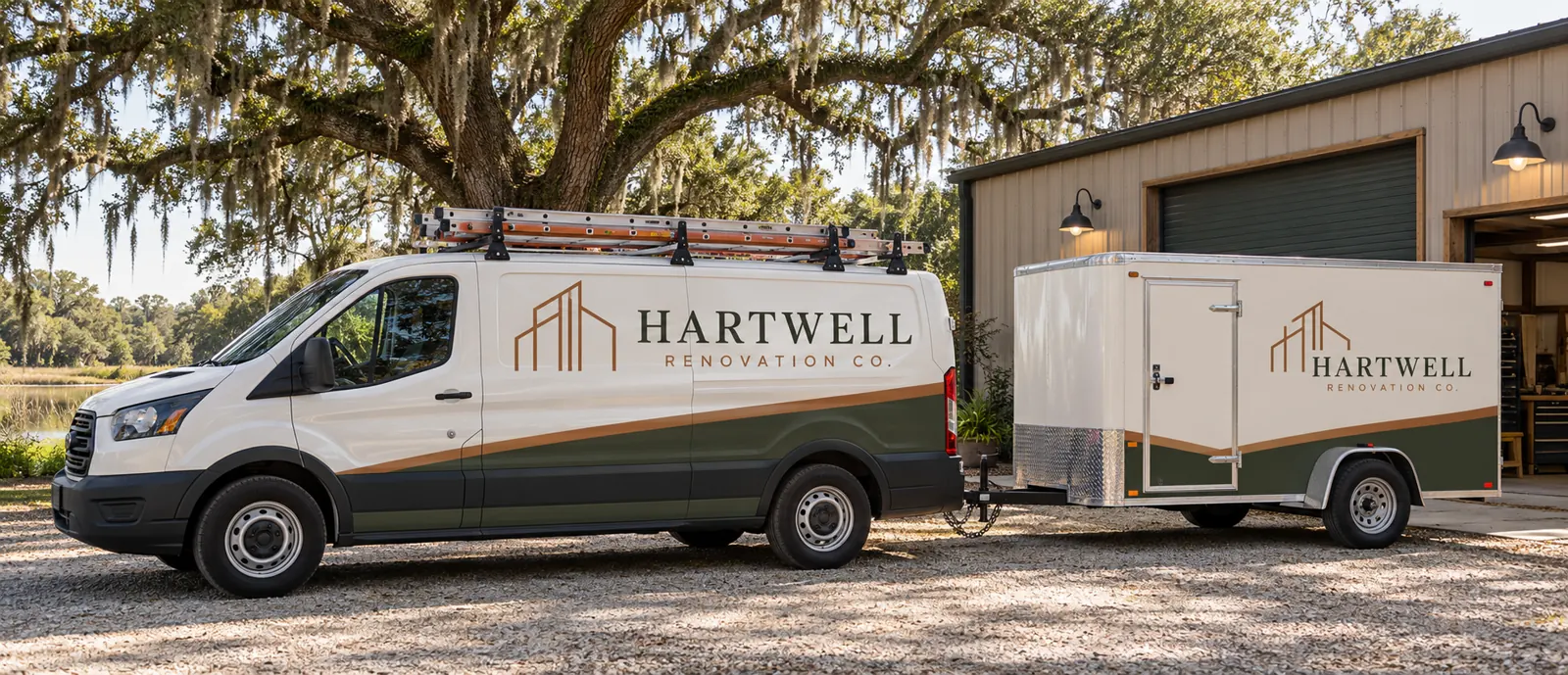
Fictional commercial wrap design concept; not a completed customer installation.
Make the remodeling contractor recognizable at the property
Start with the company name and a concise description of the work. A vehicle may remain outside a property while the crew works, but a nearby viewer may have no other context. Give the business identity enough space to be understood without relying on a detailed house illustration or a long list of trades.
Choose one primary contact route and keep it readable. A distinctive color treatment can connect the fleet while the website carries more detail about services and project enquiries. The layout should support a clear commercial identity rather than create an unsupported claim about workmanship, qualifications or customer results.
Choose service wording around the projects you want to attract
Whole-home renovation, kitchens, bathrooms and specialist interior work can create different message priorities. Identify the actual services the business offers and decide which should lead on the vehicle. A concise description can help an unfamiliar company name attract a more relevant enquiry than an equally weighted list of every possible task.
If several teams have different roles, define those versions within one brand system. Keep the approved wording in a maintained source record so future additions do not reintroduce outdated services or contact details. Use only accurate qualifications or other business information that the responsible company reviewer has approved.
Inventory the work vans, pickups and equipment
List each vehicle configuration and quantity, then send current photographs of both sides and rear. Include ladder racks, storage, caps, service bodies and accessories in the normal working arrangement. A logo placed where equipment normally blocks it will not serve the intended identity. The actual body should guide the layout.
Use the van page, pickup route and service-body page to prepare the vehicle-specific references. The cab model alone may not describe the work body or panels available. Keep modified or unusual units separate from standard versions in the fleet list.
Give the tool trailer a complete identity
A trailer may remain at a job while the tow vehicle leaves. Include enough company identity and contact information for it to make sense independently. Use the shared colors, logo treatment and hierarchy while adapting placement to the trailer’s proportions. It should look related to the van without copying the same composition.
Photograph access doors, rear ramps or swing doors, hinges, latches and vents. Review the rear separately so essential wording remains complete around hardware. The mobile-service trailer route helps connect the graphics brief to the trailer’s working role rather than treating it as an uninterrupted rectangular panel.
Compare coverage and maintain clear proof ownership
Lettering can provide a restrained identity on consistent paint. Partial graphics can create a larger recognizable color area, while fuller coverage offers another direction where the surfaces and message support it. Compare defined options using the same essential wording and actual vehicle photographs. State included panels and exclusions clearly.
Collect the best logo sources and brand references, then choose a coordinator to verify spelling, phone numbers and domains. Return consolidated feedback against a dated proof. The artwork guidelines explain source preparation and review ownership. Keep approved layouts linked to body versions for later additions and replacements.
Fit the rollout around jobs and actual surface condition
Identify priority vehicles, release windows and how the crew will cover work while units are unavailable. Clarify transport, access and collection responsibilities, then plan around the confirmed project arrangement. A desired gap between jobs should not be treated as a reservation before scope and scheduling are agreed.
Disclose old vinyl, residue, repairs, peeling finishes and other concerns with close photos. Graphics should not be treated as a repair for an underlying surface issue. Removal and preparation need to be explicit. Use the inventory worksheet to connect body versions, photo references, condition questions and release windows in one record.
Prepare a remodeling-fleet graphics brief
Send vehicle and trailer details, quantities, current photos, brand sources, essential wording and timing. Identify coverage preferences and the person who can authorize commercial details. Supply any business identifiers from your own verified records and confirm the requirements relevant to the operation through the appropriate authority where needed.
Review the commercial cost guide, then request a remodeling-fleet graphics quote. The van and trailer shown here use a fictional renovation-company identity. They illustrate a coordinated design direction without presenting customer work, contractor qualifications, workmanship guarantees or marketing results as evidence.
Frequently Asked Questions
Turn Your Vehicle Details Into a Clear Project Brief
Send current photographs, vehicle quantities, logo files, coverage preferences and timing. Identify old graphics and paint concerns so the project review can address the actual equipment.
Explore planning resources or request your commercial wrap quote.
