
Restoration Company Vehicle Wraps for Working Fleets
A restoration fleet may combine equipment trucks, service bodies, vans and support vehicles. Create an identity that remains clear across those bodies, communicates the company's actual services and supports organized additions when vehicles or divisions change.
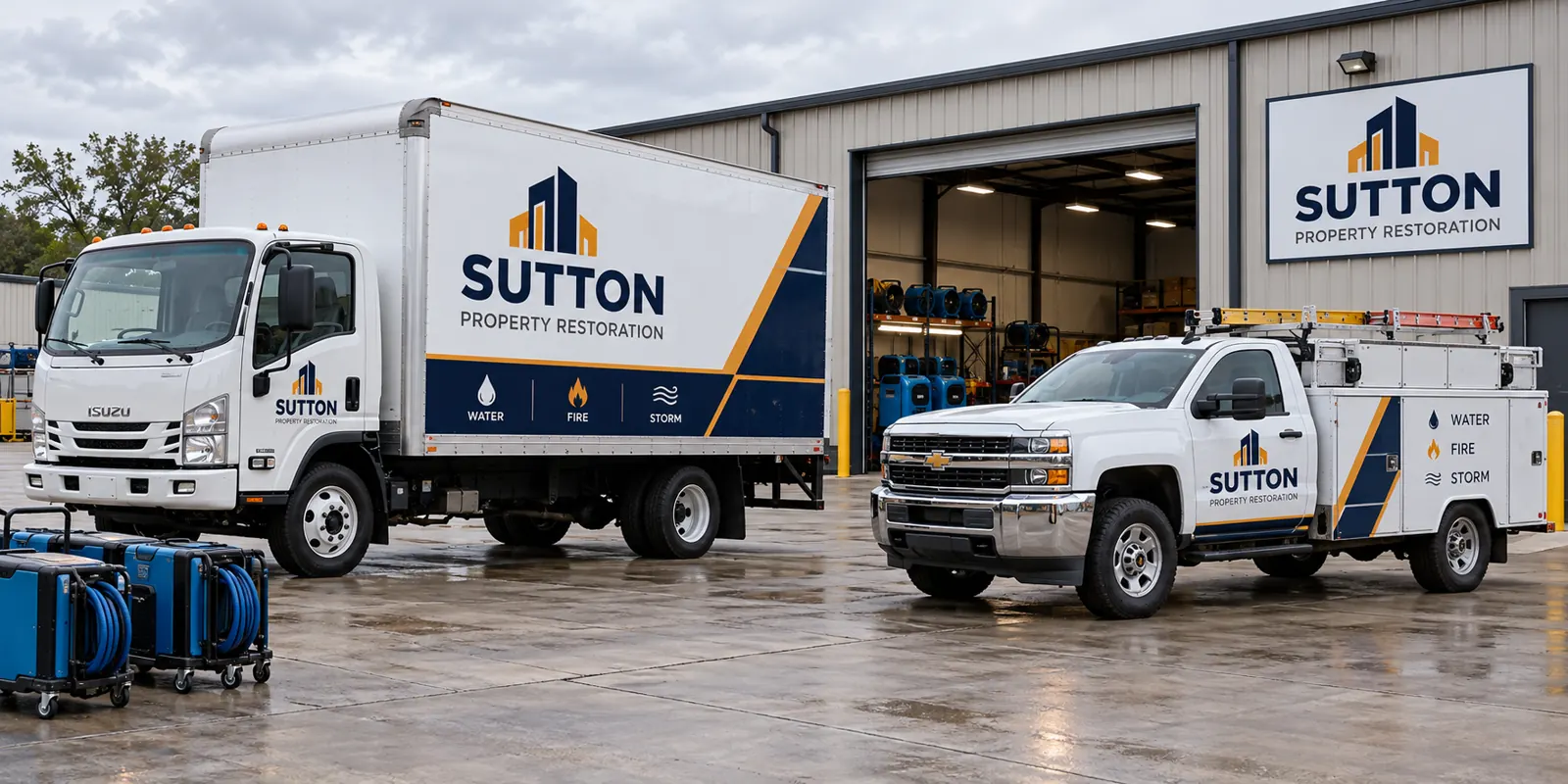
Fictional commercial wrap design concept; not a completed customer installation.
Present a clear company identity in a busy work setting
A restoration vehicle may appear beside other contractors and equipment at a property. Start with the business name and a concise description of the restoration work offered. Make the operator recognizable without requiring a viewer to interpret a complex background image. A consistent identity helps the fleet look like one company even when the vehicles differ.
Choose a primary contact route and give it space. If the company offers particular response hours or specialist services, use only approved accurate wording. Graphics should not add a response-time guarantee, certification or insurance relationship simply because it would make the concept more persuasive. Keep business claims tied to the company’s own verified information.
Organize service categories instead of printing every capability
Water, fire, storm and reconstruction work can create different communication priorities. Decide which categories the vehicle needs to represent and how they relate to the main company identity. A short grouping may be more useful than a dense list of equipment and procedures. Let the website carry the detail a customer can review later.
If different divisions operate different vehicles, define the shared brand elements and the approved division wording. Keep a maintained source record so new vehicles do not introduce conflicting descriptions. The goal is a clear commercial identity, not a vehicle-sized claim that every service or outcome is available in every circumstance.
Adapt the brand to equipment trucks and smaller support vehicles
List box trucks, vans, pickups and service bodies separately with quantities and configuration details. A large equipment truck offers broad side panels, while a compartmented utility body needs a more selective layout. The same hierarchy and colors can connect them without forcing identical placement onto every body.
Use the box truck, service-body truck and van routes to collect the right references. Photograph doors, racks, liftgates and access equipment. Review essential wording against the actual hardware rather than relying on a plain vehicle template.
Choose coverage around the message and the existing surfaces
Lettering may give smaller support vehicles a clear identity, while partial graphics can introduce a stronger color system across the fleet. Fuller coverage may suit larger panels or a broader redesign. Compare those options using the same essential wording and real vehicle photos. More coverage does not automatically make the message easier to understand.
Ask which panels are included, how rear doors are treated and where original paint remains visible. Identify equipment labels, warnings and access areas that must remain clear and usable. The partial-wrap guide helps define a coverage boundary instead of treating a package name as a complete scope.
Keep proof ownership and project records clear
Gather the best logo sources, approved colors, essential wording and any current fleet layouts. Choose one person to consolidate feedback and confirm the commercial details. Review each body version and its rear view separately. A center split, handle or compartment gap can divide important wording even when the side proof looks clear.
Keep the dated approved proof linked to the vehicle configuration and unit reference. Record later division or contact changes centrally. The artwork guidelines explain source preparation and proof review. A familiar brand system supports consistency, but it does not remove the need to check a new or modified vehicle.
Plan availability and condition review before the rollout
Explain which units can be released and how the business covers work while they are unavailable. Identify priority equipment and access restrictions early. Clarify vehicle delivery and collection against a confirmed project arrangement. An active fleet needs a practical schedule based on the actual scope rather than a general turnaround claim.
Disclose old vinyl, residue, damaged paint, repairs and replacement panels with close photographs. Graphics should not be treated as a repair for an underlying surface concern. Removal and preparation should be explicit in the proposal. The fleet solutions route connects quantities, body versions and phased scheduling for a coordinated refresh.
Prepare a restoration fleet brief with accurate expectations
Send the vehicle list, quantities, current photos, approved brand files and essential message. State the coverage options to consider and the timing you want discussed. Identify existing graphics, condition questions and any business wording that needs a particular reviewer. A complete brief makes the proposal more specific without filling gaps with invented assumptions.
Review the commercial cost guide, then request a restoration fleet graphics quote. The equipment trucks shown here use a fictional company identity. They demonstrate a possible coordinated direction without presenting customer work, restoration outcomes, qualifications or response performance as evidence.
Frequently Asked Questions
Turn Your Vehicle Details Into a Clear Project Brief
Send current photographs, vehicle quantities, logo files, coverage preferences and timing. Identify old graphics and paint concerns so the project review can address the actual equipment.
Explore planning resources or request your commercial wrap quote.
