
Private Security Company Vehicle Graphics
A private security fleet should identify the business and its actual role clearly. Build a consistent commercial identity across SUVs, cars, vans and support vehicles, with approved wording, accurate unit information and a deliberate review of each body configuration.
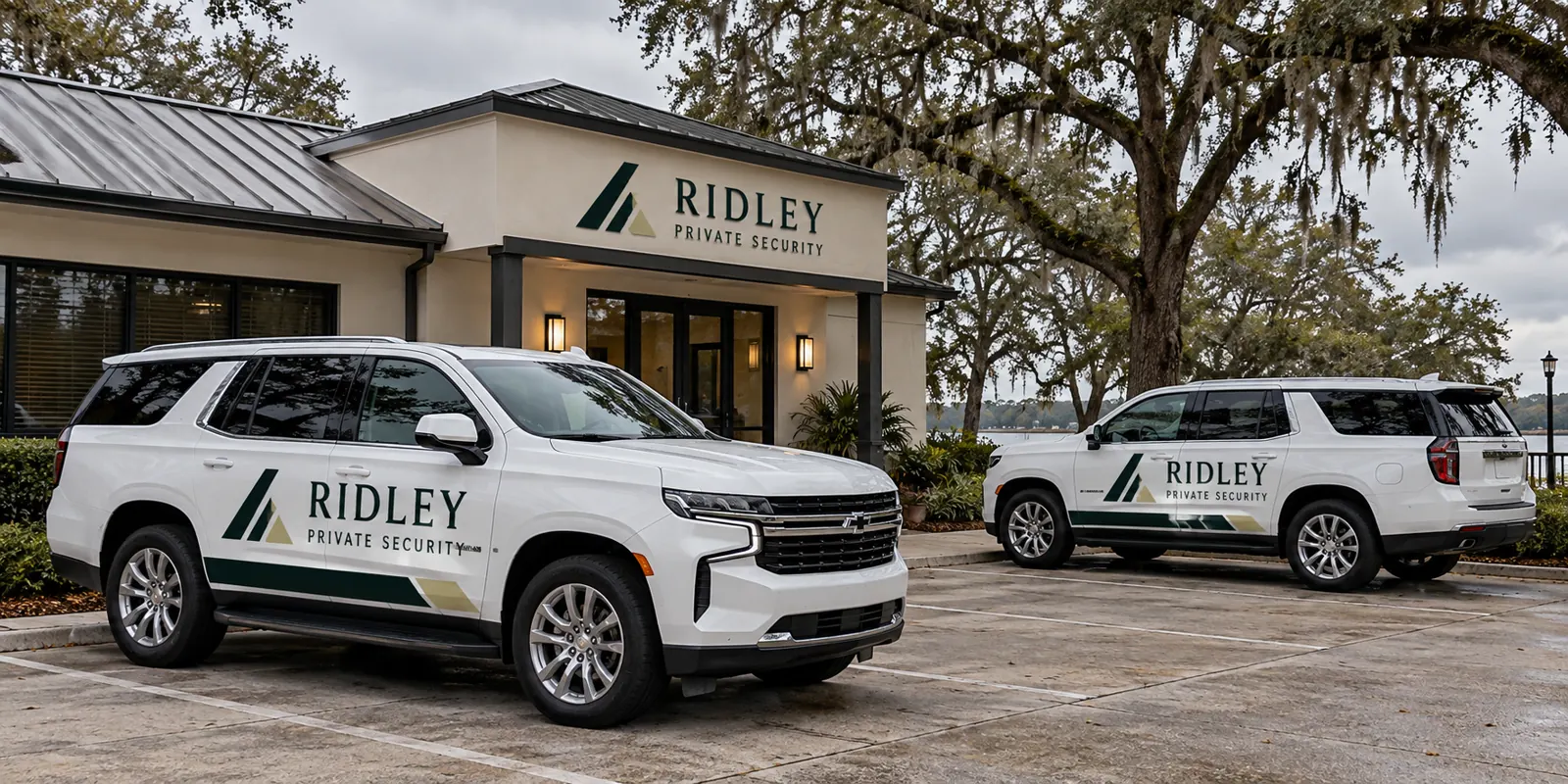
Fictional commercial wrap design concept; not a completed customer installation.
Begin with the business role and authorized identity
Identify the private security company and explain the role of the vehicles in the project. Patrol, site supervision, mobile support and administrative work may call for different message priorities. Start with the business name and the accurate service description the organization wants displayed. The identity should make the operator understandable without relying on a complicated emblem.
Supply approved logos, colors and wording, and identify who can authorize their use. Keep any client or partner assets within the permissions relevant to the actual project. A visual reference can explain a direction, but another organization’s vehicle should not become the source for your business identity or operating claims.
Define the message and the contact route
Decide what the vehicle should communicate to the intended audience. A public business enquiry route and a site-specific operational contact are different pieces of information. Choose which belongs on the vehicle and have the responsible organization verify it. Avoid crowding the layout with several numbers that have no clear hierarchy.
Keep service descriptions, operating hours and any business claims accurate and approved. The graphic layout should reflect the private role of the company. Its purpose is clear organizational identification, not an invented qualification or affiliation. Record the approved wording so later fleet additions do not introduce a different message.
Inventory the SUVs, cars and support vehicles
List each make, model and body configuration with quantity and current photographs. Include both sides and rear, plus accessories or fitted equipment that affects the panels. Different versions of an SUV can have different trim, doors and rear contours. A familiar model name does not establish that an older layout fits another unit.
The commercial SUV page addresses that body-specific planning. Use the van route for support vans and the vehicle directory for mixed equipment. A common hierarchy and color system can connect those vehicles while placement adapts to their actual surfaces.
Choose coverage around a readable commercial identity
Lettering can provide a restrained identity while leaving the original paint visible. Partial graphics can introduce a larger recognizable color area. Fuller coverage may provide another direction depending on the surfaces and project goal. Compare defined options using the same approved message and real vehicle photographs.
Use the lettering guide and partial-wrap guide to define the included areas. Review windows, handles and trim separately rather than assuming every surface is part of the same package. Identify existing information and equipment access that needs to remain clear and usable.
Review unit information and the actual proof views
Supply the verified unit list and define how those identifiers relate to the main brand. Keep the record linked to each vehicle so a later transfer or replacement does not rely on memory. Review side and rear views independently; a center gap, handle or window can interrupt important wording in a different way.
Choose one coordinator to consolidate feedback and identify the people responsible for business, operational or other required reviews. Use a clearly dated proof. If the project includes prescribed specifications, supply the current requirements and the responsible reviewer rather than inferring them from a concept image or material appearance.
Plan condition and vehicle release before the rollout
Disclose existing graphics, residue, repairs, peeling finishes and other surface concerns with close photographs. Graphics should not be used as a substitute for reviewing an underlying condition problem. Removal and preparation need to be explicit in the agreed scope. A previous fleet layout does not establish the condition of today’s vehicle.
Identify priority units, release windows and who authorizes access, delivery and collection. Coordinate around the confirmed project arrangement so the operating plan reflects the actual work. The fleet solutions route connects quantities, body versions and phased scheduling without assuming all vehicles can be released together.
Prepare a private-security fleet brief with a clear approval owner
Send the equipment list, quantities, current photos, authorized brand files and essential wording. Identify coverage preferences, existing information to preserve, condition concerns and timing. Include any specifications and the review chain the project needs to follow. Make questions visible before production rather than treating a completed-looking proof as automatic approval.
Read the artwork guidelines and request a private-security fleet graphics review. The SUVs shown here use a fictional private-company identity. They demonstrate a design direction without presenting a customer installation, qualification, agency relationship or operational performance as evidence.
Frequently Asked Questions
Turn Your Vehicle Details Into a Clear Project Brief
Send current photographs, vehicle quantities, logo files, coverage preferences and timing. Identify old graphics and paint concerns so the project review can address the actual equipment.
Explore planning resources or request your commercial wrap quote.
