
Waste Management Fleet Graphics for a Consistent Operator Identity
A waste-services business may run collection trucks, pickups, support vehicles and trailers under one name. Build a fleet identity that keeps the operator recognizable, explains the services offered and adapts to different equipment without losing control of approved artwork and identifiers.
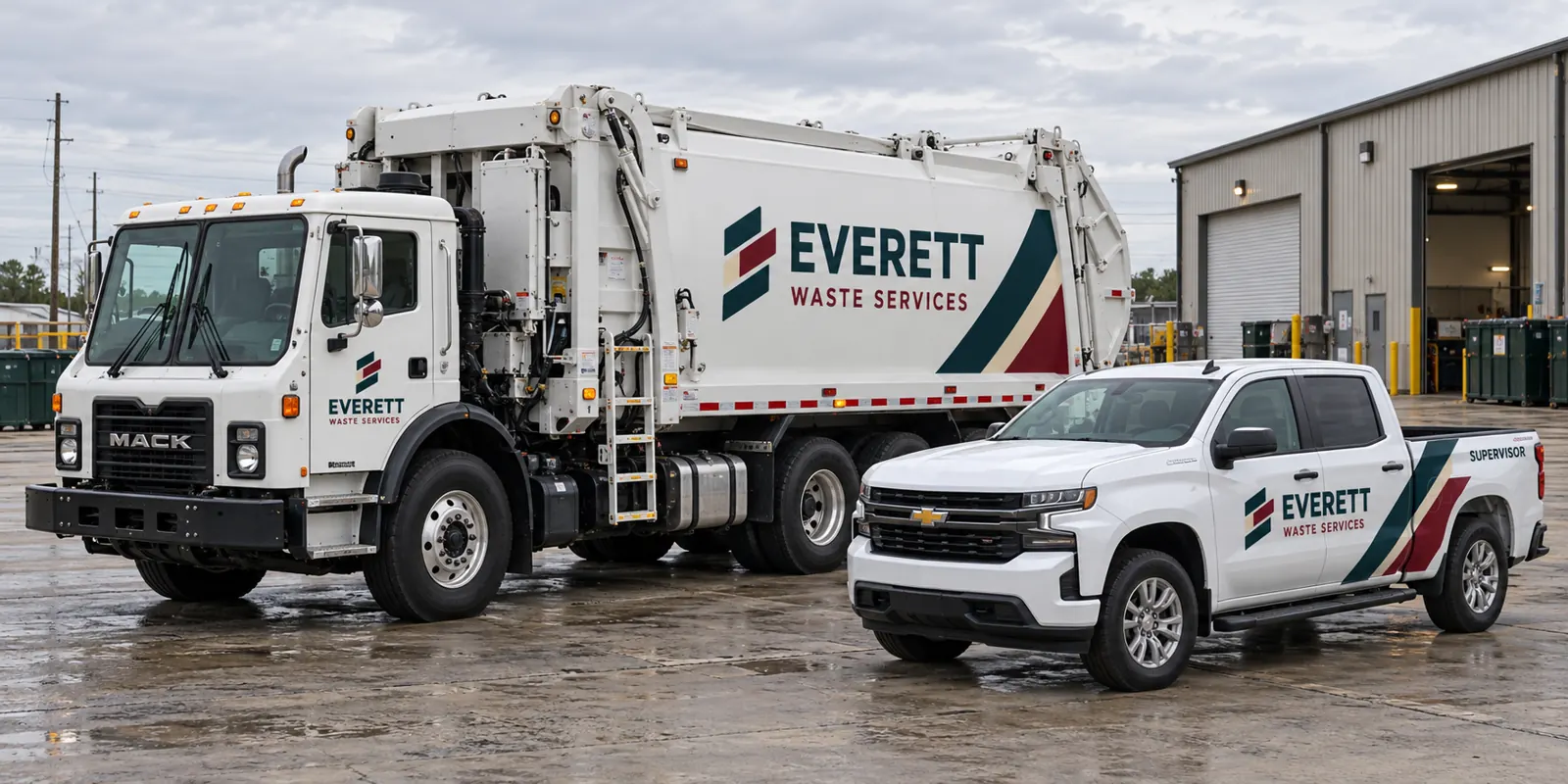
Fictional commercial wrap design concept; not a completed customer installation.
Decide what customers should recognize about the operator
Start with the business name and the waste-service categories the company actually offers. Commercial collection, residential routes, container service and other work can create different messaging priorities. Choose the description that helps the intended audience understand the operator rather than printing every possible capability across every vehicle.
Give the primary contact route enough space to remain readable. A recognizable identity can connect a collection truck with a smaller support pickup even when their bodies differ. The goal is clear commercial communication, not an invented claim about environmental performance, a public-sector relationship or a guaranteed response.
Keep corporate identity distinct from route and customer details
Define the stable elements: company name, logo treatment, colors and message hierarchy. Then identify variable information such as units, divisions or approved route details. Keep that information organized so it supports the business rather than becoming a different design system on every truck.
If client, partner or municipal assets are requested, supply the approved files and identify the authorization relevant to the project. Use accurate service wording and verified claims. A visual concept should not imply an endorsement or certification that the actual business has not established. Keep the approved versions with the fleet record for later updates.
Inventory collection equipment and support vehicles separately
List the different collection-body configurations, quantities and support vehicles in the brief. Photograph each version from both sides and rear in a normal parked configuration with equipment safely stowed. Include access panels, loading hardware, existing information and any unusual body surfaces. A chassis model does not fully identify a collection body.
The refuse-truck page focuses on the physical body and graphic areas. This industry page addresses the wider operator identity across the fleet. Include pickups and service bodies separately when they support the operation.
Adapt the design while preserving functional information
Collection trucks, supervisor vehicles and trailers can share hierarchy and color without identical placement. Use the stable suitable panels on each body for essential wording. Equipment, ribs, compartments and access areas may interrupt a composition that looks continuous on a simplified drawing. Review current photographs before choosing a broad image treatment.
Identify warnings, equipment labels and identifiers that must remain visible and usable, with the responsible reviewer involved. The scope should state the included surfaces and exclusions. Branding artwork should not invent technical labels or treat a decorative design as a change to the vehicle’s operating information.
Choose coverage and organize future updates
Lettering and selected-panel graphics can provide a direct identity on complex equipment. Partial graphics can connect the cab and body, while fuller coverage needs an explicit discussion of the suitable surfaces. Compare defined options using the same message and actual vehicle photos, with removal and preparation addressed separately where relevant.
Keep approved proofs linked to body versions and unit identifiers. A changed phone number, new division or damaged panel should start from the correct reference. The graphics management route connects those later updates with a maintained record. Replacement options still depend on the existing layout and condition rather than a universal assumption.
Plan the rollout around collection operations
Identify priority units, release windows and how many vehicles can be unavailable at one time. Clarify delivery, access and collection responsibilities before the operating plan depends on an installation date. Discuss a phased sequence against the confirmed project arrangement, allowing for different bodies and approved artwork versions.
Disclose old vinyl, residue, corrosion, repairs and damaged finishes with close photos. Graphics should not be treated as a repair for an underlying surface concern. Removal, preparation and suitability need review. Use the inventory worksheet to connect unit details, photos, condition questions and release windows in one planning record.
Prepare a waste-operator fleet brief
Send the equipment list, quantities, current photos, logo files and approved business wording. Identify coverage preferences, existing information to preserve, condition concerns and timing. Name the coordinator who can consolidate feedback and the reviewers responsible for any equipment or other specifications. Make unknown details visible before the scope is approved.
Read the commercial cost guide, then request a waste-fleet graphics review. The vehicles on this page use a fictional private-operator identity created to illustrate a coordinated direction. They are not customer installations or evidence of an environmental certification, public affiliation or operational result.
Frequently Asked Questions
Turn Your Vehicle Details Into a Clear Project Brief
Send current photographs, vehicle quantities, logo files, coverage preferences and timing. Identify old graphics and paint concerns so the project review can address the actual equipment.
Explore planning resources or request your commercial wrap quote.
