
Waste and Refuse Truck Graphics for Complex Vehicle Bodies
A refuse truck offers several branding surfaces, but its body is shaped around loading equipment, access points and heavy daily use. Plan a readable operator identity on the suitable panels, with clear exclusions and a separate record of the functional information that must remain visible.
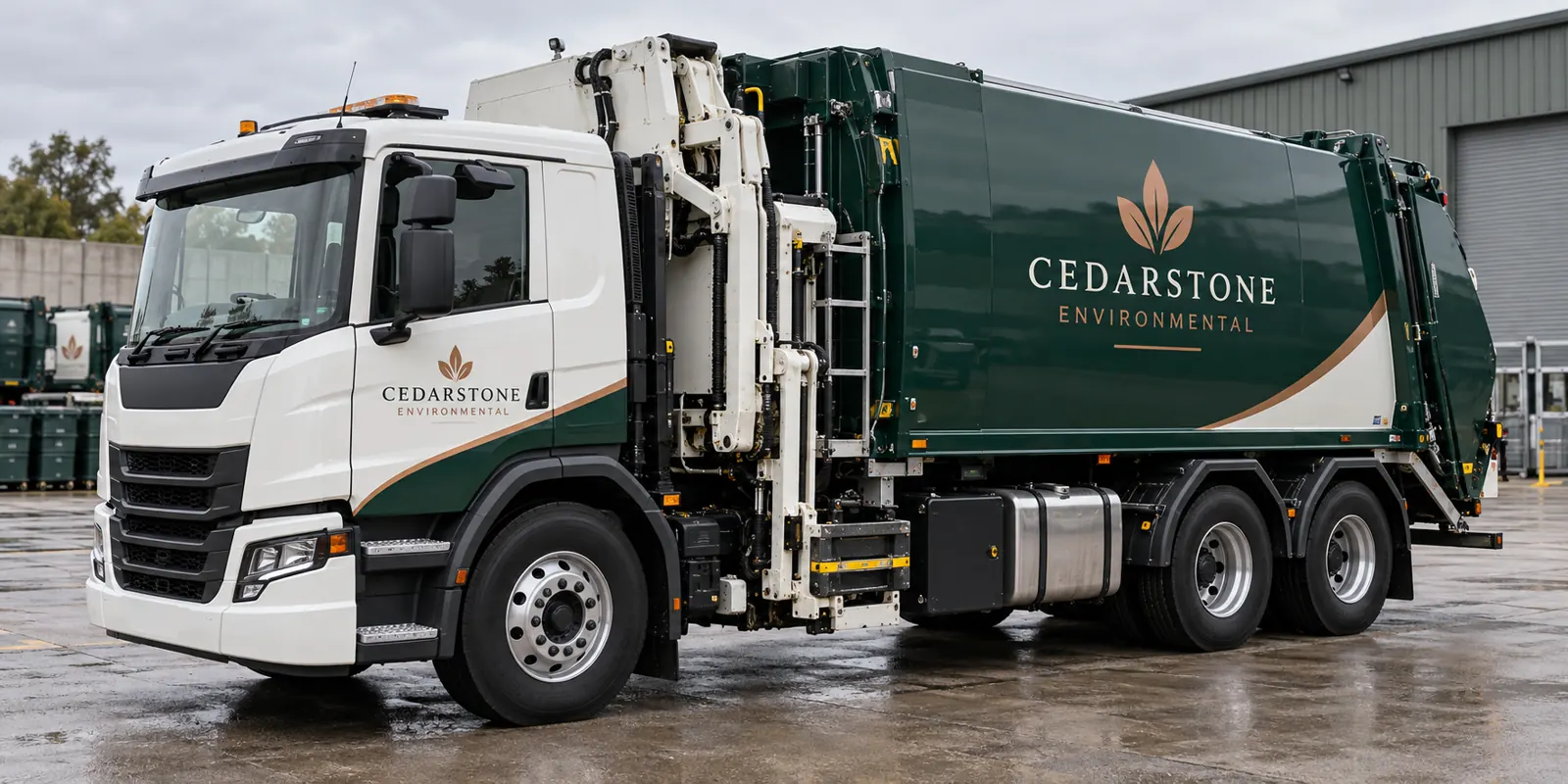
Fictional commercial wrap design concept; not a completed customer installation.
Start with the collection body rather than the truck category
Front-loading, rear-loading and side-loading vehicles present different body shapes and equipment. List the actual collection configurations in your fleet and provide current photographs. Include the body or equipment model where available. A cab-and-chassis description alone does not explain the areas that can carry the operator identity.
Photograph both sides and the rear with equipment safely stowed in the normal parked configuration. Add close views of access panels, existing identification and surface concerns. The vehicle directory helps organize a mixed equipment list. This page focuses on the physical refuse-truck body, while the industry route can address the wider waste-services brand.
Keep operator branding distinct from equipment information
Choose the company name and waste-service description that the public should recognize. A clear identity can be organized on selected stable panels without filling every available area. Add a primary contact route if it serves the business goal, then decide how vehicle numbers and divisions relate to the main brand.
Identify existing warnings, equipment labels, required identifiers and other information that must remain visible and usable. Have the responsible fleet or safety owner review those exclusions. Supply accurate wording from your own records. A graphics concept should not invent technical labels, government affiliation or environmental certifications to make the truck appear more authoritative.
Respect the body layout and working equipment
Loading components, arms, rails, access doors and changes in panel depth can interrupt an image. Review the actual body photographs before choosing a continuous design. Essential wording should be tested against the available stable surfaces rather than laid over a generic side outline that hides the equipment.
Do not assume moving components or every attached part are included in a wrap. Mark proposed exclusions and discuss access arrangements before approval. Any equipment questions belong with the responsible owner. The scope should identify exterior graphic areas clearly, without presenting decorative branding as a modification to the vehicle’s collection function or operating information.
Choose coverage for legibility and practical maintenance
Lettering and selected panel graphics may communicate the operator identity clearly on a complex body. Partial coverage can connect the cab and collection body, while a larger design needs enough uninterrupted surface to work. Compare options using the same photographs, message and exclusions. More coverage is not automatically a clearer message.
Consider the areas exposed to frequent contact and the way future replacements will be recorded. A modular brand system may make it easier to discuss a damaged section, although repair options still depend on condition and layout. The lettering guide and partial wrap guide explain those coverage approaches without treating all truck bodies as equivalent.
Organize mixed collection fleets with separate artwork versions
A company may operate several collection-body types alongside pickups, service vehicles and trailers. Use a common hierarchy and color system to connect them, then adapt the layout to each configuration. List quantities and body versions separately so a proposal does not assume a uniform fleet when the actual equipment differs.
Keep unit identifiers and the approved proof linked to the vehicle record. Record changes to compartments, access equipment or operator branding before ordering replacement graphics. The waste-management industry page is the route for broader company messaging; fleet solutions supports coordinated approvals and rollout planning across the equipment list.
Review condition and access before approving the scope
Disclose corrosion, peeling paint, dents, residue, repairs and existing vinyl with close photographs. Note any surfaces that have been refinished or replaced. Graphics should not be used as a substitute for assessing body problems. Preparation and removal need to be stated explicitly where relevant, with unsuitable areas addressed before the project depends on them.
Explain the release windows and who can authorize access to the truck. Identify operational restrictions and any specialist equipment responsibilities. Do not remove parts or make equipment changes based on a guessed graphics plan. Confirm the project arrangements and schedule before organizing collection-route coverage around an unavailable vehicle.
Prepare the brief and maintain a clear graphics record
Send the collection-body configuration, chassis details, quantity, current photos and approved brand files. Include essential wording, unit information and areas that must be excluded. Choose one approval owner who can verify the company message and coordinate the review of functional information. Check each body version before authorizing production.
Use the commercial cost guide to compare complete scopes and request a refuse-truck graphics review with your equipment list. The page image is a fictional private-operator concept, not a completed customer job. It is intended to illustrate branding possibilities without suggesting an environmental certification or public-sector relationship.
Frequently Asked Questions
Turn Your Vehicle Details Into a Clear Project Brief
Send current photographs, vehicle quantities, logo files, coverage preferences and timing. Identify old graphics and paint concerns so the project review can address the actual equipment.
Explore planning resources or request your commercial wrap quote.
