
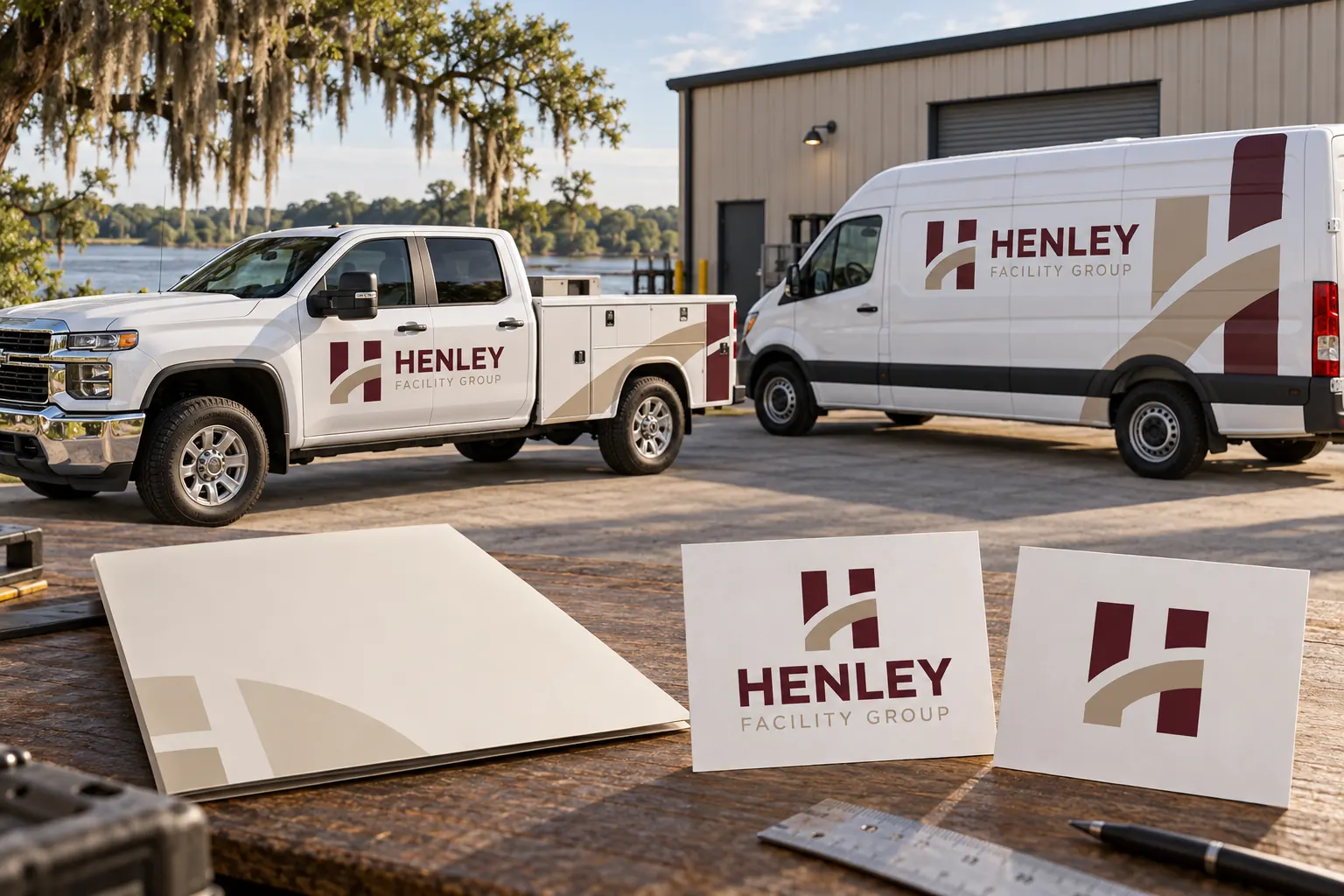
Illustrative planning concept; not a customer photograph, actual warranty record or documented company transaction.
Confirm the authorized identity before designing the fleet
An organization change can affect the operator name, logo, service wording and contact route in different ways. Obtain the actual approved business direction from the responsible people before producing graphics. Do not assume a proposed group name is the wording that every asset is authorized or intended to display.
Keep branding decisions distinct from legal-entity and required operational identification decisions, with the appropriate owner confirming each. The graphics project should implement the accepted information rather than interpret transaction documents or invent affiliations. Record which business wording is final, which remains provisional and who can resolve it before a proof moves from discussion into production.
Build one asset register from the acquired records
Combine the relevant vehicle and equipment lists into a controlled project register and identify the source of each record. Preserve unit references, configurations, operating locations and current photographs. Resolve duplicates or uncertain IDs through the responsible data owner rather than allowing a copied spreadsheet row to become a new printed identifier.
Use the inventory worksheet to organize the initial information. Identify which assets transfer into the graphics scope, which remain outside it and which are scheduled to leave service. A complete-looking total is less useful than a verified list that makes phase boundaries and unknowns visible.
Map the old identities and their removal requirements
Record the existing company names, contact routes and graphic constructions on each included class or exception. Identify which information must disappear and which may remain during an approved transition. Keep the actual authorization and timing decision with the business owner rather than infer it from a general launch announcement.
Photograph old film, repaired panels and coating concerns and label hidden condition honestly. Use removal planning to define the earlier work. A new identity proof does not answer whether all older surfaces are ready or whether one blanket removal assumption represents equipment with different histories.
Create a new standard without erasing real configuration differences
Establish the accepted master logo, message hierarchy, color/output references and permitted variations. Then fit that system to the actual vehicle classes in the combined register. Acquired fleets can contain unlike bodies, accessories and coverage histories even where the new organization wants one recognizable identity.
Use fleet standards planning and new-model adaptation for those layouts. Avoid stretching one former-company design across every asset or letting each location create an unrelated new version. The standard should define both the shared identity and the approval path for meaningful exceptions.
Keep transition decisions distinct
| Decision | Evidence needed |
|---|---|
| Authorized identity | Accepted business direction and owner |
| Asset scope | Verified combined register and phases |
| Old graphics | Current condition and removal scope |
| Launch milestone | Defined meaning and accepted release arrangement |
Separate launch messaging from vehicle-release milestones
A public business announcement, a first branded batch and a complete fleet changeover can be different milestones. Define what the project target means and record the assets included in each phase. Keep older approved transition states visible so a partly rebranded fleet is not mistaken for an untracked installation omission.
Use the timeline builder with your own stage allowances and the release planner for proposed unit windows. These tools do not book work or confirm readiness. Actual scope, condition, availability and supplier arrangements still need review before dates become accepted commitments.
Assign approval and purchasing responsibilities clearly
Identify the master brand approver, asset-data owner, operational marking contact and person who can accept changed scope. Define who supplies the accepted purchasing brief and how feedback from the former organizations is consolidated. Several well-intended reviewers can otherwise create conflicting names, versions or phase instructions.
Keep design, removal, repair, production and installation responsibilities explicit in the proposal. Use fleet volume planning to compare the actual configuration groups and quantities without assumed discounts. A transaction can change business administration, but the graphics scope still needs a current accepted vehicle list and clear deliverables.
Close the transition with a maintained current record
Retain the accepted identity versions, configuration layouts, product references and installed photographs by unit. Record what old graphics remain, any accepted temporary exceptions and the owner of later phases. Update contact information and master files before additional units are ordered under the new standard.
For the initial discussion, send a transition fleet brief with the approved business direction, combined asset register, current photographs and phase priorities. Fleet graphics management supports the ongoing record after the first changeover. The objective is a traceable identity transition that follows actual authorization and equipment facts, without claiming transaction outcomes or customer results the graphics project has not established.
Frequently Asked Questions
Turn Your Vehicle Details Into a Clear Project Brief
Send current photographs, vehicle quantities, logo files, coverage preferences and timing. Identify old graphics and paint concerns so the project review can address the actual equipment.
Explore planning resources or request your commercial wrap quote.
