
Fleet Wrap Pricing and Volume Planning for Mixed Commercial Fleets
Build the fleet budget from repeatable configurations and a realistic release plan. Quantity matters to the scope, but a useful volume proposal also explains design reuse, vehicle differences, preparation, installation and future additions.
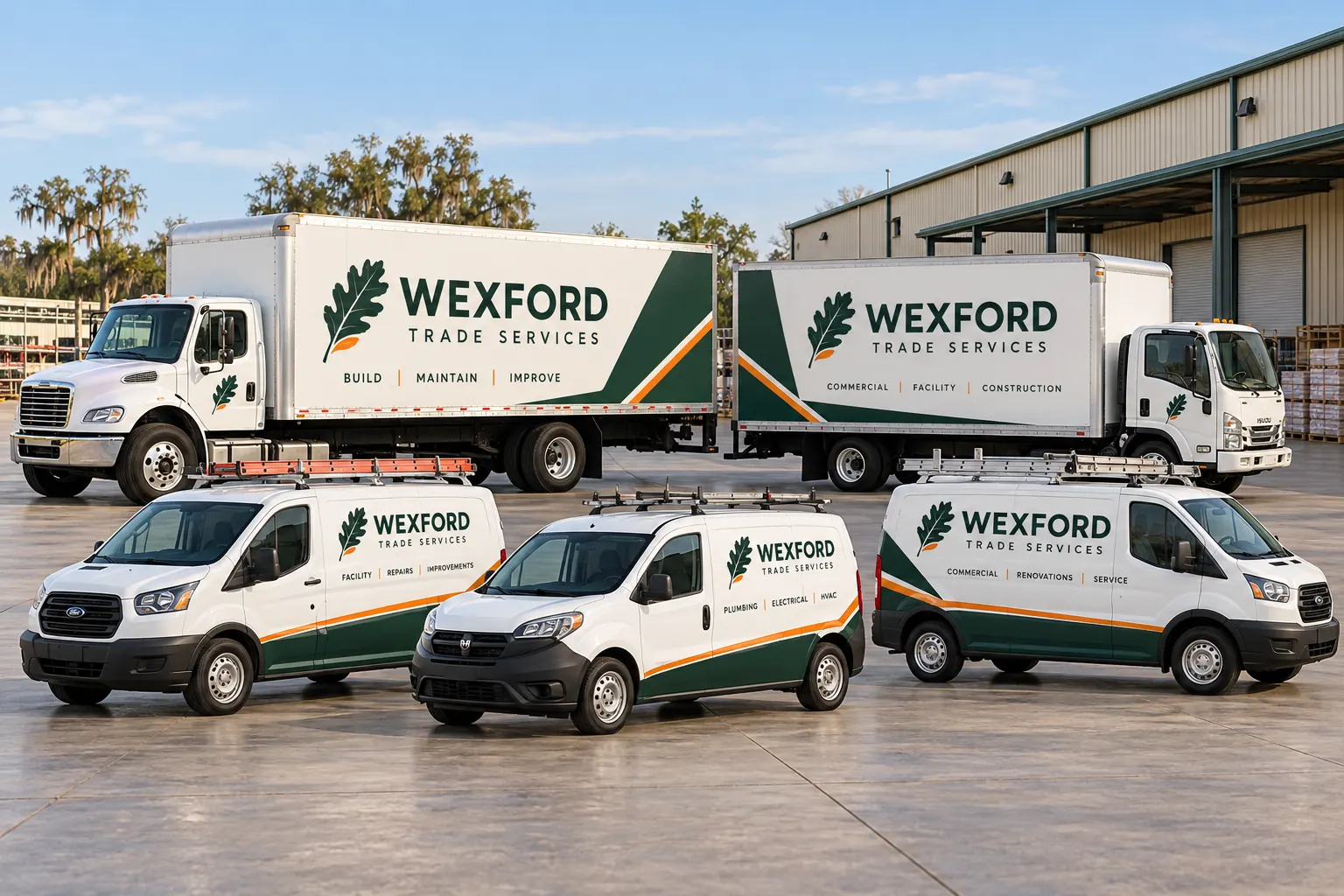
Fictional commercial wrap design concept; not a completed customer installation.
Group vehicles by work that genuinely repeats
Create a current inventory and group assets with the same body configuration, coverage and approved message. Keep roof height, body length, doors and significant equipment differences visible. A fleet of ten vehicles may contain one repeated configuration or several unrelated layout classes; the total quantity alone does not explain the work.
Use the fleet inventory worksheet to establish the register. Separate the shared identity from vehicle-specific unit data and condition notes. This makes the request useful to both the design team and operations staff. If the list changes during review, issue a dated version so every proposal and artwork set can be tied to the same intended fleet.
Distinguish shared creative work from per-unit tasks
The first accepted creative system can serve several vehicles, while configuration adaptation, variable identifiers and individual preparation remain separate work. Ask the proposal to distinguish those items. A repeated logo does not mean every vehicle is ready for the same production file or installation process.
Identify which designs already exist and which must be created. For each class, record the artwork status and whether the units truly repeat the accepted layout. The design cost guide helps define that scope. Avoid assuming that a larger quantity automatically includes unlimited future adaptations or that a one-time creative allowance applies to a different model introduced months later.
Compare a configuration schedule rather than one fleet average
Ask for a scope that identifies each vehicle class, quantity, included surfaces and preparation assumptions. Keep removal or damaged-paint concerns with the affected units. A single average per vehicle may be useful for internal planning after the scope is defined, but it should not hide differences that drive the actual job.
An example planning structure might separate four matching vans, two service-body pickups and one enclosed trailer. Those are illustrative quantities, not a priced package. Each group needs its own coverage and condition record. If one van has old graphics while the others are clean, identify that exception explicitly. A meaningful volume comparison measures the same list and work rather than comparing unrelated fleet averages.
Plan the rollout around vehicle availability
List release windows, delivery and collection contacts and any vehicles that cannot be unavailable together. Operations may prefer a phased sequence that preserves service coverage. Give that requirement to the project review before assuming that a larger batch must be installed in one uninterrupted appointment.
Record which dates are targets and which have been agreed. Artwork approval, surface readiness and access can affect the sequence. The installation scheduling guide supports that discussion. A proposal should explain its scheduling assumptions so the business can consider internal transport and operating effects alongside the supplier scope, without treating an unconfirmed planning date as a guaranteed completion promise.
Evaluate volume terms using the actual proposal
Ask whether the defined quantity and repeatable scope change the offered commercial terms. Do not assume a fixed discount, minimum batch size or universal percentage. Different configurations, artwork status and release arrangements can produce different proposals, and those differences should be visible in the response.
Review any stated dependencies: accepted quantity, consistent specifications, timing or other terms in the actual offer. Keep them with the purchase record. If a fleet is purchased in stages, ask how later units will be scoped rather than assuming an initial proposal fixes every future price. A transparent comparison considers the complete agreed work and terms instead of treating the word volume as a guaranteed saving.
Keep future additions and repairs within one system
Retain the master identity, configuration layouts, product references, unit register and installed photographs. Define how a new model or damaged panel will be reviewed against those records. This helps later enquiries begin with accurate information instead of recreating the fleet from old social images or an invoice with a vague description.
Separate exact repeats from changed configurations and updated business messages. If the company changes a URL or service wording, update the master standard before more units are ordered. Use fleet graphics management to organize that continuing need. Repeatability comes from current records and clear responsibilities; it should not depend on an assumption that an old design remains correct indefinitely.
Turn the fleet list into a comparable purchasing brief
Send one accepted inventory, all-side photographs, brand files, coverage preferences, removal needs and release plan. Identify the final artwork approver and the people who confirm unit data and vehicle readiness. Ask the proposal to state its deliverables, exclusions and any unresolved dependencies against that same brief.
Use the budget worksheet to organize actual proposed amounts and clearly labeled internal planning items. It calculates entered figures without inventing supplier rates. For a project-specific review, request a fleet graphics quote and include the intended first phase plus expected later additions. The review can then address both the immediate batch and the record system the business needs afterward.
Frequently Asked Questions
Turn Your Vehicle Details Into a Clear Project Brief
Send current photographs, vehicle quantities, logo files, coverage preferences and timing. Identify old graphics and paint concerns so the project review can address the actual equipment.
Explore planning resources or request your commercial wrap quote.
