
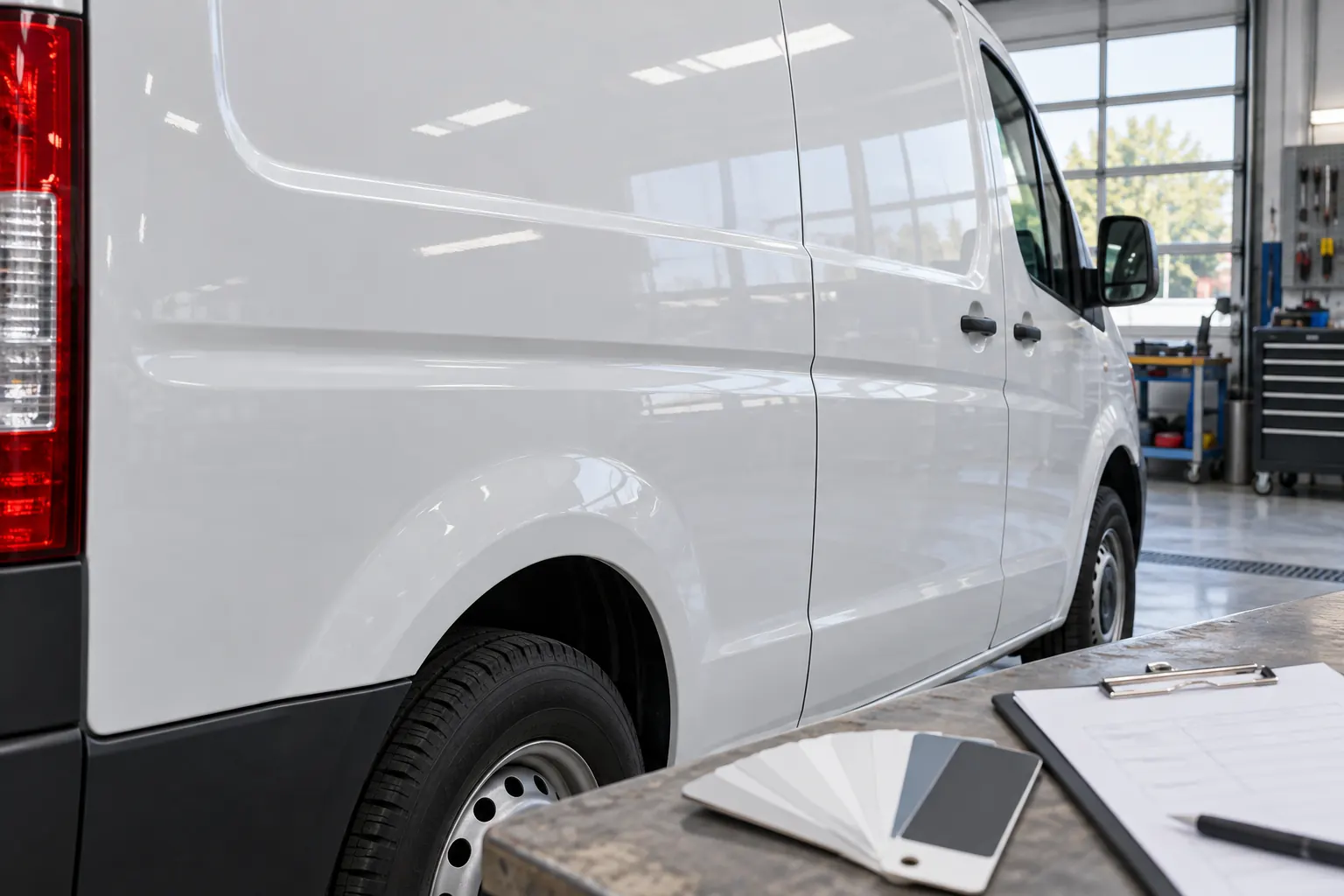
Illustrative planning concept; not documentary customer photography, a diagnosis or verified readiness record.
Distinguish dry appearance from documented readiness
The useful question is not simply whether a panel looks finished. Identify the coating system and the requirements that apply before adhesive graphics are installed. The project should be reviewed using the actual paint information and selected film guidance instead of a universal waiting period repeated from another vehicle.
The 3M general installation bulletin directs that paint cure follow the paint manufacturer recommendations. That is a product-guidance principle rather than a Pelican-specific number of days. Record the responsible source of the readiness information so the later installation decision is traceable to the coating work actually performed.
Collect the repair and coating information early
Ask the responsible repair or paint contact for the product system, application date and relevant cure information. Identify which panels were treated and whether other bodywork was involved. Keep those records linked to the unit reference so a general note that the fleet was repainted does not conceal different work on individual vehicles.
Mark missing details as questions for the responsible party rather than guessing the coating from its color or appearance. Provide current photographs as context, but do not treat them as a chemical cure test. The graphics review needs usable information about the actual finish and any limitations or conditions that the coating guidance requires the team to consider.
Coordinate the repair stage and graphic stage as separate decisions
Bodywork completion and graphics readiness are related but different milestones. Identify who confirms that the coating work is complete, who supplies the cure requirements and who accepts the vehicle for the selected graphic system. Keep those roles visible in the project plan before arranging the final handoff.
A customer request to collect the vehicle quickly does not remove a coating requirement. If the business has a fixed operating or launch target, discuss the constraint early and review feasible phases or timing with the actual project team. The scheduling guide helps organize those dependencies without treating a target date as proof that the surface will be ready.
Review repaired panels within the whole vehicle condition
Provide photographs of the treated panels and adjacent graphic areas. Identify old graphics, coating damage, filler or other known work relevant to the proposed coverage. A ready repaired panel does not automatically establish that the rest of the vehicle has the same condition, and an intact neighboring graphic does not answer every question about the new surface.
Use the surface-condition guide to organize the broader review. The accepted artwork and coverage should still fit the current vehicle after repairs. If body panels or equipment changed, update the configuration record rather than manufacturing against an older photograph that no longer represents the asset.
Keep partial replacement expectations realistic
A repaired panel may need new graphics that meet older surrounding material. Retain the original artwork, product references and installation history and provide current photographs. Appearance and matching need a separate review from coating readiness. Do not assume that a confirmed paint handoff guarantees an invisible graphic replacement.
The repair versus replacement guide compares the possible scope boundaries. Decide whether the job is a defined section, an affected face or a broader identity update only after the actual condition and records are understood. Keep repair charges, graphic removal, file adaptation and new installation distinct in the proposal so the business can see what each stage includes.
Update the schedule when readiness information changes
If the repair date, coating system or condition changes, provide the new information before the graphics appointment proceeds. Record the change against the affected units and review downstream release windows. A fleet timeline should reflect current dependencies rather than retain a date that was calculated from information no longer accurate.
Use the release planner to organize proposed windows and the timeline builder for your own calendar allowances. Neither tool inspects cure or books installation. The responsible project review must still resolve coating readiness and confirm the actual work arrangements.
Retain the coating history with the installed graphics record
Keep the repair and paint information, readiness decision, accepted artwork and installed product references with the unit record. Those details may matter during later removal, repairs or replacement enquiries. A future team should not have to infer coating history from a photograph of the finished vehicle.
For an initial discussion, send the vehicle and repair brief with current photographs, proposed coverage, known coating records and target timing. The preparation guide connects that information to the wider handoff. The goal is a clear project-specific readiness process that respects the actual coating rather than a generic promise to install after the same wait on every vehicle.
Frequently Asked Questions
Turn Your Vehicle Details Into a Clear Project Brief
Send current photographs, vehicle quantities, logo files, coverage preferences and timing. Identify old graphics and paint concerns so the project review can address the actual equipment.
Explore planning resources or request your commercial wrap quote.
