
Van Wrap Planning for Service Fleets: Write the Brief Before Choosing the Layout
A useful service-van brief explains the business message, the actual equipment and the decisions that still need review. Organize those facts before a visual direction becomes an assumed production instruction, then use the right service or worksheet to move the project forward.
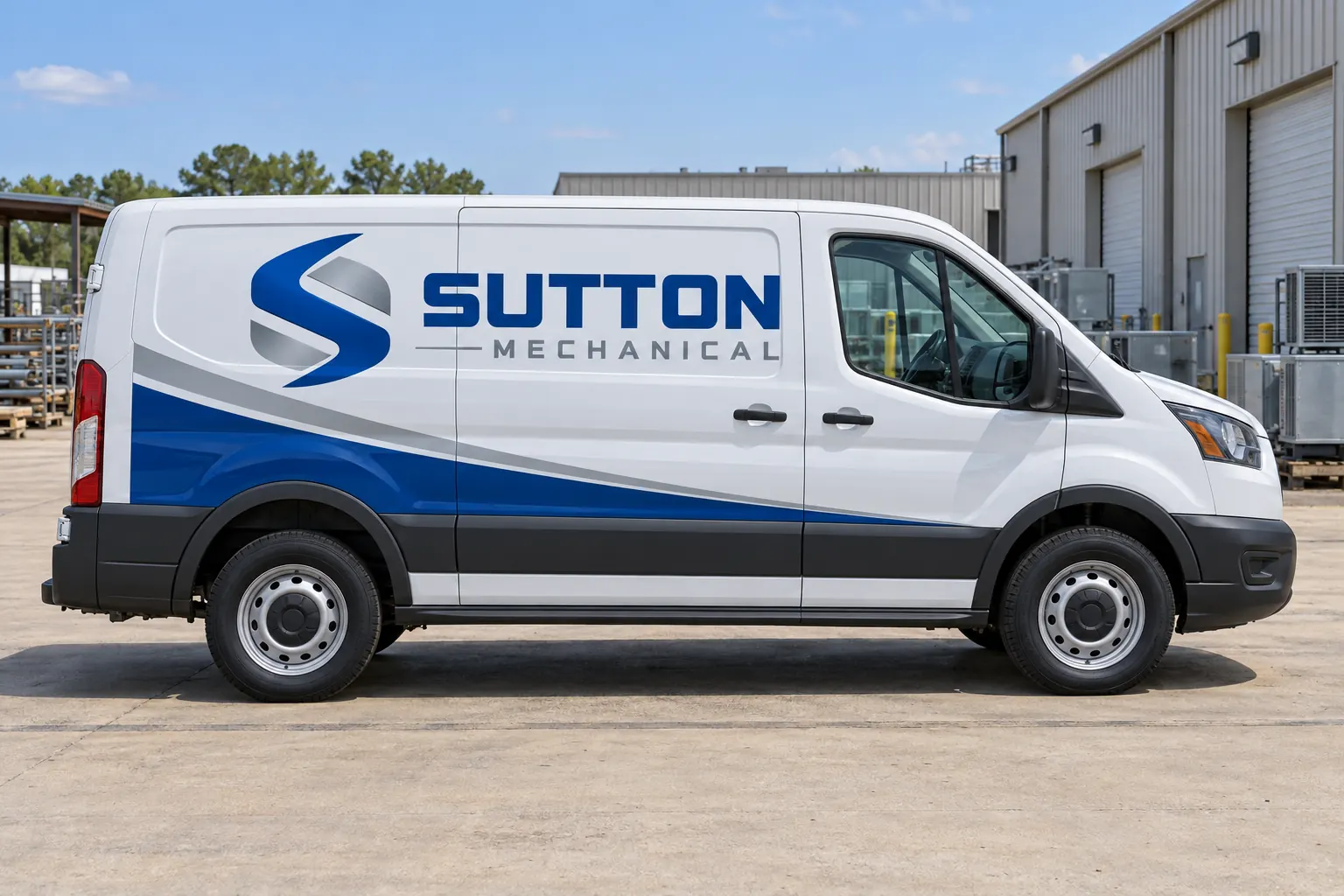
Fictional commercial design concept; not a completed customer installation.
Start with the service question a viewer should understand
Write one sentence describing the real business and the service context the vehicle should communicate. Decide whether the main job is identifying a known company, explaining a less familiar service or connecting a new identity with an established operation. That purpose gives the design a useful hierarchy before colors and decorative treatments are discussed.
Choose the approved name and a deliberate contact action. If the business has several service lines, decide which wording belongs on the relevant van group rather than fill every panel with the entire company directory. The fictional Sutton Mechanical image illustrates a restrained identity approach. It is a design concept, not evidence of a customer installation, approved fit, credentials or measured lead-generation result.
Replace a general van count with configuration facts
List the actual units and identify body length, roof height, side-door arrangement and relevant accessories. Photograph each meaningful configuration and label the references. A buyer can share one identity while still needing separate fitted side or rear sheets for genuinely different equipment.
Use the inventory worksheet to establish repeats and exceptions. Mark dimensions as estimated or verified and identify who owns final fit information. Avoid describing the whole fleet as identical because all vans have the same badge or exterior color. The configuration record gives the designer and supplier a clearer basis for scope, while prevent a later substitute unit from being released against the wrong production layout.
Choose a contact route and control the changing text
Confirm where an interested viewer should go next and check the actual supplied destination. Keep the main message concise enough to retain a clear order. Identify genuine branch wording, internal unit references and operator-approved carrier information in separate labeled fields where those data belong.
Name the person responsible for accepting each changing field. The marketing contact who approves the logo may not hold current operational information. Use the unit-data guide for that distinction. A design proof should show the real text at a readable review size rather than hide placeholders in an impressive vehicle rendering. Retain acceptance with the actual version the project will use.
Compare coverage by included faces and message, not a label alone
Describe the proposed sides, rear and other intended areas and explain which identity elements each face needs to carry. A full wrap, partial wrap and lettering are useful starting categories, but their boundaries and included work still need to be defined on the actual configuration. The existing vehicle finish may participate in the composition when areas remain uncovered.
Use the comparison worksheet to keep three alternatives, entered costs and exclusions together. It does not estimate area or supply rates. Ask what changes between options and whether the main message remains clear. More graphic coverage is a different scope choice, not independent proof of improved recognition or a particular return.
Bring current surface evidence into the first conversation
Provide overall photographs and closer views of existing film, repairs, damaged coatings and equipment. Record known treatments and uncertain history. A new identity discussion should not assume the starting surface is suitable simply because the van is available or the body shape matches a stock outline.
Use preparation planning to identify the readiness questions. Keep removal, separate vehicle repair, preparation and new graphics as stated tasks with responsible owners. Ask the response to name the actual proposed system and application assumptions. The buyer does not need to diagnose every condition before enquiring, but unknowns should remain visible instead of become unsupported assurances in the brief.
Connect approvals to the way the service fleet is released
Identify who approves the business design, who checks variable data, who verifies measurements and who controls dispatch or vehicle release. Explain which units can be available together and any transport or access constraints. Provide proposed windows and ask the supplier to confirm actual availability through the project process.
Read the service-van rollout scenario for a worked planning structure and use the release planner when a unit schedule helps. This article explains what belongs in the initial brief; the scenario follows the operating handoff. Neither turns a target date, worksheet entry or artwork comment into a confirmed installation booking.
Keep the brief useful after the first vehicle is completed
Retain the accepted identity files, configuration sheets, unit data and relevant product information with installed photographs. Record changes and care guidance so a later panel enquiry or new van can be reviewed against the current standard. A business name and an old screenshot are not a complete repeat-production record.
For the actual offer, explore commercial van graphics. To discuss a project, send the service-van brief with the inventory, photographs, current artwork, preferred coverage and timing. State the questions you still need answered. A well-organized brief makes the next review specific without pretending the buyer has already confirmed every product, surface, price and release decision.
Frequently Asked Questions
Turn Your Vehicle Details Into a Clear Project Brief
Send current photographs, vehicle quantities, logo files, coverage preferences and timing. Identify old graphics and paint concerns so the project review can address the actual equipment.
Explore planning resources or request your commercial wrap quote.
