
Commercial Pickup Truck Wraps and Business Graphics
A pickup can carry a strong business identity without losing the practical character of a daily work vehicle. Plan the message around the cab, bed and tailgate you actually have, then choose lettering, partial graphics or fuller coverage that fits the business goal.
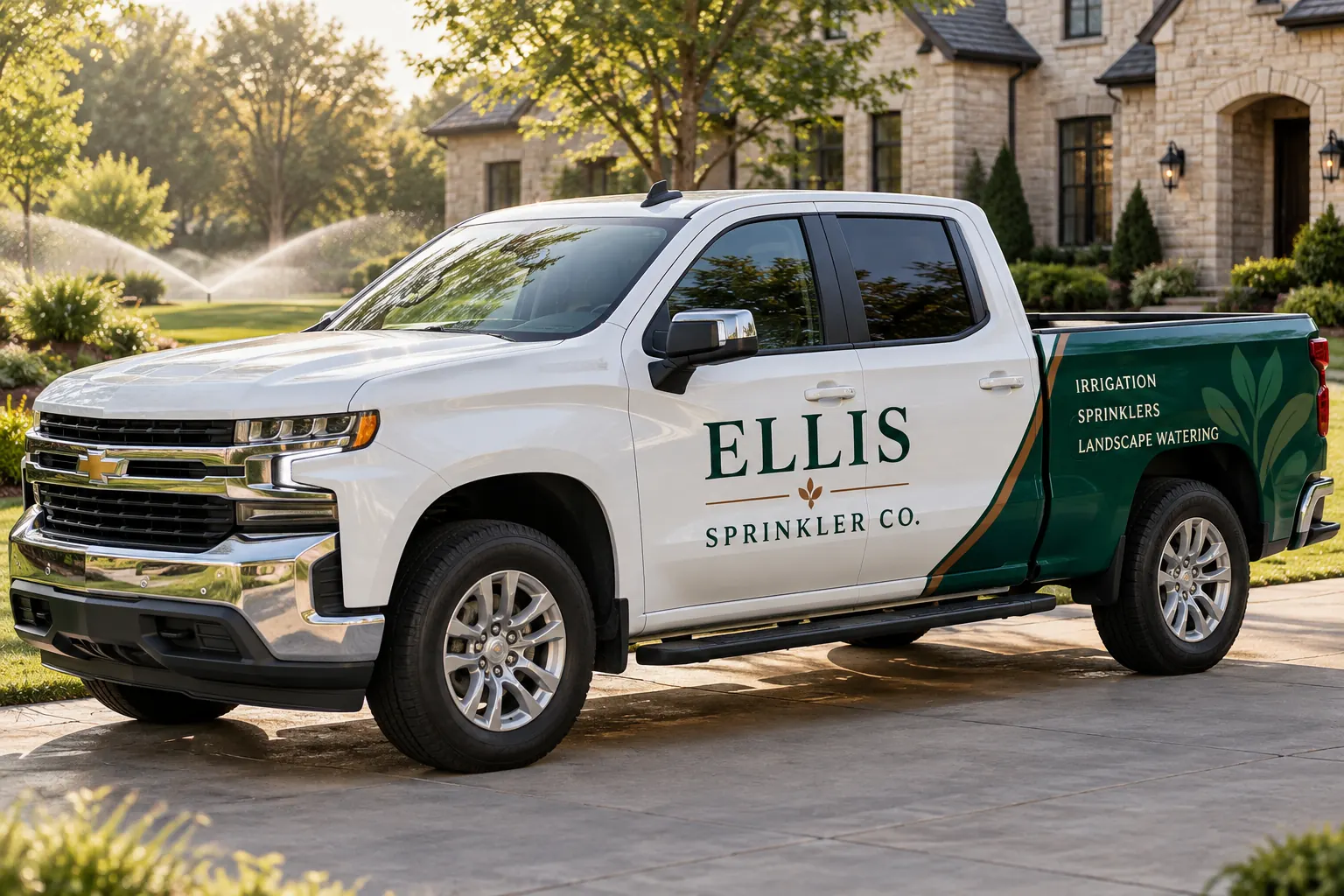
Fictional commercial wrap design concept; not a completed customer installation.
Identify the cab and bed combination accurately
Pickup model names can cover different cab lengths, bed sizes and trim details. Send the year, make, model and configuration together with current photographs. Include both sides and the rear, then show toolboxes, bed caps, racks or accessories that change the available area. A catalog image of a similar pickup can miss the details that matter to the layout.
This page focuses on a pickup with a conventional bed. If the rear has a compartmented work body, use the service-body truck page instead. The broader truck graphics route connects different commercial truck types when your project includes more than one configuration.
Give a local business a message that is easy to recognize
Start with the company name and a concise description of the work. An unfamiliar brand may need the service category more than a decorative slogan. Choose a primary contact route and give it enough space to remain legible. A pickup has less uninterrupted side area than a box truck, so the hierarchy matters.
Think about where the vehicle normally appears: customer properties, work sites, supply runs or community events. Use that context to decide which information deserves priority. Avoid filling the doors with a dense service menu merely because there is room in the proof. A simple message can be intentional when the typography, spacing and placement are well organized.
Choose lettering, partial graphics or fuller coverage
Lettering can establish a clean identity while leaving the original paint visible. Partial coverage can create a larger branded area across the bed or rear portion of the cab. Fuller coverage may support a stronger visual treatment or help a mixed-color fleet look related. Compare defined options on the same pickup rather than treating coverage names as fixed packages.
The lettering guide, partial wrap guide and full wrap guide explain the distinctions. Ask which panels are included and how exposed paint, handles, badges and the roof are treated. The written scope should describe the actual work rather than leave those decisions implied.
Review the tailgate and accessories separately
A tailgate is a smaller communication surface with its own handle, camera, badge and panel shape. Do not simply shrink the side layout and assume the contact route remains clear. Check the proof against a current rear photograph. Decide whether the vehicle needs a compact identity at the rear or another message that supports its normal use.
Show bed caps, racks and toolboxes in the configuration customers normally see. Equipment can obscure part of a graphic or change how the cab and bed appear together. Identify accessories that might be replaced soon, and disclose any vehicle change before approval. A layout prepared for one configuration should be reviewed before it is transferred to another.
Connect pickups with vans and trailers in a wider fleet
A pickup can share colors, logo treatment and message hierarchy with a delivery van or equipment trailer. It does not need the same composition to look related. The pickup’s shorter panels and the trailer’s broader side area call for different placement. Define what stays consistent and allow the layout to adapt to each body.
List the quantities and configurations, then keep a dated proof for each version. The fleet solutions page addresses coordinated rollouts, while the trailer route helps when a pickup and trailer need to be considered together. Plan the identity of each unit so it still makes sense when the vehicles are separated.
Review paint condition and plan the working schedule
Disclose old vinyl, residue, rust, dents, repairs and peeling paint with close photographs. Graphics should not be treated as a repair for underlying surface problems. Removal and preparation need to be discussed explicitly where relevant. A clean-looking photo from a distance may not reveal the condition around panel edges or earlier repairs.
Share the timing you want and when the pickup can be released. Identify delivery and collection responsibilities, plus access restrictions related to equipment. Plan around a confirmed arrangement for the agreed scope. Do not commit the business to an assumed duration based on a different pickup or a generic statement about wrap installation.
Send a clear brief and retain the approved reference
Provide the pickup specification, quantity, current photos, best logo files and essential wording. State which coverage options you want compared and who will approve the proof. Verify the business name, phone number and domain before authorizing production. Keep the approved artwork reference linked to the vehicle configuration for future replacement or additional units.
Use the cost guide for a complete scope comparison, then request a commercial pickup quote. The irrigation-company image on this page is a fictional concept designed to show one possible partial-coverage direction. It does not represent a customer job or establish results for the invented business.
Frequently Asked Questions
Turn Your Vehicle Details Into a Clear Project Brief
Send current photographs, vehicle quantities, logo files, coverage preferences and timing. Identify old graphics and paint concerns so the project review can address the actual equipment.
Explore planning resources or request your commercial wrap quote.
