
Dump Truck Graphics and Commercial Fleet Lettering
Dump trucks need a recognizable operator identity on equipment built for demanding daily work. Plan the graphics around the cab, body and hardware you actually have, with practical coverage choices and clear exclusions for functional information and moving components.
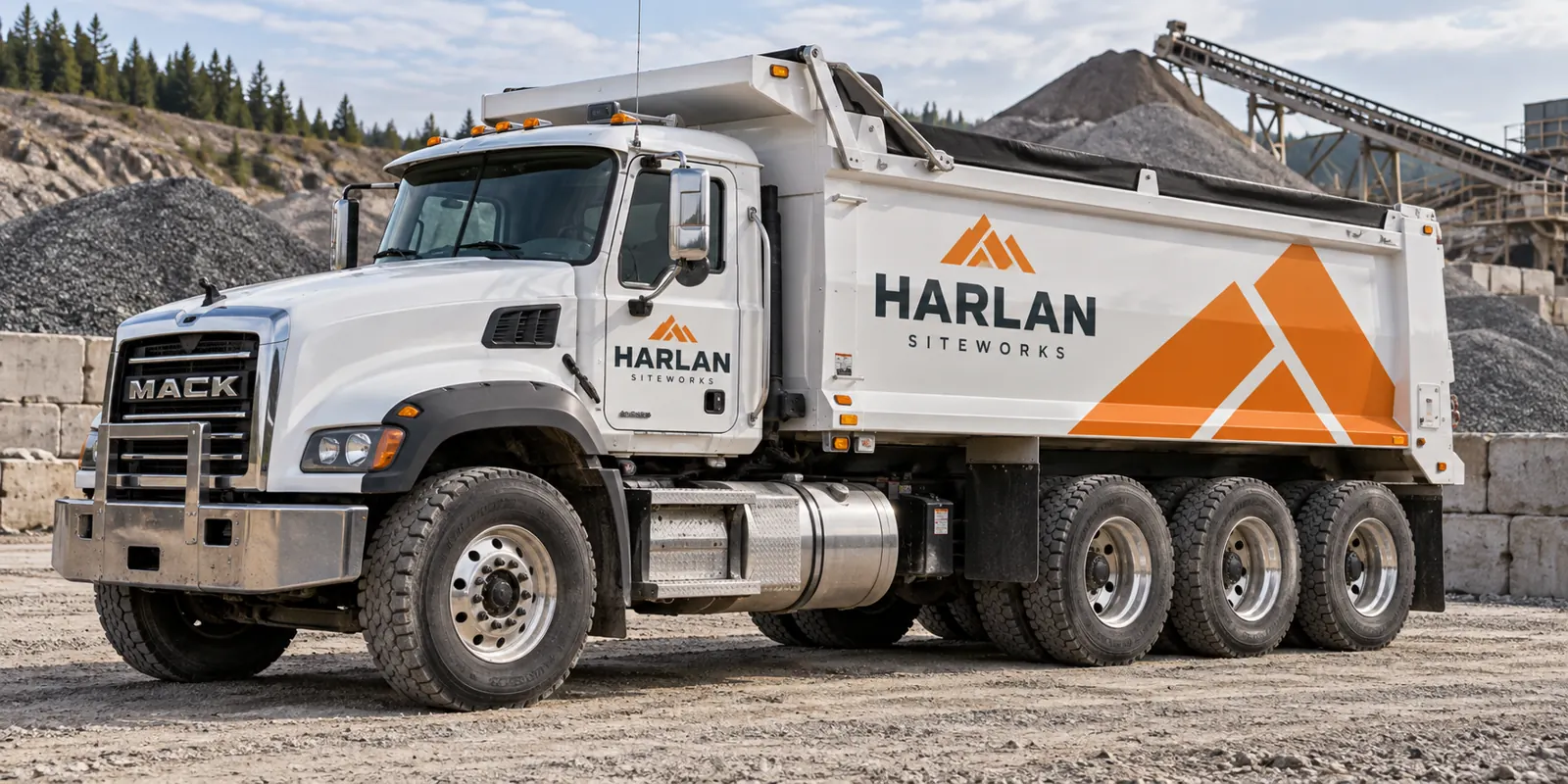
Fictional commercial wrap design concept; not a completed customer installation.
Identify the dump body and the usable graphic surfaces
Send the chassis details and dump-body information, including the body length or model if available. Photograph both sides, the cab and rear with the body lowered and equipment safely stowed. Body profiles, ribs, access areas and hardware can vary, so a generic heavy-truck outline is not enough to define the project.
Include close views of existing graphics, surface condition and any areas you want considered for branding. This page addresses the physical dump-truck layout. The commercial truck overview connects other truck types, while an industry page can help define the message for a particular contractor or operator.
Make the operator name clear without overcrowding the cab
The cab door may carry a compact identity while selected body panels provide a larger branded surface. Decide what belongs in each area before adding decorative detail. Start with the business name, a useful service category and any primary contact route. Keep the message understandable at a glance rather than filling the available space with every service the company offers.
Record unit numbers and any business or vehicle identification your operation needs displayed. Supply verified details from your own records and have the responsible person check the proof. Do not use a fictional concept, another operator’s truck or a decorative mockup as the source for required commercial information.
Work with ribs, hardware and moving components
Dump bodies can divide a side view into several areas rather than one flat uninterrupted panel. Review the company name against those divisions and identify which stable surfaces support the layout. Do not assume a large photographic design will remain readable when body ribs and hardware cut through its important elements.
Mark exclusions around existing labels, access points and functional components. Any equipment-related decisions should be reviewed with the responsible owner. Branding should not be interpreted as equipment modification or a replacement for operating information. The written scope should state the included exterior areas, not leave every component in the photograph open to interpretation.
Compare lettering and selected-panel coverage
Lettering can provide a direct, restrained identity on the cab and suitable body areas. Partial graphics can introduce a stronger color system while working around the vehicle’s structure. Fuller coverage needs enough suitable surface and a clear explanation of the intended treatment. Ask for defined options based on the actual truck photographs.
The lettering page and partial wrap page help frame that choice. Compare the message, panel list and exclusions alongside the total price. More printed coverage does not automatically make the operator easier to recognize, particularly on equipment with strong structural divisions.
Connect dump trucks with the contractor's other vehicles
A sitework or construction business may also run pickups, service trucks and trailers. Keep the brand hierarchy and colors consistent while adapting the layouts. The dump truck’s working body and the pickup’s shorter panels call for different arrangements. Each should still look like the same business when the fleet is seen together.
List the equipment types and quantities, and keep an approved reference for each body version. The construction fleet page addresses the job-site identity, while fleet solutions connects approvals and phased scheduling. Use those routes when the project is a coordinated refresh rather than a single truck lettering job.
Disclose wear, old graphics and access restrictions
Share close photographs of corrosion, peeling paint, repairs, old vinyl and residue. Identify panels that have been replaced or refinished. Graphics should not be treated as a repair for a surface concern. Preparation and removal need to be discussed explicitly, with the agreed allowances and exclusions recorded before approval.
Explain when the truck can be released from work and who will manage access, delivery and collection. Do not raise the body, remove equipment or alter components simply to prepare an initial quote enquiry. Provide photographs in a safe parked configuration and coordinate any project-specific access requirements through the responsible vehicle owner.
Build a quote brief and retain the vehicle reference
Send the truck and dump-body details, quantity, current photos, approved logo files and essential wording. Include unit identifiers and areas that must remain clear. State whether you want lettering, selected-panel graphics or broader coverage considered. Choose one person to verify the commercial details and coordinate any equipment review before production.
Read the cost guide to compare complete scopes, then request a dump-truck graphics quote. Keep the final proof linked to the vehicle identifier for later repairs or additions. The page illustration uses a fictional sitework company and is not presented as a completed customer job or evidence of project performance.
Frequently Asked Questions
Turn Your Vehicle Details Into a Clear Project Brief
Send current photographs, vehicle quantities, logo files, coverage preferences and timing. Identify old graphics and paint concerns so the project review can address the actual equipment.
Explore planning resources or request your commercial wrap quote.
