
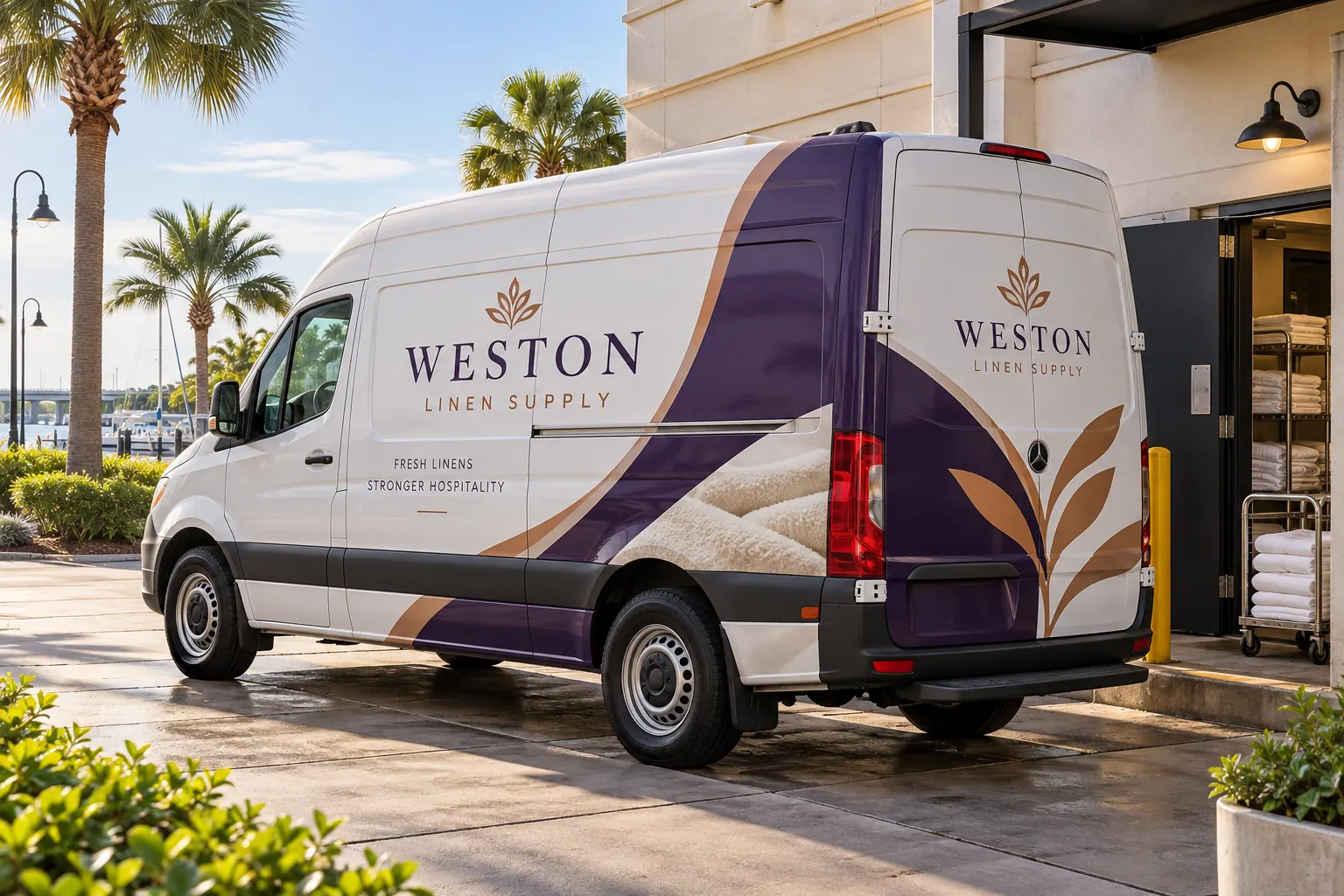
Fictional commercial wrap design concept; not a completed customer installation.
Define the delivery role before choosing the design
Explain what the van delivers and who needs to recognize it. A wholesale supplier, local courier and service-and-delivery business may have different messages. Start with the business name, a useful category description and a primary contact route. Keep the layout focused enough that a person unfamiliar with the company can understand it.
This page addresses vans used for repeated commercial deliveries. The general van-wrap page covers broader van choices. For a program involving route management and several vehicle categories, use the last-mile fleet route to connect the individual vehicle design with the wider rollout.
Identify wheelbase, roof height and door configuration
Send the year, make, model, wheelbase and roof height, together with current photographs. Include each side and the rear, then show windows, racks, side doors and unusual fittings. Vans sharing a model name can have different proportions and doors. A short standard-roof layout should not be assumed to fit a longer high-roof version.
List the quantity of each body configuration separately. Include existing graphics and any panels that have been replaced or repaired. A clear equipment list gives the artwork and quote a specific reference. If the fleet includes leased or newly ordered vans, explain their status and confirm the relevant permissions or details before the project depends on them.
Review the sliding door as part of daily operation
The side message needs to work with the van closed for travel. Also explain whether a sliding door remains open during typical delivery stops, because that can change what customers see. Handles, seams and a door’s travel path can interrupt a logo or contact route. Use the actual body photographs to review those features rather than an idealized blank side.
The rear doors deserve a separate composition. Check the business name and contact details around hinges, latches, windows and the center split. Do not simply shrink the side artwork and assume it remains complete. The proof should make the treatment of both side and rear views clear before production is approved.
Choose coverage around a strong supplier or courier identity
Lettering may provide a concise identity on consistent paint. Partial graphics can introduce a larger branded area while leaving some original body color visible. Fuller coverage offers another visual direction, particularly when the fleet begins with different colors. Compare those options against the same essential message rather than equating more coverage with better communication.
Use the partial-wrap guide and full-wrap guide to define the panels you want assessed. Ask how the roof, rear, windows and visible paint are treated. Any exclusions and preparation should be written into the scope so the proposal describes the actual project.
Build a consistent system across route vehicles
A delivery fleet may combine short vans, high-roof vans, step vans and box trucks. Shared colors, logo treatment and hierarchy can connect them while each body uses a suitable layout. Record which elements are fixed and which can adapt. Keep unit or route identifiers separate from the main brand decision where possible.
For mixed equipment, include step-van details and the quantities of other body types in the brief. Retain an approved proof for each configuration. The fleet solutions page helps organize approval ownership, phased installation and future additions without assuming every vehicle is identical.
Plan condition review and release windows around deliveries
Disclose old vinyl, adhesive residue, dents, peeling paint and body repairs with close photographs. Graphics should not be treated as a repair for underlying surface problems. Removal and preparation need to be identified explicitly in the scope. Initial photos support planning, while suitability may still require a closer review of the actual van.
Explain when a route vehicle can be released and how deliveries will be covered. Identify who delivers and collects it, and discuss access or cargo restrictions relevant to the agreed work. Make operational commitments around the confirmed project arrangement rather than a generic turnaround claim. A phased rollout can be discussed when spare vehicles are limited.
Prepare a brief that supports approval and later replacements
Send the equipment list, current photos, brand files, essential wording and timing. State whether you need design work or have an approved fleet identity to adapt. Choose one person to verify contact information and consolidate feedback. Keep the dated proof linked to the vehicle version so later graphics requests start from the right reference.
Read the artwork guidelines, then request a delivery-van graphics quote with your quantity breakdown. The linen-supplier image on this page is a fictional concept. It illustrates one design direction without claiming a completed customer installation or evidence of delivery performance.
Frequently Asked Questions
Turn Your Vehicle Details Into a Clear Project Brief
Send current photographs, vehicle quantities, logo files, coverage preferences and timing. Identify old graphics and paint concerns so the project review can address the actual equipment.
Explore planning resources or request your commercial wrap quote.
