
Fleet-Focused Project Planning
Every fleet program starts with accurate vehicle information, clear brand standards and a production plan built for repeatable results.
Design That Reads at Highway Speed
Every fleet program starts with accurate vehicle information, clear brand standards and a production plan built for repeatable results.
Production Built for Repeatability
Every fleet program starts with accurate vehicle information, clear brand standards and a production plan built for repeatable results.
Installation Planned Around Your Operations
Every fleet program starts with accurate vehicle information, clear brand standards and a production plan built for repeatable results.
Commercial Wrap & Graphics Services
Pelican Wraps specializes in profitable large-format fleet and vehicle work: box trucks, vans, buses, semi trucks, food trucks, enclosed trailers and charter boats. Signs, walls, windows and specialty wraps remain available through supporting service pages.
Find the Right Graphics for Your Operation
Start with your fleet vehicles, then explore project planning and supporting commercial graphics.
Supporting Facility Graphics
Coordinate your fleet identity with signs, window graphics, and facility applications when your project needs them. These services support the commercial vehicle program.
Choose the Right Commercial Graphics Path
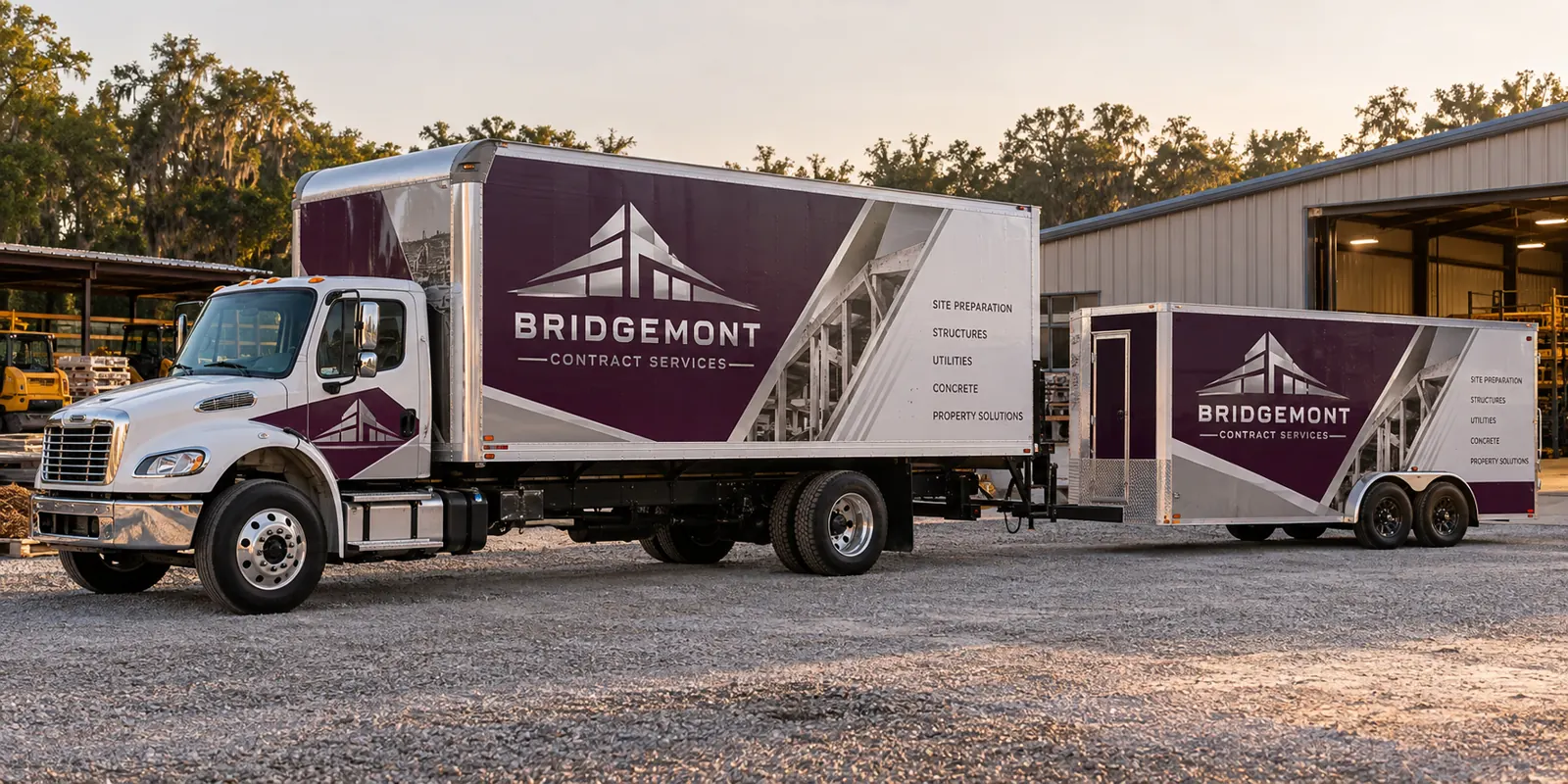
Fictional illustrative commercial wrap concept; not a completed customer installation.
Choose the service that matches the equipment
A commercial graphics project is easier to scope when the equipment comes first. Use box truck wraps for large delivery and service bodies, commercial van graphics for working vans and the semi-truck and trailer service for larger transport equipment. Food trucks, enclosed trailers, buses and commercial boats have their own access and hardware questions.
Photograph the actual body and explain how it is used. Door arrangements, working equipment and existing graphics can change the usable area. A showroom image or a model name alone may not identify those details. If the project combines several types, describe the complete fleet. The useful recommendation connects one business identity to the surfaces available on each unit instead of forcing a generic package across every vehicle.
Compare coverage using the same business message
Full wraps, partial coverage and lettering are different ways to present a commercial identity. Compare them with the same company name, service priority and contact route. More printed area is not automatically the best way to make that message readable. Existing paint, body shape, intended service period and budget all belong in the decision.
Ask the proposal to identify included surfaces and preparation so the comparison is clear. Review the side, rear and normal working views, including doors or racks that can hide information. The full-versus-partial guide explains the choices in more detail. If you already know the vehicle, the relevant service page provides the physical questions to organize before requesting a quote. The aim is a defined option that supports the business objective.
Use a fleet program when the work continues
A first installation is one event in a fleet’s operating life. Vehicles are added, models change, contact information is updated and damaged panels need attention. Fleet solutions address those continuing needs through unit records, controlled artwork revisions and a clear route for new requests. A rebrand may need a phased changeover; an established identity may need repeatable additions.
Start with a current register, photographs, approved assets and the person who can authorize changes. Identify what remains fixed across the fleet and what varies by vehicle role or operating group. Keep completion records with the relevant unit. This information helps a later order begin from a known specification. Confirm the actual service scope and responsibilities instead of assuming a fleet program includes every future repair, software feature or installation location.
Move from a service choice to a clear proposal
Send the vehicle or application, quantity, current photographs, preferred coverage, artwork status and timing. Explain old-graphic removal and surface concerns, and identify equipment that is still awaiting repair or purchase. If the fleet operates in several places, list the bases and release contacts. Pelican Wraps is based in Harvey; the project review should establish the practical inspection and installation arrangement.
Use the quote form to start the discussion. The proposal should define design adaptation, materials, preparation, production, installation and exclusions for the actual project. Then check the final proof and unit assignment before release. A useful service page gives you the right questions and a direct next step. The scoped proposal turns those choices into the work that can be approved and scheduled.
Keep the next action appropriate to your stage
If the vehicle and business identity are known, send the brief and ask for a scoped recommendation. If the main uncertainty is coverage, compare the relevant options first and state that you want guidance. If old graphics or paint condition may affect the work, include current photographs and ask which assessment is needed before production. You do not need to invent an answer to make an inquiry look complete.
For several vehicles, identify the approval owner and release contact at the start. Keep later decisions connected to the same project record. Clear responsibilities help the discussion move from interest to a proposal that the business can review, approve and use to plan the actual work.
