
Commercial Wrap Service Areas & Harvey Shop Planning
Pelican Wraps is based at 1201 MacArthur Avenue, Suite B, Harvey, Louisiana 70058. Use the service-area directory to organize an inquiry for the place your vehicles operate. The important next step is to confirm where the equipment will be inspected and installed, who will move it and how it can be released from service. A listed area is not an additional shop location.
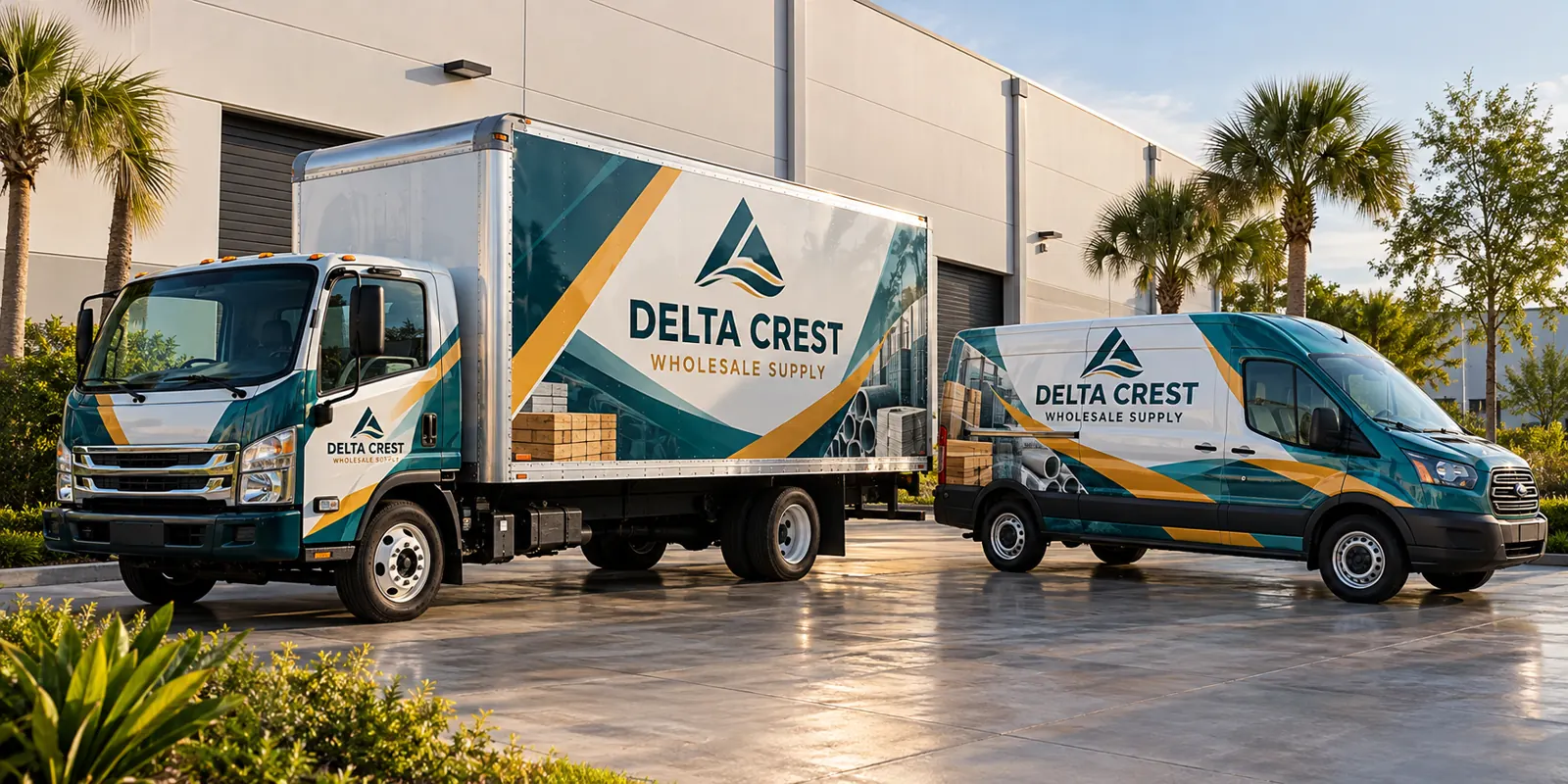
Fictional commercial wrap design concept; not a completed customer installation.
Use the actual shop location as the starting point
The established Pelican Wraps address is 1201 MacArthur Avenue, Suite B, Harvey, LA 70058. Confirm an appointment and the appropriate vehicle-access instructions before making a trip. Explain the vehicle type, overall equipment configuration and whether a trailer or other attachment will be arriving. An address alone does not confirm that an unscheduled visit or every equipment size can be accommodated.
For directions, use the address and the agreed appointment details rather than a guessed travel time. Traffic, operating schedules and the vehicle itself can affect transportation planning. If inspection and installation happen at different stages, clarify what is needed at each visit so a driver is not sent with the wrong expectations.
Choose the area where the equipment actually operates
The directory includes Greater New Orleans and Westbank inquiries, other Louisiana markets and broader regional planning routes. Select the operating area that best describes your fleet and explain any split between the business office and the vehicle base. A billing address may not identify where the equipment can be released or who controls its schedule.
If several locations are involved, provide a unit list by operating base. Identify vehicles that travel between markets or could be brought to Harvey together. The service-area page helps frame those arrangements; it does not establish a separate branch, an assigned installer or a confirmed off-site service commitment. Ask for a project-specific review when another location is requested.
Separate the vehicle service from the transportation question
A box truck project needs the relevant body and surface information wherever the truck operates. Start with the box truck service, the vehicle directory or the appropriate application page. Then add the location, transportation and access details. Geographic wording should not replace the physical scope of the work.
Explain whether the equipment is road-ready, awaiting body repair, carrying old graphics or restricted by a lease. Identify who can deliver and collect it. Do not assume transportation, storage or preparation is included in a graphics proposal unless the scope states that responsibility. These questions affect the plan even when the business is nearby.
Release vehicles around real operating needs
Tell the project contact which units can be unavailable together and which must remain on the road. Include the person who can confirm release at each operating base. For a small business, one unavailable van can affect the day’s work; for a larger fleet, an orderly sequence can help avoid sending the wrong equipment before artwork or preparation is ready.
Use the installation scheduling guide to separate design approval, surface readiness, production and the actual appointment. Keep target dates distinct from confirmed dates. A service-area inquiry does not reserve an installation window, and the same travel arrangement may not suit every phase of a multi-vehicle project.
Prepare enough information for a remote first review
Before moving equipment, send current photographs of both sides, front and rear, plus close views of existing graphics and surface concerns. Include the year, make, model, body details and quantity. Describe the intended coverage, approved message, artwork status and timing. Mark uncertain details as uncertain so the review can identify what still needs inspection.
A useful photo set can make the initial conversation more productive, but it should not be treated as a substitute for every physical check. Ask whether a measurement or condition assessment is required before a firm proposal or production release. The fleet planning guide helps assemble the equipment and approval information.
Confirm broader-market arrangements individually
For regional or national equipment, identify every requested operating location and the quantity at each one. Ask which arrangement is feasible for that program and who would perform the work. Do not infer a national installer network, guaranteed geographic coverage or local premises from the existence of a broad service-area page.
Review multi-location installation planning when the project spans several markets. The proposal should define the confirmed production, installation, transportation, site and closeout responsibilities. If another facility is being considered, provide its access contact and working-condition details. A parking area or a receiving address alone does not establish a suitable installation site.
Turn a location inquiry into a scoped next step
Send a commercial wrap inquiry with the equipment details and the place the vehicles actually operate. Explain whether the first need is a coverage recommendation, a cost review, a rebrand plan or repair of existing graphics. Identify the person who approves the scope and the person who controls vehicle availability if they are different.
Use the area links below for context, then confirm the actual inspection and installation arrangement with the project contact. The goal is a clear proposal and an executable appointment plan. It should be obvious which work is included, which information remains outstanding and who is responsible for getting the right vehicle to the agreed location.
Browse Service-Area Planning Pages
- Baton Rouge Commercial Vehicle Wraps
- Belle Chasse Vehicle Wraps & Fleet Graphics
- Covington & Mandeville Fleet Graphics
- Elmwood & Harahan Vehicle Wraps
- Gretna Vehicle Wraps & Fleet Graphics
- Gulf South Fleet Graphics
- Gulfport & Biloxi Vehicle Wraps
- Harvey & Westbank Vehicle Wraps
- Houma & Thibodaux Vehicle Wraps
- Houston Fleet Wraps & Installation
- Kenner Vehicle Wraps & Signs
- Lafayette Commercial Vehicle Wraps
- Louisiana Fleet Graphics
- Marrero Commercial Vehicle Wraps
- Metairie Vehicle Wraps & Fleet Graphics
- Mobile Alabama Fleet Wraps
- Nationwide Fleet Wrap Installation
- New Orleans Commercial Vehicle Wraps
- Northshore Vehicle Wraps & Fleet Graphics
- Slidell Commercial Vehicle Wraps
Frequently Asked Questions
Turn Your Vehicle Details Into a Clear Project Brief
Send current photographs, vehicle quantities, logo files, coverage preferences and timing. Identify old graphics and paint concerns so the project review can address the actual equipment.
Explore planning resources or request your commercial wrap quote.
