
Printed Versus Cut Vinyl Graphics for Commercial Vehicles
Choose the production approach around the artwork, vehicle and maintenance plan. A focused cut-lettering identity, a printed composition or a deliberate combination can each serve a commercial fleet when the actual scope and product system are clear.
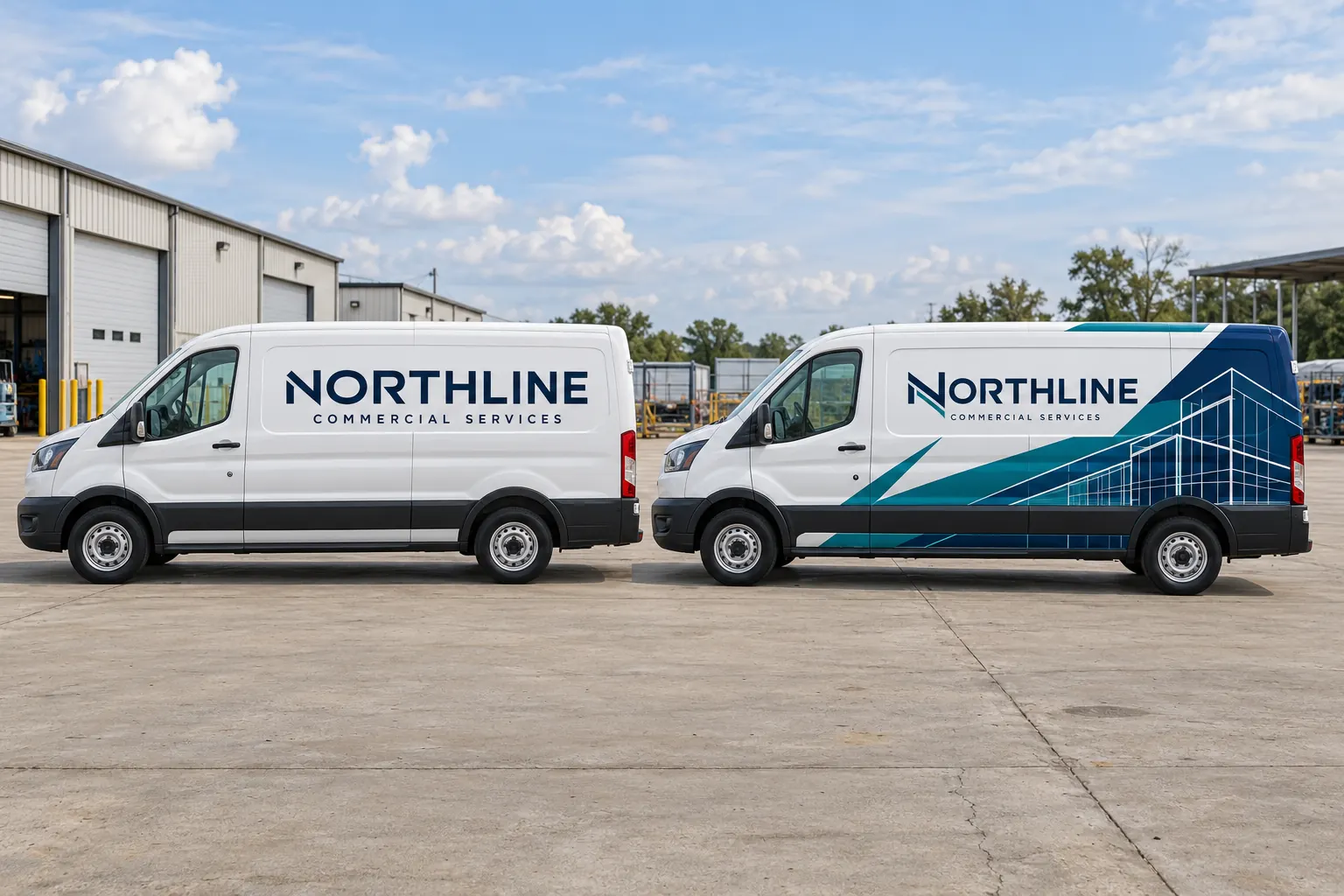
Fictional commercial wrap design concept; not a completed customer installation.
Begin with the artwork rather than a production preference
Write the intended business identity and rank the information: company name, service context, contact route and any unit-specific data. Identify whether the composition uses simple lettering and shapes, photographic imagery, gradients or a broader printed background. The artwork requirements give the production review a useful starting point.
In a cut-graphic approach, shapes or lettering are cut from suitable film; a printed approach reproduces the design on a printable material. A finished project can also combine methods. Do not assume one method is inherently the correct commercial choice before reviewing the actual art and surface. The decision should connect the desired message to a defined, suitable construction rather than turn a production label into a marketing claim.
Compare the appearance on the actual body color
Uncovered paint remains visible around cut lettering and within many selected printed layouts. Record the body color and configuration for each vehicle and review the identity in that context. The same dark lettering will not create the same appearance on a white body and a dark replacement vehicle without design review.
A printed background can change how the identity occupies the panel, while a simpler cut arrangement may use more of the original body as part of the composition. Review both against the same approved wording and viewing priorities. Use vehicle lettering and partial-wrap options as relevant service routes rather than assuming one label fully defines the finished coverage.
Review product suitability separately from graphic method
Printed and cut describe how a graphic is produced, not a complete statement of film suitability. The named product, adhesive, surface geometry and intended use still require review. Avery Dennison addresses computer-cut graphics and printed constructions separately in its vehicle-wrapping considerations bulletin; use current guidance for the selected system.
Photograph the actual contours, recesses, seams and hardware within the coverage area. Do not assume a small cut shape can go anywhere or that a printed sheet automatically suits every complex surface. Keep required lights, labels and operational markings clear through the responsible project review. A production method alone does not certify the vehicle layout.
Define colors and fine details before approval
Supply the original vector logo where available and identify the accepted color references. Review how the proposed construction handles small lettering, intricate shapes and the relationships between design elements. A detailed logo viewed large on a monitor may need a different review at its intended finished size.
For printed elements, confirm the relevant material and protective system. For cut elements, identify the actual specified films and accepted arrangement. Do not promise exact appearance from a screen preview alone. The color consistency guide can support a managed review across methods and vehicle classes. Keep the accepted references so later additions do not depend on a designer guessing from a photograph.
Plan updates and unit-specific information deliberately
A phone number, service line or unit identifier may change while the wider identity remains current. Decide how that information should sit within the design and how a future update would be reviewed. A separate element may support a focused change in some layouts, but the actual material, installed construction and condition still matter.
Do not assume every cut letter or printed area can be replaced invisibly after years of use. Record what is shared across the fleet and what varies by unit. Keep the current data source and accepted artwork linked. This makes later enquiries more precise and avoids reproducing an obsolete contact route simply because it remains in a retained production file.
Compare the intended artwork, not just the method name
| Artwork need | Planning consideration |
|---|---|
| Focused company lettering | Review suitable cut or printed identity options at the actual size. |
| Photo or broad composition | Supply authorized usable source imagery and review printed output. |
| Variable unit number | Define the data owner, placement and future update record. |
| Mixed body colors | Approve each relevant uncovered-paint combination. |
Compare complete scopes using the same message
Ask each proposal to identify the graphic locations, sizes, colors, construction, artwork preparation, removal and installation. A supplied decal set and an installed printed package are different deliverables. Likewise, a small identity-only layout is not directly comparable with a larger composition carrying a different message.
Use the lettering cost guide and the design scope guide to organize those differences. If cost drives a change, review a coherent alternative with the same commercial priorities rather than deleting elements at random. Keep exclusions visible so the chosen package still delivers the intended business identity on the actual vehicles.
Keep the accepted method and files with the fleet record
Retain the artwork, material references, finished dimensions, placement and configuration photographs. Record whether the package combines methods and which elements carry variable data. If the vehicle is repaired, repainted or changed, provide current photographs before requesting another set from the older record.
For the first enquiry, send a commercial graphics brief with the approved identity, vehicle list, desired coverage and known update needs. The review can then consider cut, printed or combined approaches against the same real project. Fleet solutions provides the wider route when the business needs an ongoing identity system across several equipment types rather than one isolated set of decals.
Frequently Asked Questions
Turn Your Vehicle Details Into a Clear Project Brief
Send current photographs, vehicle quantities, logo files, coverage preferences and timing. Identify old graphics and paint concerns so the project review can address the actual equipment.
Explore planning resources or request your commercial wrap quote.
