
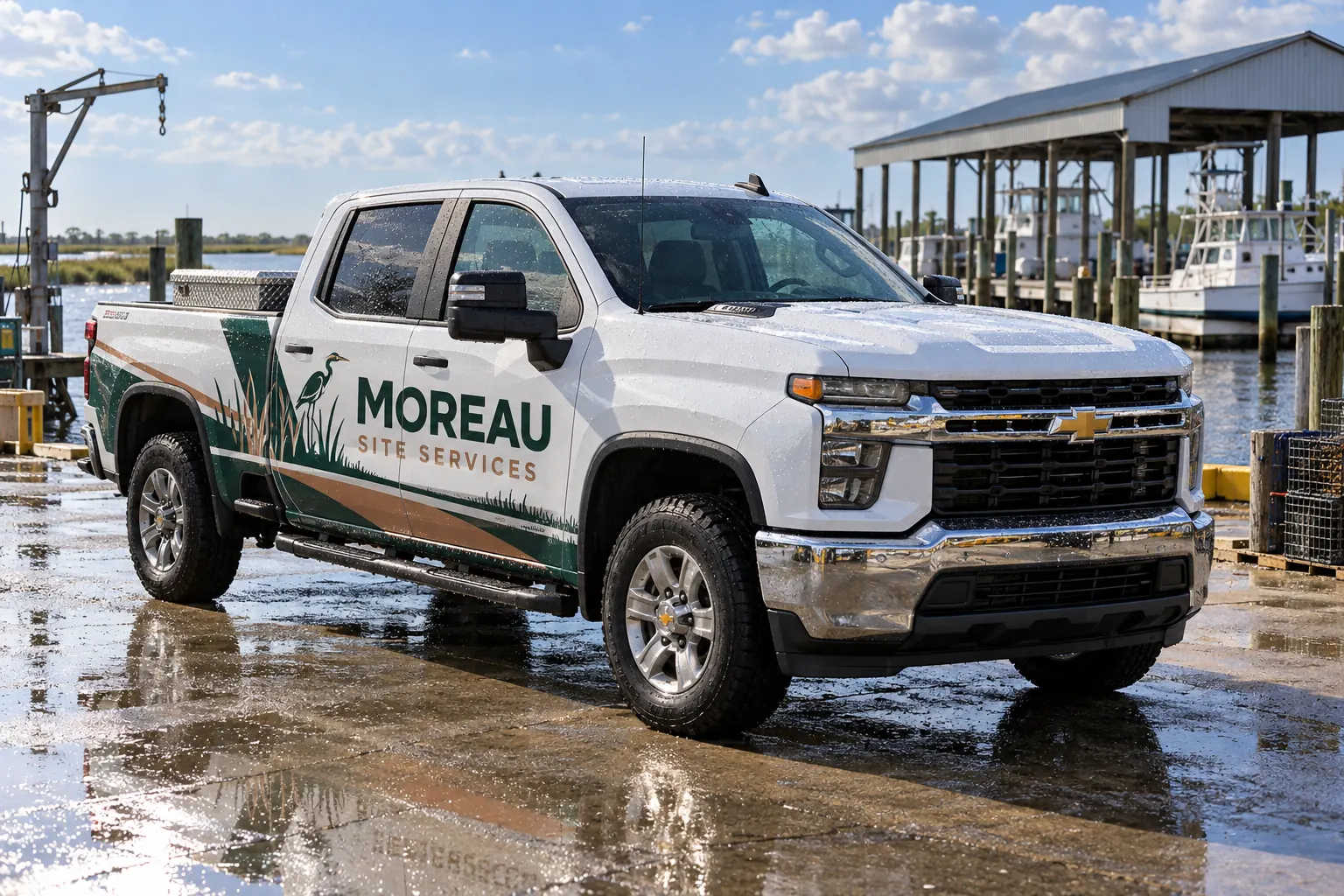
Fictional commercial wrap design concept; not a completed customer installation.
Build an exposure record for each operating group
Group vehicles by their actual work and parking patterns. Record whether they spend most idle time inside, under cover or outdoors, and whether their routes involve coastal yards, industrial sites or routine contact with dirt and other contaminants. These observations help organize care without pretending a city name alone predicts the condition of a graphic.
Connect the exposure notes to the unit inventory and installed product record. A service van, a trailer and a pickup may carry the same identity while having different surfaces and working routines. Ask supervisors for practical observations rather than create an elaborate score that nobody maintains. The purpose is to identify meaningful differences, assign follow-up and provide useful information when a condition concern needs review.
Separate product guidance from a general wash habit
Retain the cleaning and maintenance guidance for the actual installed graphic system. Share it with drivers and any external wash provider before treating the usual fleet wash process as suitable. The 3M commercial graphic maintenance bulletin warns that aggressive pressure washing can damage graphics and force water under edges. That does not establish one procedure for every product.
Record the chosen method, responsible provider and any product-specific restrictions. Keep technical settings with the applicable instructions instead of copying one pressure, temperature or chemical limit across unrelated films. If the existing wash contract cannot follow the selected system, address that difference before installation rather than wait for a driver to discover the conflict at the wash bay.
Make coastal exposure a review question, not a performance promise
If units work around salt water, include that environment in the material and care discussion. Describe the actual route, parking location and cleaning arrangements. Do not convert coastal branding language into a claim that a decorative wrap is a corrosion treatment, underwater coating or substitute for the vehicle body maintenance required by its operator.
Photograph visible finish concerns and keep the graphics review connected to the underlying surface record. Use vehicle preparation planning when the starting condition is uncertain. A wrap can only be evaluated in relation to the actual substrate and proposed application. The commercial scope should say what is being installed and what separate vehicle work remains the owner responsibility.
Inspect consistently instead of waiting for obvious failure
Add a brief graphics observation to an existing fleet inspection or cleaning handoff. Look for changed appearance, lifting edges, impact damage and areas repeatedly rubbed by equipment. Identify the unit and panel and take a clear photograph when something changes. A consistent record is more useful than an unsupported description that every wrap on a route is failing.
Record when the condition was first noticed and any relevant wash, repair or equipment change. Do not ask drivers to perform improvised repairs or conceal the concern with a new chemical. Send the information for review against the actual product and installation record. The inspection process should identify an issue early and route it to a responsible person, without promising that every observed change has the same cause or remedy.
Assign care ownership across drivers, branches and suppliers
Choose who distributes instructions, who receives condition reports and who can approve follow-up work. Give new drivers the same reference used by established staff. For shared or pooled vehicles, keep the record with the unit rather than assume the latest driver knows the installation history. Include outside wash and maintenance providers in the handoff where their work affects the graphics.
Use fleet program planning to organize responsibility and connect the care handoff to the resource hub and your actual unit inventory. Keep reports short enough to use: unit, date, affected face, photograph, recent events and assigned next action. A clear owner prevents repeated concerns from disappearing between branch and supplier inboxes.
Budget for review and replacement without inventing service life
Keep inspection, damage replacement and planned identity changes distinct. A panel damaged during work may need a different review from a weathered full side or a company-wide rebrand. Ask for a current assessment rather than assume an old purchase date proves the appropriate repair or the coverage of a warranty.
Use lifespan planning to organize the questions and panel replacement for a defined damage enquiry. Retain the original artwork and material references while providing current photographs. Aging, surface condition and production differences need review; do not promise that every small replacement will be visually indistinguishable from the surrounding graphics.
Create the handoff before the next unit returns to work
Prepare a simple care sheet with the unit reference, installed system, source instructions, approved wash contact and issue-report route. Confirm who will update it if a panel or product changes. The document should support the real operating routine and remain available to the people who handle the vehicle, rather than exist only in the original artwork email.
For a new fleet project, send the exposure and care brief with the vehicle list, coverage, photographs and known cleaning arrangements. Include any uncertainty about products already installed. The review can connect design, surface readiness and future care so the commercial identity has an organized maintenance path after installation, without turning a general guide into a universal product guarantee.
Frequently Asked Questions
Turn Your Vehicle Details Into a Clear Project Brief
Send current photographs, vehicle quantities, logo files, coverage preferences and timing. Identify old graphics and paint concerns so the project review can address the actual equipment.
Explore planning resources or request your commercial wrap quote.
