
Planning Graphics Around Rivets, Seams, Liftgates and Roll-Up Doors
Treat body construction and working hardware as part of the graphics brief. The actual vehicle, covered areas and selected system determine how a commercial layout should be reviewed; a flat-looking photograph is not a complete installation specification.
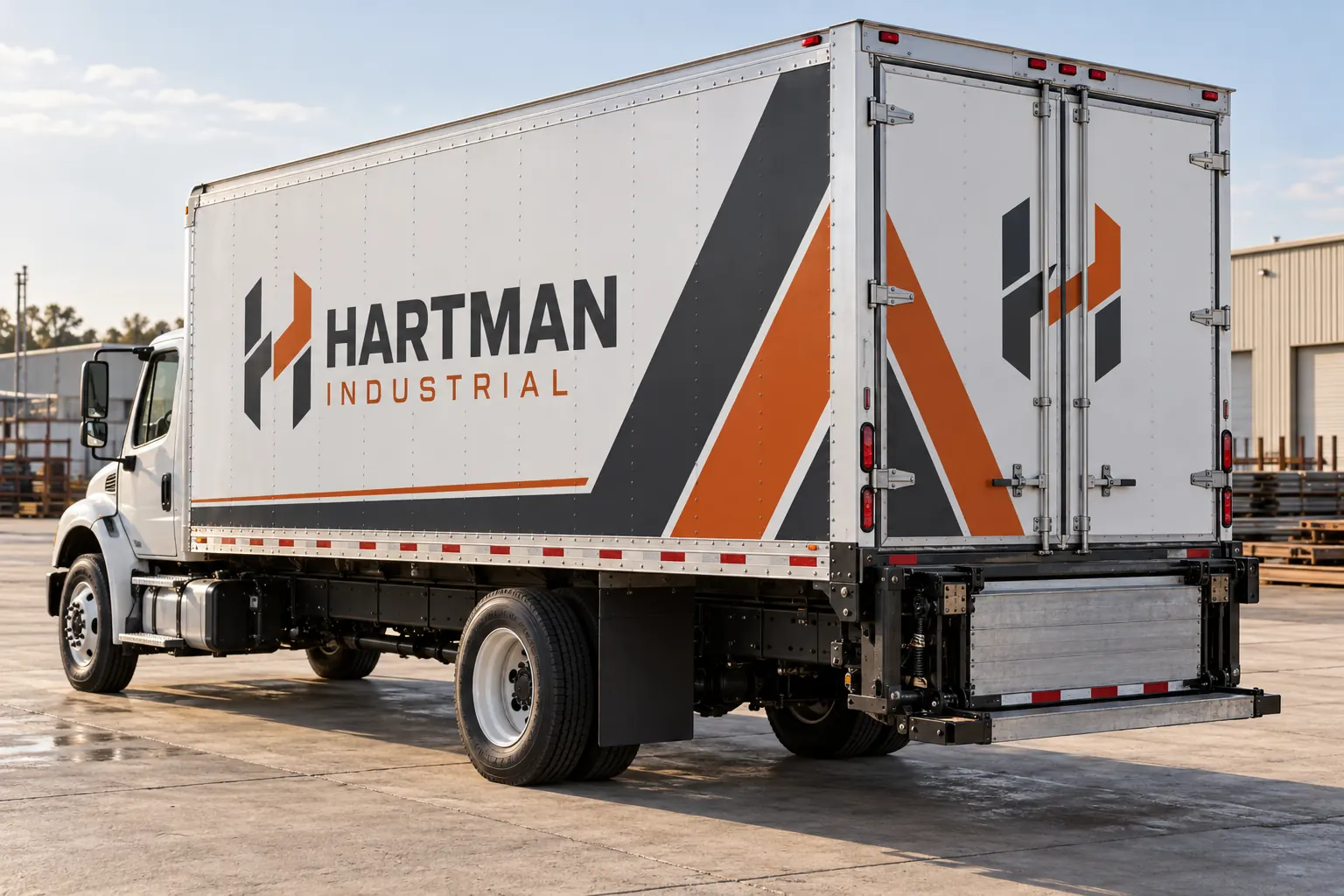
Fictional commercial wrap design concept; not a completed customer installation.
Survey the body construction before the artwork is fitted
Photograph the full face and close views of rivets, seams, corrugation, rails and relevant hardware. Identify the actual body manufacturer or construction if records are available. A broad truck side may look like one blank rectangle in a distant image while containing several details that affect layout and application review.
Connect the photographs to usable-area dimensions and mark estimates. Use the survey guide to keep references consistent. The designer needs to understand where the graphic is intended to go and which construction details lie within that coverage. The technical installation process then follows the selected product and actual surface rather than a generic assumption based on vehicle length.
Keep critical identity clear of the most disruptive features
Review the company name, contact route and variable identifiers against seams, bars, latches and other interruptions. A complete word may fit more usefully within one clear panel than span several moving or obstructed areas. Preserve the hierarchy while allowing the composition to adapt to real equipment.
Use rear-door planning for more interrupted rear faces and box-truck standards for the wider system. Do not treat a technically applicable area as the best location for important text simply because film might be installed there. Graphic suitability and commercial message placement are related decisions with different purposes.
Review the named film system for the actual geometry
Riveted panels, contours, door construction and other surfaces need review against the proposed material and manufacturer guidance. The current 3M vehicle application bulletin addresses vehicle-specific application techniques; it is not a reason to assume every film or printed construction suits every body detail.
Ask the proposal to identify the actual system and relevant coverage assumptions. Keep technical methods with the responsible installation process rather than turn a customer guide into one universal heating or cutting recipe. Use material-selection planning to distinguish category questions from a complete product specification and retain the accepted references for later replacements.
Document moving doors and liftgates as working equipment
Show roll-up or swing-door construction, hinges, handles, latches and the relevant liftgate arrangement. Identify normal operating positions through the responsible fleet process where they change visibility or clearances. A graphic that looks balanced on a parked rear may not communicate the same way when equipment moves or covers part of the design.
Keep controls, lighting, reflectors, warnings, serial information and other required areas clear under the operational review. Do not assume the brand designer can infer every requirement from a small stock outline. The accepted layout should identify the actual configuration and protected areas instead of leave an installer to resolve competing instructions when the vehicle arrives.
Include condition, old graphics and cleaning access
Photograph damaged coatings, repairs, adhesive and existing film around the details as well as on the broad panels. Record what is known about the body and previous work and mark concealed condition as uncertain. Hardware and joints can make the starting condition harder to understand from an overall view alone.
Use preparation planning and removal planning to define those earlier tasks. A new graphic is not a repair to an unsound substrate, and a material sample does not establish readiness. Keep repair, preparation and application responsibilities separate unless the accepted scope expressly includes them.
Create configuration exceptions within the fleet standard
Record which bodies genuinely repeat and which have different rear doors, rivet patterns, liftgates or accessories. Use the master identity with fitted placement sheets rather than copy one production file across every similar-looking asset. A clear exception is easier to manage than an unrecorded instruction that only one person remembers.
Have the brand approver accept the message and layout and the responsible fleet contact confirm operational clearances and variable data. Use the standards guide to link those decisions. A correct company name on an unsuitable configuration is not a useful repeat, even when the logo colors match the rest of the fleet.
Keep panel and hardware records for future changes
Retain the accepted artwork, surface references, product information and installed photographs with the unit. If a door, liftgate, panel or accessory changes, update the survey before reordering graphics from the older file. The current configuration matters even when the business identity remains unchanged.
For damage, use the replacement service route with current evidence and the retained record. For a new project, send the body-detail brief with full-face and close photographs, coverage and operating information. The review can then define both the commercial layout and the actual application scope without pretending the truck is an uninterrupted poster surface.
Frequently Asked Questions
Turn Your Vehicle Details Into a Clear Project Brief
Send current photographs, vehicle quantities, logo files, coverage preferences and timing. Identify old graphics and paint concerns so the project review can address the actual equipment.
Explore planning resources or request your commercial wrap quote.
