
Equipment Service Contact Decal Planning
An equipment service contact decal should identify the actual contact the business wants a reader to use for the stated purpose. The important work happens before the number or address is placed in a layout: confirm who receives the inquiry, what the contact covers and which equipment the instruction concerns. This planning guide produces a checked contact-and-unit brief for graphics assessment, without treating a general company identity as a substitute for original equipment information.
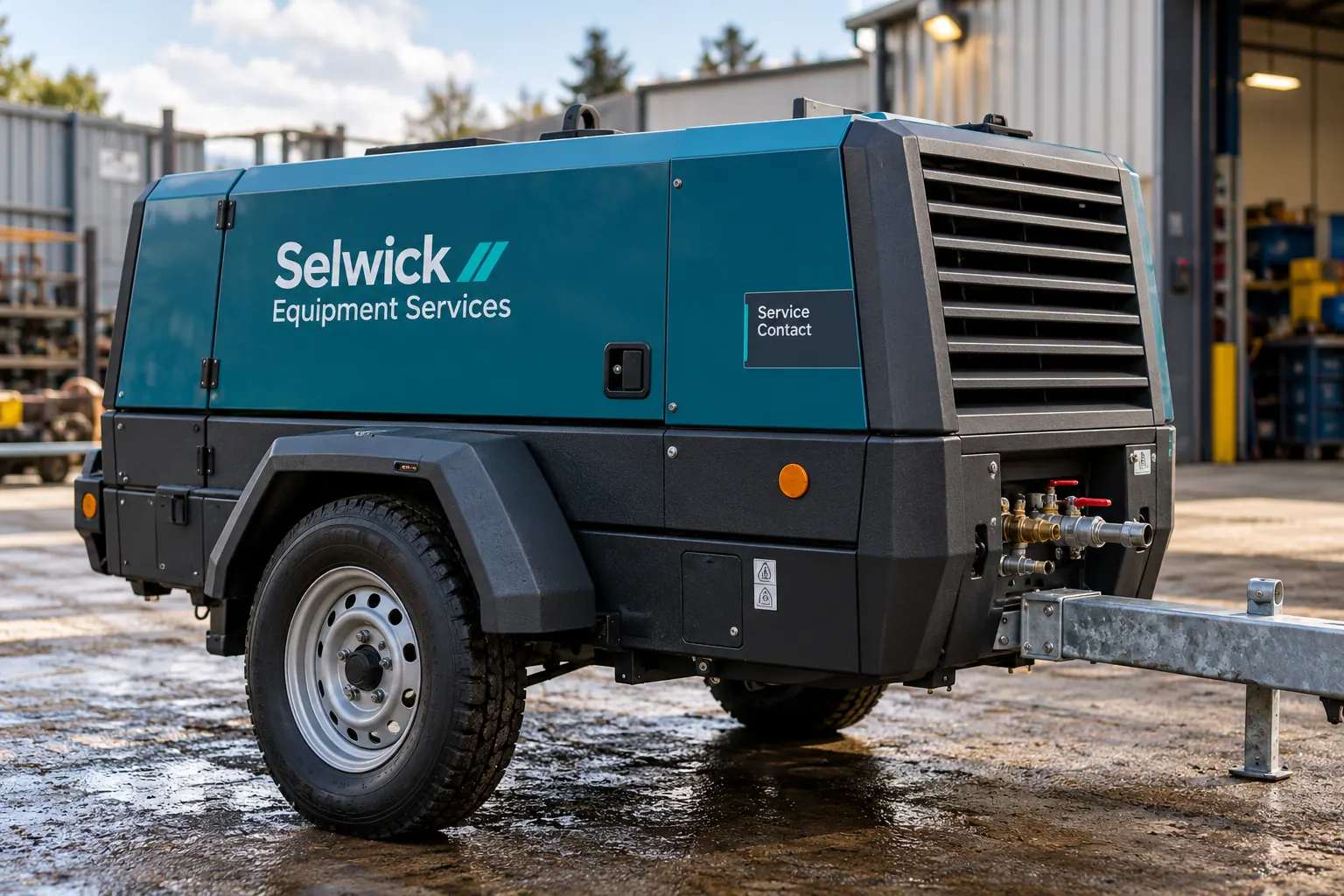
Original fictional commercial planning concept; not a completed customer installation.
Define the service contact purpose in one sentence
Ask the equipment owner what the reader is supposed to do with the contact. A rental company’s service desk, a business maintenance coordinator and an equipment manufacturer’s published support channel are different sources. Record the intended purpose using the business’s actual arrangements. Do not select a familiar phone number merely because it already appears on a company vehicle.
For example, a brief might say that routine service inquiries for unit 27 should reach the rental company’s current equipment service desk. That is an illustrative scope statement, not an established arrangement for your equipment. The real business must confirm the role and the wording. Keep any other operating or urgent-response instructions with their responsible source rather than inventing them as supporting marketing copy.
Verify the exact contact and recipient
Obtain the actual number, address or other proposed contact from its owner in text. Identify the person or team that receives the inquiry and record when the business checked the destination. A number copied from a faded label or an old supplier invoice needs confirmation before it becomes the active graphics source.
Have the business verify the proposed destination through its normal process and explain what should happen when someone uses it. Record any relevant scope or availability wording supplied by that owner. Do not invent response hours, emergency support or service promises to fill a small decal. A short accurate instruction is more useful than a polished claim that the recipient has never agreed to deliver.
Connect the contact instruction to the actual equipment
List the units that should use this particular contact and identify the source governing that assignment. Different equipment groups or ownership arrangements may have different responsible service contacts. Keep those differences visible in the request rather than assuming one decal master applies to every asset in the yard.
Add actual overall and proposed-area photographs for the requested equipment. Record the identifier used by the business and the person confirming each assignment. If a label has no reliable unit match, leave it pending. The request should let a reviewer explain why the selected contact belongs on the actual unit being discussed, even when another machine nearby uses similar colors or an older company name.
Separate contact copy from original technical information
Identify existing plates, labels, instructions and hardware through current views and the equipment owner’s actual sources. Ask which information and areas the proposed service contact graphic must preserve. Keep the new business contact separate from assumptions about manufacturer identification, equipment servicing requirements or technical instructions.
If the proposal includes wording that might suggest manufacturer affiliation or a particular service authorization, obtain the business’s actual source and reviewer for that claim. Do not infer that a company can describe itself that way because it handles some routine inquiries. The graphics brief should reproduce verified business information while leaving technical scope and any affiliation statements with the people responsible for substantiating them.
Prepare copy that a proof reviewer can check
Supply one current text block with the purpose, exact destination and any approved supporting wording. Distinguish required copy from optional appearance preferences. If a web address is proposed, identify the actual destination and the business owner maintaining it. A printed address should not depend on an unowned page that nobody has agreed to keep current.
Review the message in the actual proposed area with the graphics provider. Ask what further assessment is needed for the surface and treatment. Do not infer a universal letter size or material from another company’s equipment picture. Keep the copy source and proposed physical instance connected so a design revision can be checked against both the intended recipient and the actual equipment context.
Check the proof and the receiving process together
Compare every contact character against the verified source. Have the responsible business reviewer check the exact purpose wording and unit assignment. Record one current proof version with consolidated comments. If the destination or recipient changes during review, identify the affected instances and update the source rather than issuing a correction only to one person in the chain.
Separately confirm that the business’s receiving process still matches the proposed instruction. A correct printed number can still lead to the wrong team if the internal arrangement has changed. Record the business’s confirmation through the normal project process. Graphics approval concerns the defined copy and treatment; it should not silently stand in for the recipient’s acceptance of a service commitment.
Assign an owner for contact changes and replacements
Use the working record below to retain the contact purpose, verified destination, unit assignments, area evidence, proof decisions and update owner. Establish who will identify affected equipment when a service number or recipient changes. Keep earlier information as history while making the active source easy to find for the next replacement inquiry.
Send Pelican Wraps the approved contact block, actual unit list and photographs, requested decal instances, supplied preservation instructions and coordinating contact. Identify outstanding recipient checks and requested timing. Use equipment graphics for the broader proposal and the owner-versus-operator checklist where roles need clarification. A useful outcome is a service contact request the business can support operationally and maintain after the first decal has been produced.
Draft and Download Your Working Record
Draft your entry, then download a copy before leaving. Send any project decision through the communication process agreed with your supplier.
Frequently Asked Questions
Take the Next Step with a Clear Project Brief
Continue with the resource that matches your next decision:
- Equipment & Machinery Graphics
- Equipment Owner vs Operator Branding Checklist
- Rental Equipment Unit Number Decals
- Request a Quote
Send the actual vehicle or surface photographs, quantities, approved brand files, requested coverage and timing constraints. Identify open questions so the project review can address your equipment and business needs.
