
Commercial Vehicle Wrap Cost: Build a Quote You Can Compare
A useful wrap budget starts with the actual vehicle, the coverage you want and the work needed before installation. A price without those details can hide meaningful differences. Use this guide to prepare a commercial project brief, compare proposals on the same scope and decide where your fleet budget should go.
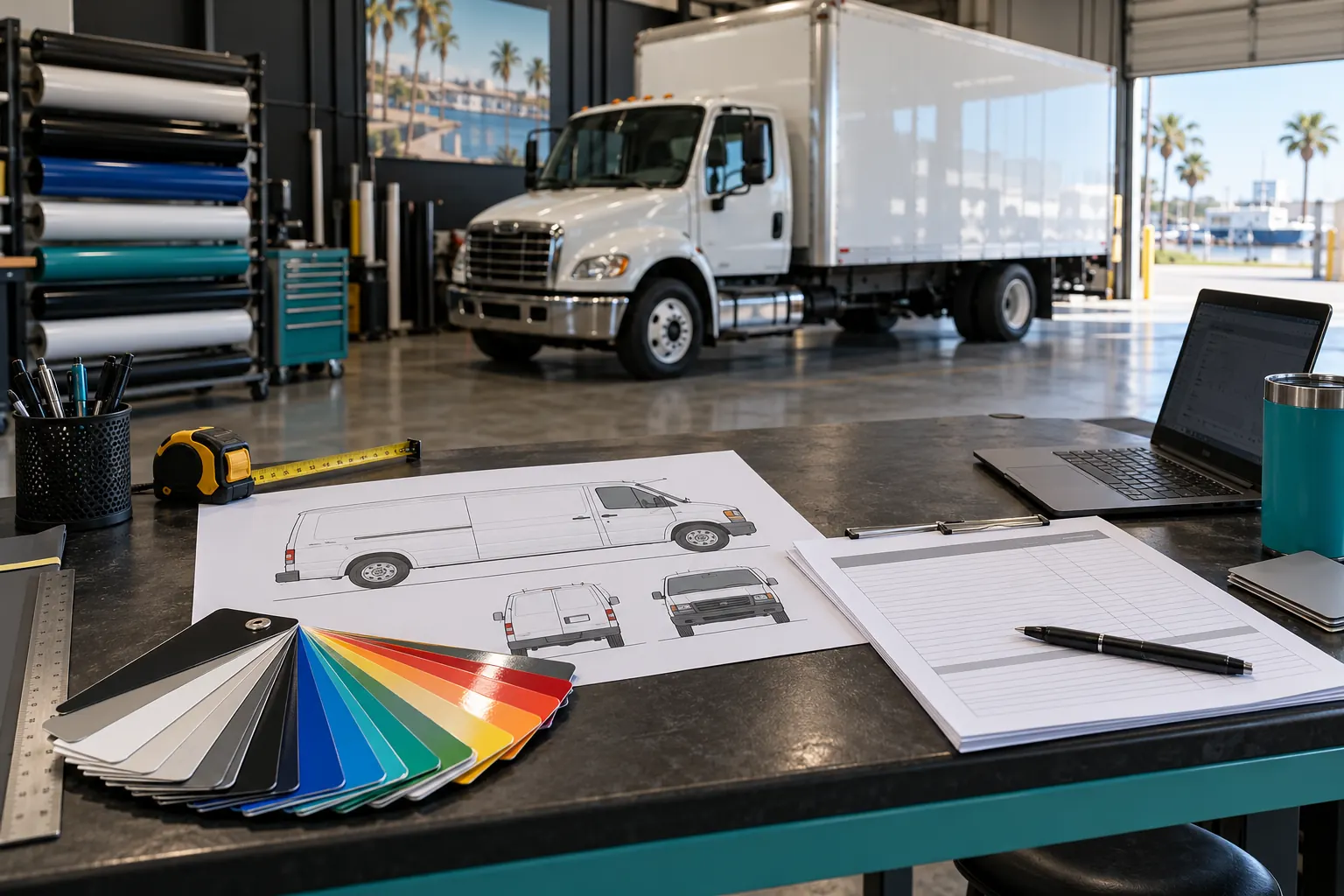
AI-generated illustrative planning or care scene; fictional branding where shown, not documentary customer or shop photography.
Why a single advertised price rarely answers your question
A compact cargo van, a long box truck and a utility pickup present different amounts of usable surface. Their handles, recesses, body seams and existing graphics also differ. Even two vehicles with the same badge can have different roof heights, wheelbases or aftermarket bodies. The quote should identify the equipment being priced rather than assume every vehicle in a category is interchangeable.
Describe the business goal before discussing coverage. A delivery vehicle may need a highly visible brand on a large box. A contractor may need the business name, trade and contact route clearly readable on an otherwise clean white truck. These are different design briefs. Start with the commercial graphics services and choose the outcome your vehicles need to support.
Separate coverage from the cost of the complete project
Ask each proposal to identify the panels included, whether the roof is included, how rear doors are treated and which painted areas remain exposed. A full commercial wrap and a partial wrap should not be compared as if they contain the same work. More coverage can support a larger design, but it does not automatically make the message clearer.
Include artwork development, file repair, production, installation and any agreed preparation in the comparison. Existing graphic removal, adhesive cleanup, replacement badges or specialist body repairs may need separate review. A low total that excludes necessary work can become a poor budgeting reference. Ask what is included, what is excluded and what would trigger a revised scope.
What to send for an estimate that reflects your vehicles
Send the year, make, model, wheelbase or body length, roof height and quantity. Photograph both sides, the front and rear, then add close views of old vinyl, dents, peeling paint and unusual equipment. Include ladders, toolboxes, refrigeration units, liftgates, windows and anything that blocks a graphic area. Clear current photos are more useful than a catalog image of a similar vehicle.
Share the best available logo files, approved colors, essential wording and your preferred contact method. Say whether you need new design work or already have production-ready artwork. Note the target handover date and whether vehicles can be released individually. This information reduces guesswork; it does not replace a condition assessment or guarantee an installation slot.
Choose a coverage level around a readable message
Identify what a nearby customer needs to understand first: the business name, the service category and one practical next action. If the brand is unfamiliar, a clear description such as commercial plumbing can be more useful than a list of every service. Let the design reserve enough space for that hierarchy before adding decorative coverage.
Lettering and decals may suit a clean, simple identity. Partial graphics can use existing paint as part of the composition. Full coverage can create a stronger visual system across different body colors. Ask for a comparison of defined options using the same core message. Avoid comparing a fully designed package with a bare production-only price.
Plan fleet costs around repeatable work and real exceptions
A repeatable design system can simplify approvals and future additions, but a mixed fleet still needs adaptation. Separate standard vehicles from unusual bodies and document each variation. A shared logo position does not mean one print file fits a pickup, a van and a trailer. Confirm which vehicle versions and revision rounds the proposal covers.
Operational costs matter too. Identify who transports vehicles, who removes tools or accessories and how the business will cover work while a unit is unavailable. A phased rollout may fit daily operations better than delivering every vehicle at once. For a wider program, use the fleet wrap planning route to connect quantities, vehicle differences and scheduling before approval.
Use a written comparison instead of a price-only decision
Create a simple comparison with rows for vehicle identification, coverage, artwork, material description, preparation, removal, installation, exclusions, timing and aftercare. Put each proposal beside the same checklist. If a line is unclear, ask for clarification before interpreting the total. Record whether taxes or other charges are included in the quoted amount.
Ask what happens if inspection uncovers unsuitable paint, a different body configuration or undisclosed old graphics. Understand the approval point and how changes are authorized. Material or workmanship terms should be provided for the actual project rather than inferred from a general lifespan claim. A clear written scope gives both sides a practical reference when the vehicle arrives.
Move from a planning budget to a project decision
Once the brief is complete, identify the decision maker and the version of the design they will approve. Verify business names, phone numbers, domains and any required identification from your own records. Ask how production approval, vehicle delivery and handover fit together. Do not schedule a customer campaign around an installation date that has not been confirmed.
Request a quote with your photos and quantity, or read the project process if you are still planning approvals. This guide intentionally avoids invented price bands: your next useful step is a defined scope that can be assessed, priced and approved with the actual vehicle information.
Use the Interactive Worksheet
Open the scope and budget worksheet. Organize your own quantities, planning amounts and unanswered scope questions, then download a copy. The worksheet supplies no automatic prices.
Frequently Asked Questions
Turn Your Vehicle Details Into a Clear Project Brief
Send current photographs, vehicle quantities, logo files, coverage preferences and timing. Identify old graphics and paint concerns so the project review can address the actual equipment.
Explore planning resources or request your commercial wrap quote.
