
Commercial Vehicle Wrap Care and Fleet Maintenance
A wrap care routine should be easy for drivers, cleaners and fleet managers to follow. Start with the instructions for the actual film and finish on your vehicle, then build a simple record of cleaning, condition checks and issues that need review. This guide helps organize that routine without promising a universal lifespan.
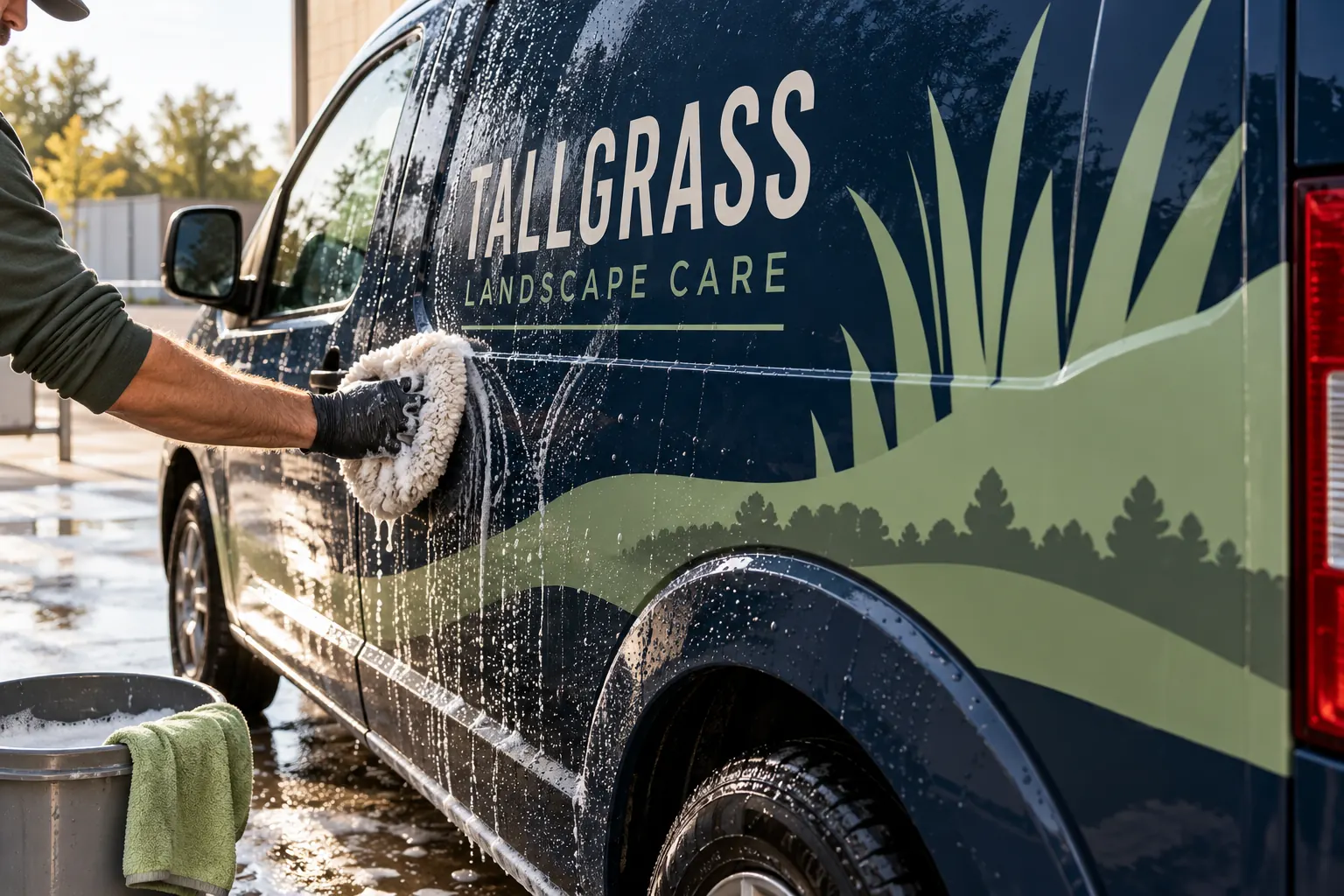
AI-generated illustrative planning or care scene; fictional branding where shown, not documentary customer or shop photography.
Keep the product instructions with the vehicle record
Ask for the material and finish details supplied with your project, plus the applicable written care guidance. Cleaning advice can differ by product, laminate and finish. A method used on another vehicle is not automatically suitable for yours. Keep the installation date, project reference and care document together so the information is available when a new driver or cleaning contractor takes over.
Manufacturer guidance should remain the technical reference. Avery Dennison’s vehicle wrap maintenance bulletin describes gentle hand washing and compatibility checks for its products. Read the instructions relevant to your installed film rather than applying a generic internet recipe to every surface.
Set a cleaning routine that your team can follow
For routine care, use a gentle approach consistent with the installed product’s instructions. Remove loose contamination before washing, use clean non-abrasive tools and rinse thoroughly. Avoid aggressive scrubbing and take care around film edges. Manufacturer guidance also recommends testing cleaning products in an inconspicuous area and addressing contaminants promptly. Confirm product compatibility before introducing cleaners, solvents, waxes or sealants.
Turn that guidance into a short driver handover note. Name the approved supplies and where they are stored. Decide who checks that cloths and wash tools remain clean. A clear routine is easier to follow than a folder of conflicting product suggestions. If an outside wash service is used, give it the relevant care instructions before the first visit.
Inspect the parts most exposed to daily work
Use a regular walkaround to notice changes rather than trying to diagnose them from memory. Look at door edges, loading areas, lower panels and places near frequently handled equipment. Check for lifted edges, cuts, impact damage, unusual discoloration or sections that have become difficult to clean. Note whether a problem appears on one vehicle or across several units.
Photograph the affected area both close up and in context. Record the vehicle identifier, location on the body and when the issue was first noticed. This gives the graphics team a clearer starting point than a message saying the wrap looks wrong. Do not pick at an edge to see how far it will lift or cover a problem with an unapproved chemical.
Make drivers part of the reporting process
Drivers do not need to become material specialists. They need to recognize changes and know where to report them. Put the fleet contact and the required photos in the same place as the vehicle’s other operating notes. Ask for reports after collisions, scraping, spills or accessory changes that affect the graphic area.
Keep the reporting task brief enough to be used. A vehicle number, date, two photographs and a short description often provide the initial context. Separate cosmetic concerns from mechanical or safety issues, which belong in your normal vehicle maintenance process. Graphics review does not replace inspection of the underlying body or equipment.
Plan repairs around the damaged area and approved design
A damaged panel does not necessarily mean the whole design must be replaced, but repair options depend on the layout, material condition and location of the damage. Supply the original project reference and photographs before ordering a replacement. A replacement section may need artwork adaptation, and differences between new and weathered material should be discussed rather than assumed away.
If bodywork is being repaired, coordinate the graphics discussion with the repair plan. Identify which panels will be refinished and follow the relevant paint and film requirements before new graphics are applied. Do not ask a wrap to hide an unresolved surface problem. The commercial graphics service overview can help identify the right scope for a repair or wider refresh.
Keep fleet changes from breaking brand consistency
Record phone number changes, new service descriptions and brand updates before they reach the vehicles. A small decal replacement may look simple, but it still needs the correct wording, color treatment and placement. Keep one approved source for the current identity so different drivers do not commission conflicting updates.
When adding a vehicle, send its specification and current photos even if the fleet already has an established design. The new body may need a different layout. For a phased refresh, identify which units receive replacement panels and which receive a complete redesign. Use the fleet planning page to connect graphics maintenance with a consistent rollout.
Use condition and business needs to plan the next step
Review the fleet periodically for both physical condition and message accuracy. A graphic can be clean yet display an outdated domain, service offering or brand. Conversely, the message may still be right while a heavily used loading area needs attention. Track those as separate decisions so a simple content update does not become an unnecessary full redesign.
Read how a graphics project moves through approval before arranging a replacement, or request a review with the project reference and current photos. Care records make the conversation more specific. They do not establish a warranty outcome on their own; applicable product and project terms still govern that assessment.
Use the Interactive Worksheet
Open the care handover checklist. Record product-document references, responsibilities, condition reporting and the next internal review date. Use the actual installed product instructions as the technical reference.
Frequently Asked Questions
Turn Your Vehicle Details Into a Clear Project Brief
Send current photographs, vehicle quantities, logo files, coverage preferences and timing. Identify old graphics and paint concerns so the project review can address the actual equipment.
Explore planning resources or request your commercial wrap quote.
Explore Related Project Guides
- Fleet Graphics Adhesive Residue Review Brief
- Fleet Graphics Panel Replacement File Request
- Fleet Graphics Replacement Color Sample Record
- Fleet Graphics Wash Provider Handoff
- Fleet Vehicle Coating Disclosure for Graphics
- Fleet Vehicle Sale Graphics Removal Checklist
- Fleet Wrap Care Responsibility Matrix
- Fleet Wrap Edge Inspection Log
- Fleet Wrap Incident Photo Checklist
- Fleet Wrap Pressure Washing Exception Record
