
Pool Service Vehicle Wraps for Route and Repair Fleets
A pool-service vehicle needs to identify the business clearly during repeat visits and explain the kind of work it offers. Build a consistent identity across pickups and vans, with a readable message that works around racks, tool storage and different vehicle bodies.
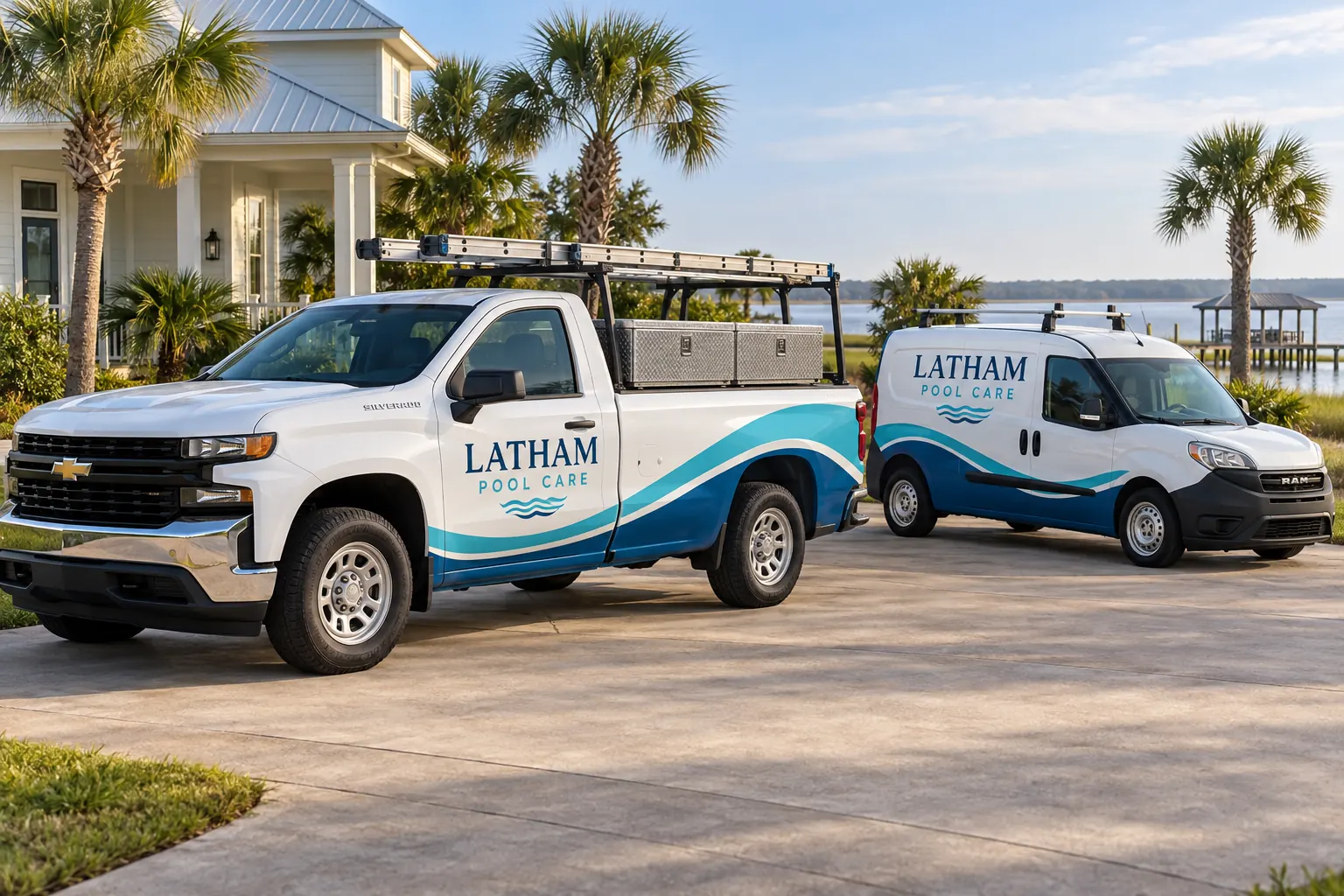
Fictional commercial wrap design concept; not a completed customer installation.
Make the pool-service company easy to recognize
Start with the business name and a concise pool-service description. A homeowner may see the vehicle during a regular visit, while a neighbor may have no context beyond the parked pickup. The identity should explain the operator without requiring a viewer to interpret a large water illustration or a long list of equipment.
Choose a primary contact route and leave enough space for it to remain readable. A distinctive color system can support the brand, but the company name should carry the identity. The aim is a clear commercial message, not a promise that graphics alone produce a fixed number of leads or demonstrate the quality of pool maintenance.
Distinguish routine service, repairs and other business offerings
Pool maintenance, equipment repair and construction are different customer needs. Identify the services the business actually offers and decide which should lead on the vehicle. A concise description can help an unfamiliar company name attract the right enquiry. The website can provide the detailed list once the vehicle has made the business recognizable.
If different teams have different roles, define the relationship between their wording and the shared brand. A routine-service pickup and a repair van can look related without displaying an identical service list. Keep approved descriptions in one maintained record so future additions do not introduce outdated wording or a different contact route.
Work around pickup racks, storage and van doors
Send current side and rear photographs in the normal working configuration. Show racks, tool storage, bed caps, windows and accessories that affect visible panels. Include the year, model and body details for each version. A standard pickup bed and a compartmented service body should not be assumed to offer the same graphic areas.
Use the pickup, service-body truck and van pages for the equipment-specific decisions. Identify existing equipment information and access areas that need to remain visible and usable. Review important wording against the actual hardware rather than a simplified blank-vehicle template.
Choose coverage that supports a clear route-service identity
Lettering can provide a clean identity on consistent paint, while partial graphics can introduce a recognizable branded area. Fuller coverage offers another direction where the surfaces and message support it. Compare the options using the same essential wording and vehicle photographs rather than assuming one coverage level suits every pool-service business.
The lettering guide and partial-wrap guide help define the requested treatment. Ask which panels are included and how the rear, roof and visible original paint are handled. Water imagery should reinforce the business name rather than compete with it across every available surface.
Keep a mixed pool fleet consistent as routes grow
List quantities by vehicle configuration and define the shared logo treatment, colors and message hierarchy. Allow placement to adapt to each body. A small van and a longer pickup can carry the same identity without using the same composition. Keep unit numbers and team labels organized as secondary information where needed.
Assign one person to verify business wording, phone numbers and domains during proof review. Retain a dated proof for each vehicle version. The fleet solutions route connects this record with phased additions and future replacements. When another vehicle joins the business, review its current body details before reusing an earlier file.
Plan installation around service routes and actual condition
Identify priority units and the release windows available between booked work. Clarify who manages delivery, access and collection, then plan around the confirmed project arrangement. Do not treat a preferred date or a generic turnaround statement as an agreed installation schedule for the whole fleet.
Disclose old vinyl, residue, body repairs, peeling paint and other concerns with close photographs. Graphics should not be used as a repair for an underlying surface issue. Preparation and removal need to be explicit in the scope. The inventory worksheet can connect the units, condition questions, photo references and availability before the proposal is approved.
Build a useful pool-service graphics brief
Send the equipment list, quantities, current photos, logo sources, essential wording and timing. State the coverage options to assess and identify the approval owner. If the business needs particular identification displayed, supply verified details from its own records and confirm relevant requirements through the appropriate authority where needed.
Review the commercial cost guide, then request a pool-service fleet quote. The truck and van shown here use fictional branding created for this page. They illustrate a possible identity without presenting customer installations, service qualifications or business results as evidence.
Frequently Asked Questions
Turn Your Vehicle Details Into a Clear Project Brief
Send current photographs, vehicle quantities, logo files, coverage preferences and timing. Identify old graphics and paint concerns so the project review can address the actual equipment.
Explore planning resources or request your commercial wrap quote.
