
Damaged Fleet Panel: A Planning Example for a Focused Replacement Brief
This fictional damage scenario follows one affected graphic area from condition report to a defined replacement enquiry. It shows which current photographs and retained records help distinguish a panel question from a complete vehicle rebrand.
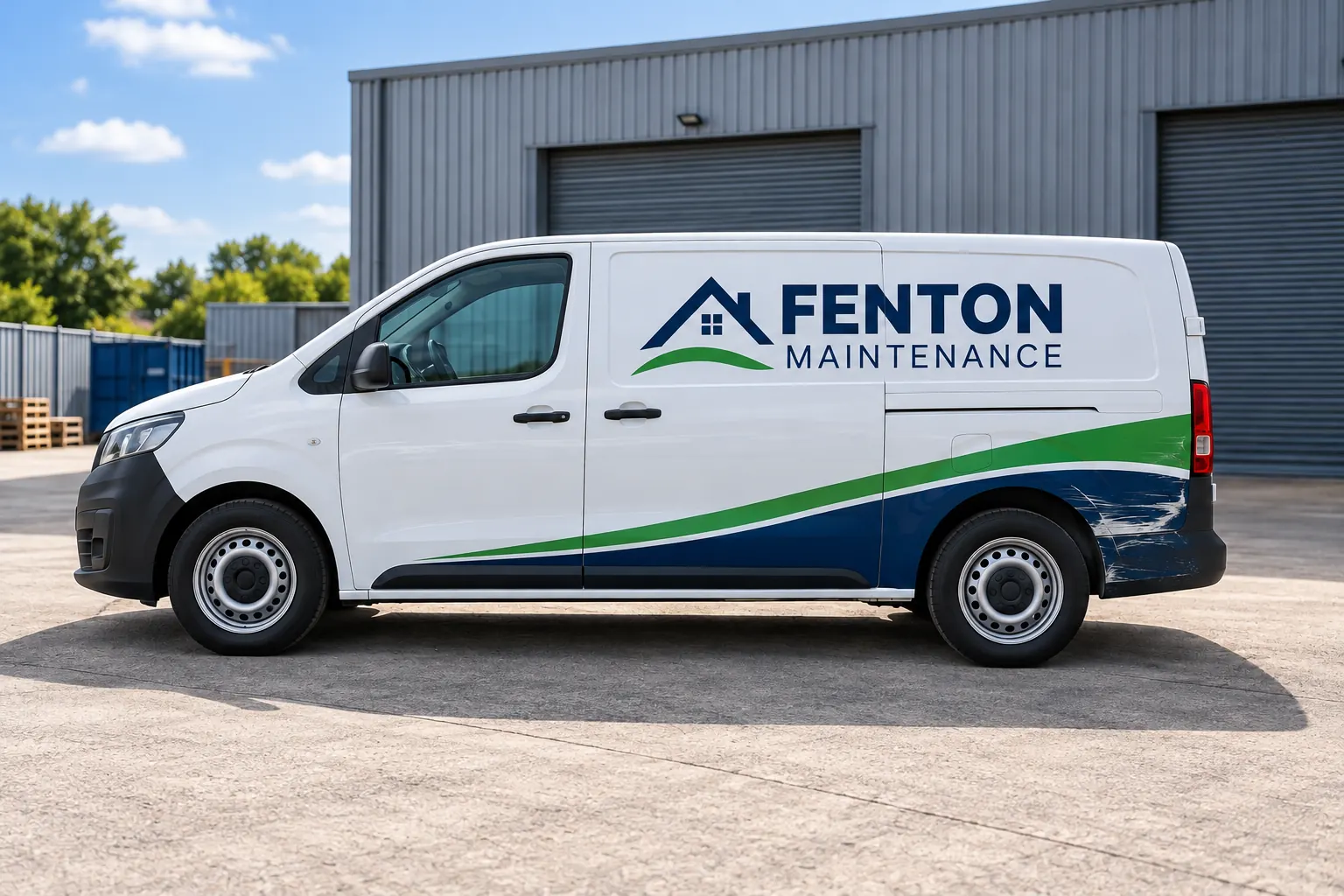
Fictional project-planning illustration; not a completed customer installation or measured project result.
Scenario: an affected area within an otherwise current identity
Consider a maintenance fleet with a van carrying the correct business identity but a visibly scraped graphic area on one rear quarter. The fictional Fenton Maintenance image illustrates that limited condition. It does not establish the cause, the underlying panel state, an inspected customer vehicle or an approved repair method.
The first decision is what needs review, not which old file to print immediately. Identify the unit, affected face and current operating contact. Ask whether body or paint work is also being considered and who owns that separate decision. A useful enquiry gives the reviewer current evidence and the retained graphics record so the replacement scope can be assessed against the actual vehicle.
| Decision | Record to retain | Purpose |
|---|---|---|
| Condition report | Unit, affected face, date and contextual photographs | Define the actual question before choosing a print file. |
| Installed reference | Accepted version, configuration and product history | Label missing or unconfirmed records clearly. |
| Vehicle work | Body/paint concerns and separate repair owner | Keep substrate repair distinct from graphic replacement. |
| Accepted boundary | Actual replacement area and appearance discussion | Do not infer an invisible match from an older digital file. |
| Updated history | Replacement version, current photographs and care | Leave the next enquiry connected to the actual supplied work. |
Collect current photographs that explain location and extent
Provide an overall view identifying the vehicle and affected face, a mid-range view showing the panel boundaries and close views of the damaged graphic. Include seams, trim, accessories and surrounding graphics that matter to the proposed replacement. Label the photographs with the unit and date and explain any known event or recent work.
Use the photo checklist to organize the handoff for a useful overall-and-detail image set. Avoid crop every image so tightly that the reviewer cannot identify where the concern sits. A close photograph may show a scrape clearly while still fail to establish the panel, adjacent graphic area or current configuration needed for a practical scope discussion.
Find the installed record without assuming the nearest file is correct
Locate the accepted artwork version, unit or configuration sheet and supplied product information where available. Identify whether a later repair, accessory change or identity update has occurred. If the record is incomplete, say so rather than present a similar van proof as the confirmed source file.
Use the fleet standard to connect master identity and fitted production variants. The designer needs the correct source and the reviewer needs the current vehicle evidence. A business name alone cannot establish which printed construction, panel geometry or variable data was originally used. Keep uncertainty visible so the enquiry can resolve it before a repeat order is treated as production-ready.
Separate graphic replacement from underlying vehicle repair
Identify visible body or finish concerns and any repair work planned by the operator. Decorative film is not a repair to the substrate. Ask how the graphics scope depends on separate body or paint decisions and retain the responsible contact and relevant readiness information for that work.
Use preparation planning to organize the questions. Do not assume a small visible scrape means the underlying surface is suitable or that every concern requires a complete rewrap. The actual condition and selected system determine what can be reviewed. The fictional illustration is not an instruction to apply new film over damage or a diagnosis of a real vehicle.
Define the replacement boundary and appearance expectations
Discuss the actual affected area, adjacent graphics and usable panel boundaries with the reviewer. A limited replacement may need a wider defined scope than the visible mark, while the rest of the identity can remain current. Record the accepted area rather than use repair as an unexplained label for whatever the supplier eventually decides to print.
Use repair-versus-replacement planning when comparing the actual scope. Provide current photographs because aging and production differences can affect appearance. Do not promise that new material will be indistinguishable from the surrounding graphic solely because an older digital artwork file is available.
Confirm the actual unit and approvals before release
Link the replacement request to the unit reference, current configuration, accepted area and artwork version. Check any variable wording and identify who can approve the commercial scope and final proof. Confirm vehicle availability, access and supplier arrangements through the project process rather than assume a small job can be inserted into any calendar opening.
Keep the proposed graphic work separate from body-shop or other vehicle arrangements unless the accepted scope expressly coordinates them. If the actual unit changes, review the replacement file and fit again. A matching company identity does not establish that another van has the same panel geometry, product history or surrounding graphic condition.
Update the record after a replacement so the next enquiry is clearer
Retain installed photographs, the accepted replacement area, production version and relevant product references. Record any difference from the earlier layout or construction and hand over the applicable care guidance. The unit history should show what changed rather than leave the next buyer to choose between several similarly named files.
For a similar enquiry, send the unit-specific damage brief with current photographs and any original record. Use the panel replacement service for the actual review route. This scenario explains an organized enquiry without claiming a completed Fenton repair, a universal method, warranty coverage, an invisible color match or a confirmed turnaround.
Frequently Asked Questions
Plan a Similar Project with Your Actual Equipment
Send current photographs, vehicle quantities, logo files, coverage preferences and timing. Identify old graphics and paint concerns so the project review can address the actual equipment.
Explore planning resources or request your commercial wrap quote.
