
Commercial Wrap and Graphics FAQs: Find the Right Next Decision
Start with the question blocking your project, then follow the relevant service, guide or worksheet. This buyer FAQ hub connects coverage, cost, design, vehicle readiness, installation planning and ongoing fleet care with a clear route to a useful project brief.
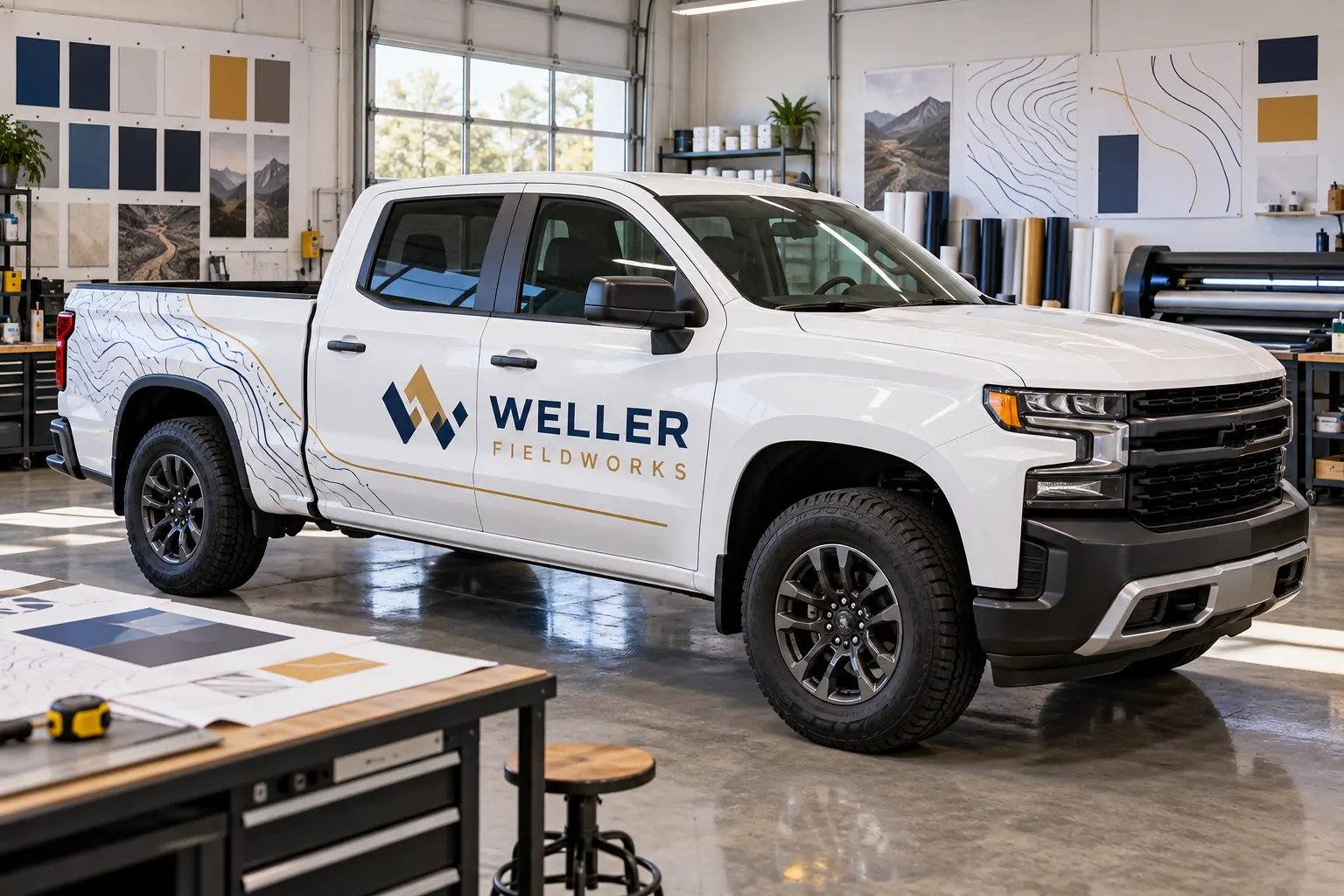
Fictional commercial wrap design concept; not a completed customer installation.
Start with the business job the graphics need to do
Decide whether the enquiry concerns one working vehicle, a repeat fleet identity, a company rebrand or coordinated property and vehicle graphics. Name the approved business identity and the main service message. A first-time buyer does not need a finished design to start, but a short description of the purpose helps connect the conversation to the right service.
Explore commercial vehicle wraps for the core coverage choices and fleet solutions when consistency, rollout or replacement management is central. Use signs and graphics for property touchpoints. The next decision should fit the actual buying problem instead of forcing every enquiry into an identical full-wrap request.
Choose coverage through the actual message and equipment
Compare full coverage, partial coverage and lettering against the real vehicle faces, starting finish and required identity. Describe the boundaries and important wording rather than assume a coverage label is a complete scope. A broad box-truck side, a service body and a van rear offer different usable areas even when the same logo appears on each.
Use the coverage comparison worksheet to keep alternatives and entered amounts together. It does not select a product or generate a quote. The useful outcome is a clearer description of what each option includes, what still needs review and which questions should be resolved before the project becomes a production instruction.
Prepare the facts that make a cost conversation useful
List quantities, configurations, current photographs and any known dimensions. Identify old graphics, paint concerns, intended coverage and whether artwork already exists. Include the target timing and vehicle release constraints. These facts explain the work behind a price and help avoid comparing totals that quietly include different removal, design, access or installation assumptions.
Start with cost planning if you need to understand scope drivers and the RFQ checklist when assembling a defined request. Mark unknowns openly. A useful enquiry can begin with questions, but neither a planning calculator nor a fictional image should be treated as a confirmed project amount.
Bring current identity files and identify the approvers
Supply the best available logo and source artwork and explain which text can change. Keep branch wording, internal unit codes and operator-approved carrier information separate from fixed brand elements. Name the people who can accept the business design, variable data and final production release so proof decisions do not get lost between several contacts.
Use the artwork guide for file handoff and fleet design standards for repeat layouts. A placement image supports review, but it does not verify dimensions or establish that every similar vehicle has the same doors and accessories. Connect the accepted artwork version to the actual unit or configuration schedule.
Resolve surface readiness and release arrangements before work
Provide overall and close photographs of the actual vehicles and disclose known repairs, finish treatments and old graphics. Use preparation planning to organize those questions. A new graphic is not a paint or body repair, and a distant image cannot establish every concealed condition. Keep separate vehicle work and graphics responsibilities clear in the scope.
Explain when units can be released, who arranges transport and where inspection and work are proposed. Review access and supplier availability through the actual project process. An enquiry, artwork discussion or downloaded worksheet does not automatically reserve installation capacity. A phased fleet needs a release plan that preserves the operator service needs as well as a consistent identity.
Ask for the actual product, care and replacement record
Request the proposed material system and relevant construction for the actual application. Do not infer a universal lifespan or warranty from a broad film category, supplier brand or attractive concept. Review the applicable written terms and care guidance for the supplied system and retain those references with the accepted artwork and installed photographs.
Use panel replacement planning when a unit is damaged and provide current evidence alongside the original file. Keep ordinary wear, impact damage and an identity change as distinct reasons for review. A well-organized record makes future enquiries more specific without promising that every replacement will be invisible or covered by the same terms.
Turn the answers into a brief that can move forward
Gather the vehicle list, photographs, identity files, preferred coverage and timing, then identify the unresolved questions. Send those through the quote page and name the decision contact. If you are still comparing approaches, say so; the brief can describe alternatives instead of pretend the entire design and scope are already settled.
Explore the resource hub for the deeper guide that matches the next decision. This page is a route through buyer questions rather than a substitute for the actual vehicle, product and commercial review. Keep the accepted scope, approvals and later changes together so the path from initial question to installation and future fleet care remains understandable to everyone involved.
Frequently Asked Questions
Turn Your Vehicle Details Into a Clear Project Brief
Send current photographs, vehicle quantities, logo files, coverage preferences and timing. Identify old graphics and paint concerns so the project review can address the actual equipment.
Explore planning resources or request your commercial wrap quote.
