
Commercial Vehicle Wrap Removal: Plan the Condition Review and Next Step
Organize removal around the existing material, vehicle history and intended handover. Keep the film removal, adhesive work, exposed-surface review and any replacement graphics clearly defined so the project starts with realistic expectations.
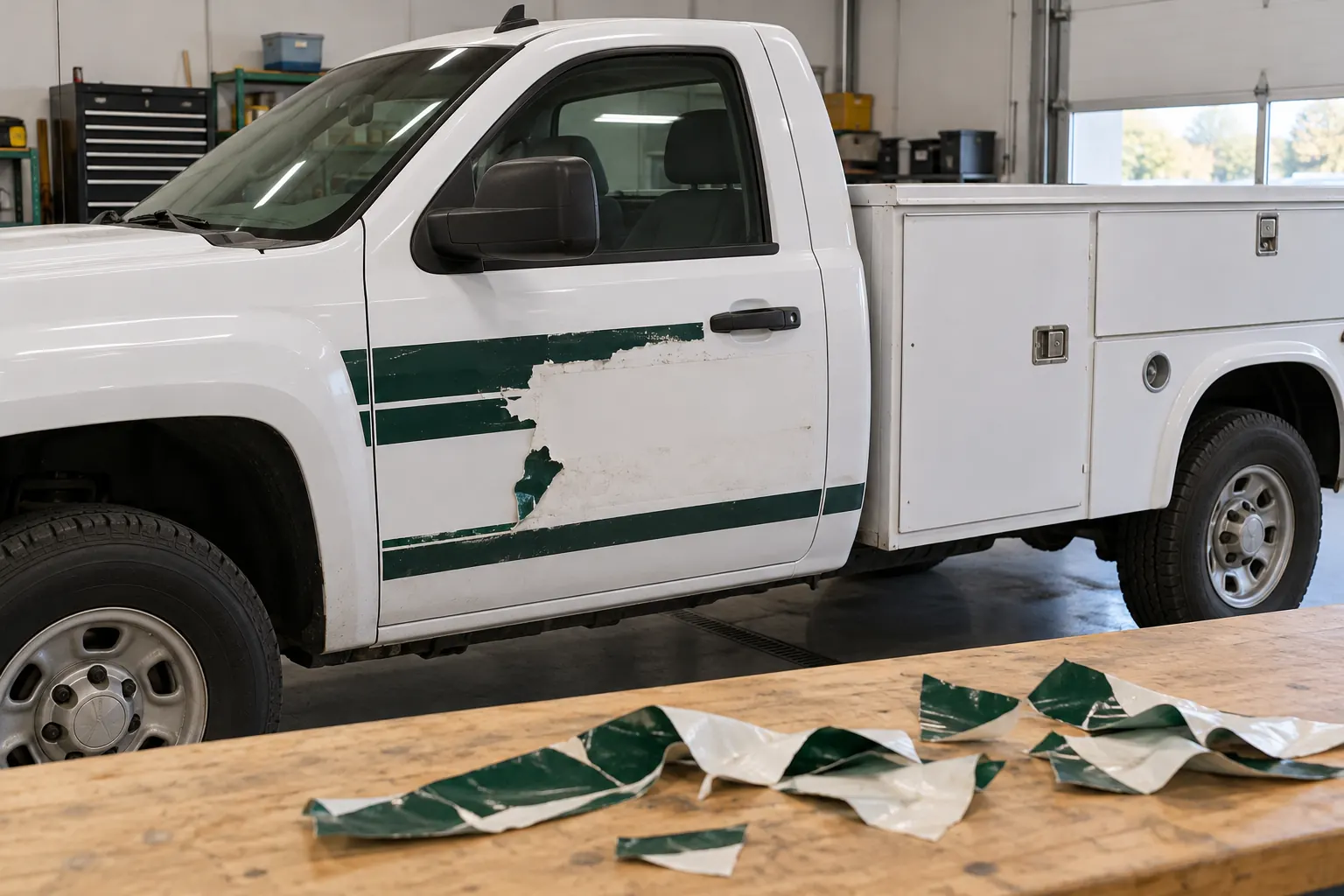
Illustrative planning concept; not documentary customer photography, a diagnosis or verified readiness record.
Define why the graphics are being removed
Identify whether the job is a rebrand, a vehicle leaving the fleet, a damaged section or a change of coverage. The next use matters to the brief because it defines which faces are affected and what information the project team needs. State the intended handover condition without assuming every surface can be restored to an earlier appearance.
Record any graphics that should remain and any business identity that must disappear. A complete vehicle de-identification is different from removing one outdated phone number. Keep the actual scope visible so a proposal does not rely on the reviewer guessing whether the business wants a clean asset transfer, a ready-to-review surface for new graphics or a limited change to the current identity.
Collect existing-material and installation history
Provide the vehicle configuration, affected areas, approximate installation date and named film or system if known. Include any earlier repairs, extra layers or replacement sections. Mark unknowns honestly. Similar-looking graphics across a fleet may have different material and repair histories that matter to the removal review.
Avery Dennison lists separate removal instructions among its technical resources, illustrating why the actual product information should be retained. Do not turn a general description such as removable vinyl into a complete method or guarantee for every older installation. The project needs a plan appropriate to the material and actual vehicle condition.
Document current condition before work begins
Photograph the whole vehicle, affected faces and close areas of cracking, lifting, adhesive exposure or visible coating damage. Identify known repainting and repairs and keep hidden condition beneath existing graphics marked as uncertain. The initial record should distinguish what can be observed from what has not yet been assessed.
Use the photo checklist to organize the set. Photographs support the scope discussion but do not guarantee the concealed paint condition or outcome. Name the person responsible for reviewing unexpected concerns after removal. That decision path is part of the plan and should not be discovered only when the vehicle is already unavailable.
Define the removal end point and separate repair work
Ask the accepted scope to identify graphic removal, adhesive treatment, exposed-surface review and any preparation for new graphics. Those are related stages but should not remain one undefined phrase. Agree what is included and how changed conditions affect the next decision.
Body or coating repair is a separate responsibility unless expressly included. A removal task does not itself establish that the surface is ready for another film or that every finish returns unchanged. Use the surface-condition guide to organize repair questions, and retain the actual condition findings before committing to the next graphics stage.
Compare the proposed scope and operating arrangement
Provide the same affected areas, history, photographs and intended next use when obtaining a quote. Ask for exclusions, assumptions and how the final work is confirmed. A limited film-removal price and a package including adhesive work and later preparation may describe different end points even when both are called wrap removal.
The removal cost guide focuses on that comparison. Record release windows, delivery and collection responsibilities and the contact authorized to resolve a changed scope. Keep internal transport and operating effects in the business plan so the supplier task is connected to the actual handoff rather than treated as an isolated graphic-area total.
Coordinate replacement only after its dependencies are clear
If new graphics follow, keep the accepted artwork and coverage separate from the removal decision and review the exposed surface before proceeding. Identify any coating work and use its actual readiness requirements. A target rebrand date should not override a changed condition that needs resolution.
Use the rebranding checklist and paint-readiness planning when relevant. For a limited damaged area, compare repair and replacement boundaries rather than automatically clear the whole vehicle. The useful sequence follows the actual condition and commercial objective, with the responsible approvals recorded at each stage.
Update the vehicle history after the handover
Retain photographs of the exposed condition and any subsequent repair or new graphics work. Record what was removed, what remains and the relevant project references. Future teams should not have to infer the removal history from a current blank panel or an old branded photograph.
For a new enquiry, send a removal brief with the asset list, affected areas, known material history, current images and intended next step. The preparation guide connects the later handoff to new graphics when that is the agreed goal. A clear record and defined responsibilities make the removal conversation more useful than a universal promise about time, cost or paint appearance.
Frequently Asked Questions
Turn Your Vehicle Details Into a Clear Project Brief
Send current photographs, vehicle quantities, logo files, coverage preferences and timing. Identify old graphics and paint concerns so the project review can address the actual equipment.
Explore planning resources or request your commercial wrap quote.
