
Lafayette Vehicle Wraps: Compare Coverage With a Complete Commercial Brief
Choose the right message and coverage for your Lafayette business vehicle before comparing proposals. Pelican Wraps in Harvey can review the actual vehicle brief, artwork, condition and proposed work arrangement so the next decision rests on a defined scope.
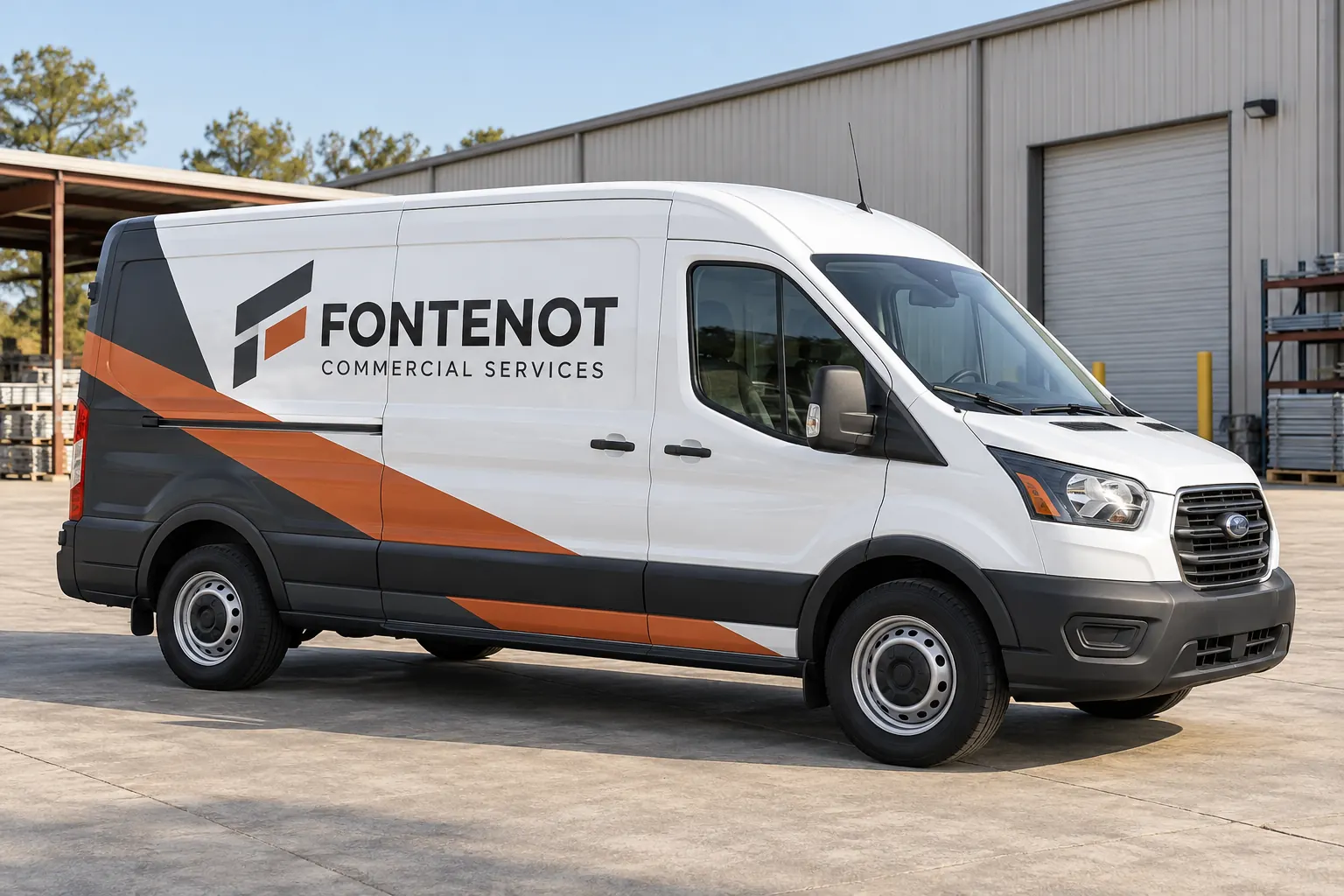
Fictional commercial design concept; not a local customer installation or a photograph of Pelican Wraps premises.
Give the vehicle one clear commercial communication job
Decide what someone should understand first: the business name, the main service category and the useful next action. A work van can carry supporting information, but every extra line competes with the primary identity. Start with the actual business purpose and the vehicle faces customers are most likely to see.
Explore commercial vehicle services to identify the appropriate vehicle category. Pelican Wraps uses 1201 MacArthur Ave, Suite B, Harvey, LA 70058. This Lafayette planning route does not establish an additional office or an automatic local installation arrangement. Send the vehicle information and desired outcome before moving it. The initial discussion should determine the relevant scope, outstanding information and actual work arrangement rather than treat a service-area heading as a confirmed appointment.
| Record | Include in the brief |
|---|---|
| Communication | Approved business name, primary service and response route |
| Comparable coverage | Actual faces, boundaries, quantities and retained paint |
| Starting evidence | Current photographs, source artwork and known condition |
| Commercial decision | Included work, exclusions, unknowns and accepted handoff |
Build three coverage descriptions that can actually be compared
Describe full coverage, partial coverage or lettering in terms of actual faces and boundaries. Specify whether a hood, rear face or separate compartment is included. For a partial design, explain how the original paint participates in the composition. For lettering, identify the logo, service line and response information instead of using a vague small-package label.
Use the coverage comparison worksheet to retain alternatives for the same vehicle configuration. Its amounts are visitor-entered planning figures, not supplier rates. Keep each alternative’s quantities and assumptions aligned. The Fontenot Commercial Services van is a fictional partial-wrap concept showing a clear identity against visible original paint; it is not a photographed Lafayette customer, material recommendation or evidence of a completed local job.
Photograph the actual van before treating a template as sufficient
Provide overall side, rear and front views plus close views of handles, tracks, sensors, windows and accessories. Show existing graphics and areas where finish condition is uncertain. Label the photographs with the unit reference and identify any measurement that is estimated. A model name alone may miss a roof, door or equipment difference that changes the layout.
Use the photo checklist and the measurement guide to organize the record. Identify what the project review still needs to confirm. A clean computer rendering can help discuss hierarchy, but it cannot inspect paint, prove the correct body configuration or establish that graphics will fit around every real interruption without further review.
Supply identity files and verify the response route
Provide the current logo source file where available and explain any approved color or typography standard. If the artwork exists only as a screenshot, say so early. Identify who can obtain a better source or approve necessary recreation. Keep supplied assets separate from an earlier vehicle photograph used only as a visual reference.
Use artwork guidance for file preparation. Confirm the website, contact wording and service description before they become part of the fitted proof. If a destination uses a campaign page, test that page on a phone and make sure the business owns the response process. A readable vehicle message should lead to a useful enquiry step rather than a dead destination or an unmonitored contact route.
Ask what the price includes and what remains unresolved
Compare the actual quantities, design scope, production faces, removal assumptions, preparation and proposed product information. Ask how unresolved condition issues will be handled and which tasks are outside the proposal. A figure without these details is difficult to compare even when two documents both use the word wrap.
Use the cost guide and the commercial RFQ worksheet where helpful. Do not invent a budget from a generated concept or assume that broader coverage always produces a better return. State the real decision limit and the communication priority. The supplier response should explain the defined scope and remaining decisions so you can compare suitable alternatives without disguising unknown work as an agreed fixed item.
Confirm movement only after scope and availability are reviewed
Identify the actual vehicle location, its working role, the person releasing it and the proposed return requirement. Include dimensions and equipment details relevant to access. Ask the supplier to confirm the work location, receiving arrangements and availability before the operating team commits to transport or substitutes.
Use Harvey handoff planning and current Louisiana 511 information for relevant journey questions. There is no universal installation or travel duration for every Lafayette van, trailer or truck. A proposed date is a discussion point until the actual arrangement is accepted. Keep condition review, artwork acceptance and release responsibility visible so movement does not depend on a missing decision discovered at the last moment.
Keep the approved record useful for the next vehicle
Retain the accepted fitted proof, approved contact information, relevant product references, installed photographs and applicable care guidance. Record the actual configuration and layout version. When adding another van, compare its body, equipment and finish history rather than assuming a shared model name makes it an exact repeat.
Use new-model planning for additions. To begin, send the Lafayette commercial vehicle brief with actual photographs, quantity, identity files, intended faces and timing. Describe the coverage alternatives you want compared and identify your approver. A complete brief makes the next step concrete: establish a suitable scope and work arrangement, clarify the commercial assumptions and approve the actual fitted instruction before production.
Frequently Asked Questions
Prepare Your Actual Vehicle Graphics Brief
Send current photographs, vehicle quantities, logo files, coverage preferences and timing. Identify old graphics and paint concerns so the project review can address the actual equipment.
Explore planning resources or request your commercial wrap quote.
